
The monk who walked to India
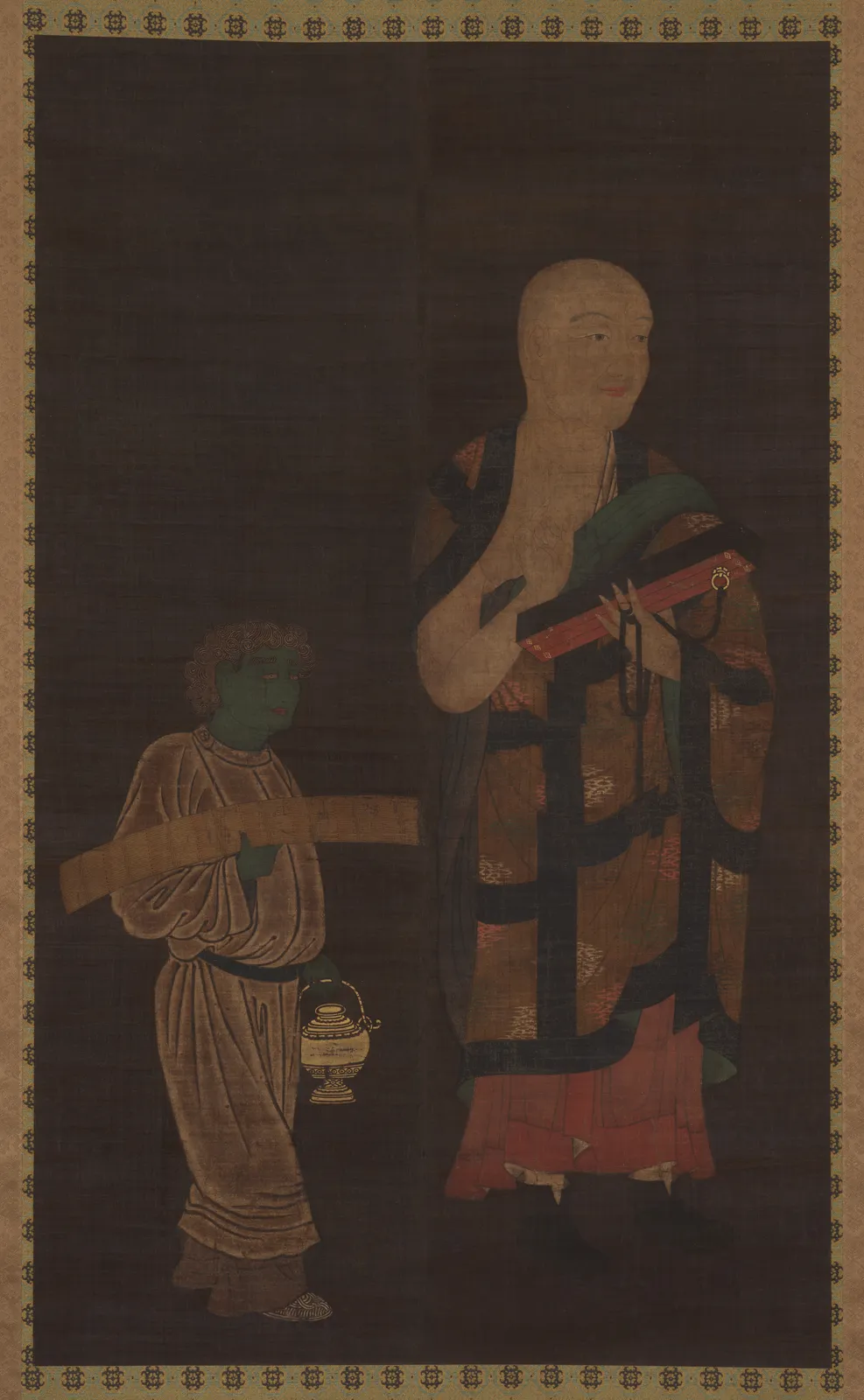
In 629 a young monk slipped out of Chang’an against an imperial ban. He came home years later with 657 texts, and a pagoda rose to keep them.
In 629, a monk in his late twenties left Chang’an, the capital of the Tang dynasty, without permission. Travel beyond the frontier was forbidden, and his request for a pass had been refused. His name was Xuanzang. He had studied Buddhist texts all his life and found the Chinese translations incomplete and contradictory, so he decided to go to India and read them in the original.
Across deserts and mountains
He went west along the routes we now call the Silk Roads. He followed the Gansu corridor, slipped past the frontier watchtowers at night and crossed the desert alone to reach the oasis kingdoms. According to the biography written by his disciple Huili, the king of Turfan liked him so much that he tried to keep him at court. Xuanzang went on: to Kucha, over the snowy passes of the Tian Shan, to Tashkent and Samarkand, into Bactria and over the Hindu Kush into the Indian subcontinent.
In India he spent years at Nalanda, then one of the greatest centres of learning in Asia, studying under its abbot, Śīlabhadra. He travelled widely, visited the places linked with the life of the Buddha, gathered manuscripts and took part in great debates at the court of King Harsha. Then he turned home, taking the southern road around the Taklamakan Desert. When he reached Chang’an in 645, he had been gone for about seventeen years.
A fugitive comes home
The man who had left in secret was welcomed back by crowds. Emperor Taizong received him, offered him an official post, which he declined, and asked him to write down what he had seen. The result, finished in 646 with the help of the monk Bianji, was the Record of the Western Regions of the Great Tang (Da Tang Xiyu ji). It describes more than a hundred kingdoms and regions: their climate, crops, languages, customs, rulers and monasteries. Historians still rely on it, and archaeologists in India and Central Asia have used its directions to identify ancient sites.
He brought back 657 texts, packed in 520 cases, together with images and relics. He spent the rest of his life translating them with a team of assistants. By his death in 664 he had finished about 75 works in 1,335 scrolls, only part of what he had carried home, but among the most influential texts in East Asia.
A pagoda for the books
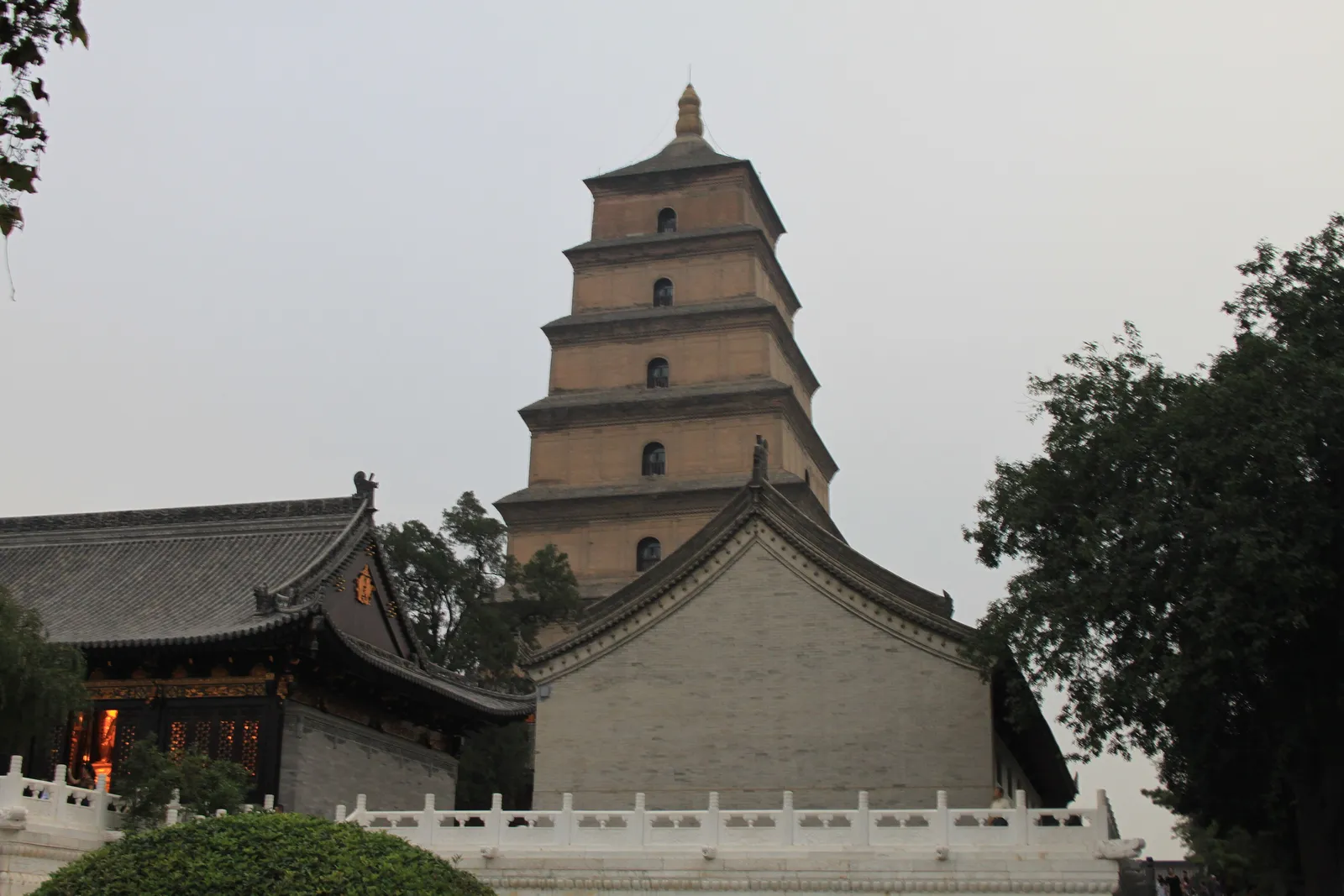
A library like that needed a safe home. In 648 the crown prince Li Zhi, later Emperor Gaozong, had founded the Great Ci’en Monastery in memory of his mother, and Xuanzang moved there to lead his translation work. In 652 he asked for a pagoda to protect the scriptures and images. The first one had five storeys, an earth core faced with brick, and was modelled on Indian stupas he had seen on his travels. It did not last. Within a few decades it was crumbling, and in the early 700s, under Empress Wu Zetian, it was rebuilt taller in the Chinese storeyed style. Sources disagree about how many storeys it had then. Today it has seven and stands about 64 metres high, wrapped in a thick outer layer of brick added in the Ming dynasty.
At the base are Tang stone tablets carrying the Preface to the Sacred Teachings, written by Emperor Taizong for Xuanzang’s translations, with a companion text by Gaozong, in the elegant hand of the calligrapher Chu Suiliang. Later, scholars who passed the imperial examinations came to the pagoda to write their names, a custom remembered as “inscribing names at the Wild Goose Pagoda”. Where the name comes from is not certain; one explanation links it to a story in Xuanzang’s own Record, about monks in India who built a stupa where a wild goose had fallen from the sky.
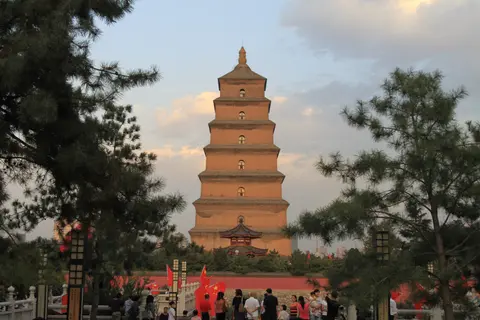 Sight in Xi'anBig Wild Goose Pagoda 大雁塔A Tang dynasty pagoda built for scriptures brought back from India, with a fountain show at night.
Monkey and the real monk
Nine centuries later, Xuanzang became a character in one of China’s best-loved novels. Journey to the West, published in 1592 during the Ming dynasty and usually attributed to Wu Cheng’en, sends a monk to India with Monkey, Pigsy and Sandy through eighty-one trials full of demons. It is fiction, built on centuries of storytelling that had grown around the real journey. The novel’s timid monk, who needs rescuing at every turn, is very unlike the historical Xuanzang, who crossed deserts and mountains largely on his own and whose book is full of distances, harvests and customs rather than monsters.
Visiting today
The Big Wild Goose Pagoda still stands in the grounds of the Great Ci’en Temple in southern Xi’an, and since 2014 it has been part of the Silk Roads World Heritage listing. You can walk through the temple courtyards, look for the Tang tablets at the foot of the pagoda, climb the stairs inside for a view over the city that grew around it, and find the statue of Xuanzang on the square in front. The practical details are on the Big Wild Goose Pagoda page.
Places in this story
Sources
- Xuanzang (Hsuan-tsang), Internet Encyclopedia of Philosophy (iep.utm.edu)
- Xuanzang’s Record of the Western Regions, Silk Road Seattle, University of Washington (depts.washington.edu)
- Big Wild Goose Pagoda: the surviving glory of the Tang (in Chinese), The Paper (m.thepaper.cn)
- Giant Wild Goose Pagoda: a World Heritage site along the Silk Road, People’s Daily Online (en.people.cn)
- Journey to the West, Research Starters, EBSCO (ebsco.com)
Legends are told as legends. Where historians disagree, we say so.
More stories
 HistoryThe well that found an armyIn 1974 farmers digging a well near Xi’an hit pieces of clay. They had found the First Emperor’s army, and the tomb it guards is still sealed.
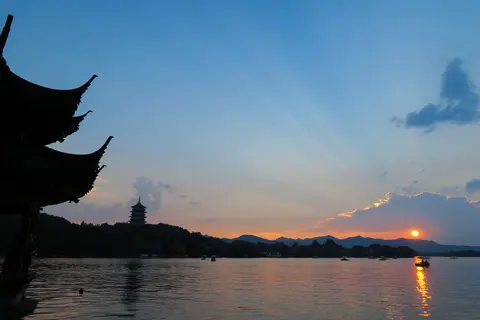 LegendsThe White Snake and Leifeng PagodaA snake spirit in love, a monk who stood in her way, and a real pagoda on West Lake that fell in 1924 and rose again.
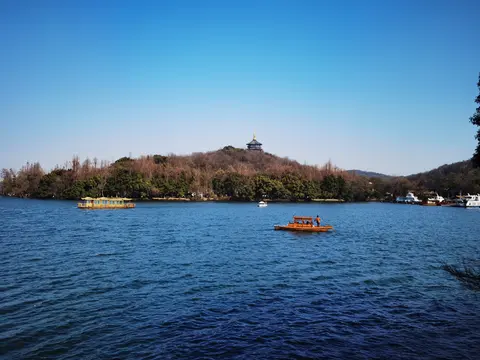 Travelers of the pastMarco Polo’s City of HeavenIn the 13th century a Venetian called Hangzhou the finest city in the world. What did he really see, and what is still there at West Lake?