
Tang dynasty
唐朝Tángcháo618–907
The dynasty (618–907) remembered as China’s golden age of poetry, Buddhism and Silk Road trade, ruled from Chang’an, today’s Xi’an.
The Tang was founded in 618 by Li Yuan (Emperor Gaozu) and his son Li Shimin, who ruled as Emperor Taizong, and it is often called China’s golden age. Its capital Chang’an (today’s Xi’an) was one of the largest cities in the world, with Luoyang as a second capital, and merchants, monks and envoys arrived along the Silk Road from Central Asia, Persia, Korea and Japan. This was the age of the poets Li Bai and Du Fu, of the pilgrim Xuanzang, and of Wu Zetian, the only woman to rule China as emperor in her own name. The An Lushan Rebellion (755–763) badly weakened the dynasty, which finally fell in 907. Few Tang wooden buildings survive, so travellers meet the era through brick pagodas, Buddhist cliff carvings, royal tombs and the palace ruins and museum treasures of Xi’an.
Also known as: T’ang dynasty
Where to see it in China
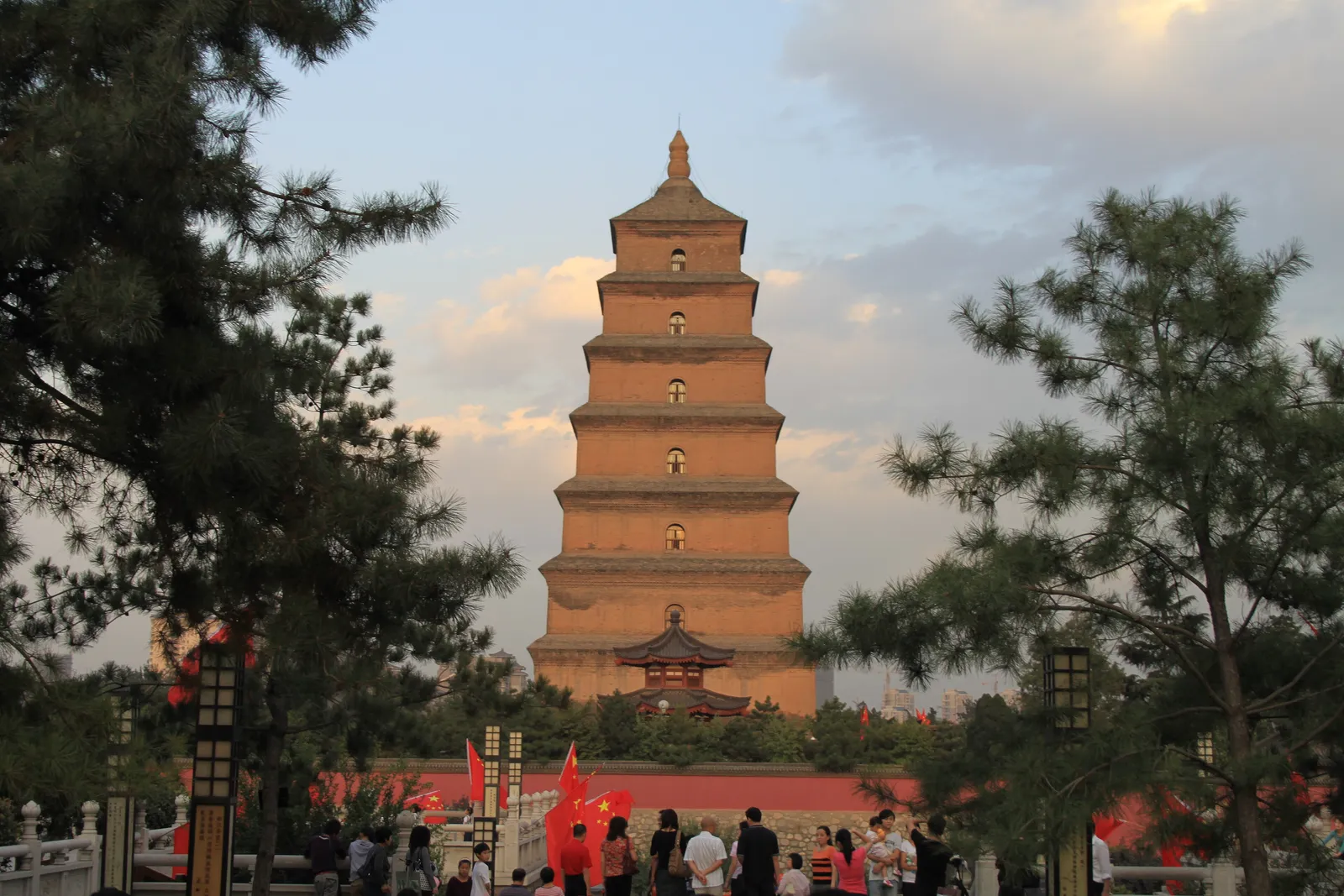
 Xi'anBig Wild Goose Pagoda 大雁塔A Tang brick pagoda built to house the scriptures Xuanzang brought back from India.
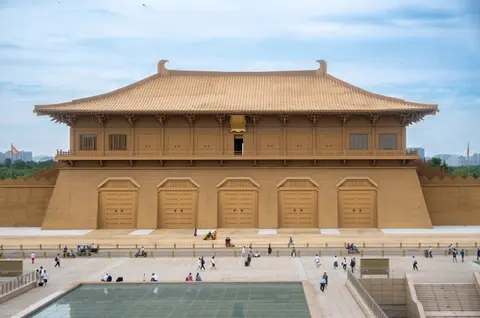 Xi'anDaming Palace National Heritage Park 大明宫国家遗址公园The site of the main Tang imperial palace, now a park with a museum and marked-out hall foundations.
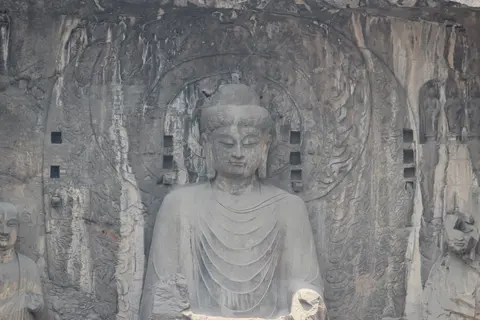 LuoyangLongmen Grottoes 龙门石窟Cliffs of Buddhist carvings crowned by the giant Vairocana Buddha, carved under the Tang.
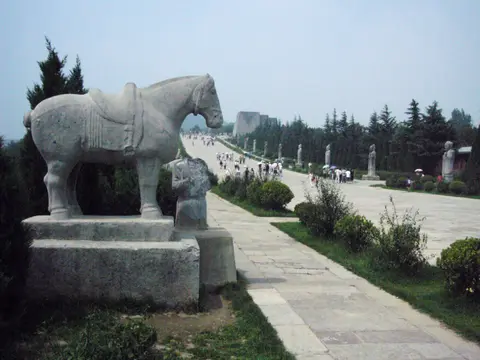 Xi'anQianling Mausoleum 乾陵The hillside tomb of Emperor Gaozong and Empress Wu Zetian, approached by a long road of stone statues.
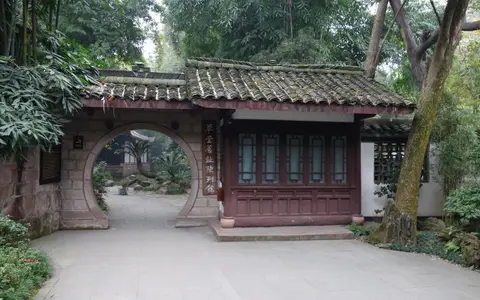 ChengduDu Fu Thatched Cottage 杜甫草堂A garden museum where the Tang poet Du Fu lived in exile, with a rebuilt thatched hut.
Where we mention it
- The monk who walked to India Zouzou Stories · Travelers of the past
- Terracotta Army tickets and tour: booking, transport and pits (2026) Travel guides
- Tang Paradise Xi'an
- Xi’an Museum & Small Wild Goose Pagoda Xi'an
- Famen Temple Xi'an
- Qinglong Temple Xi'an
- Pochengzi City Ruins Dunhuang
- Songyang Academy (Dengfeng) Luoyang
- Changsha Museum Changsha
- Tongguan Kiln Archaeological Park Changsha
Related entries
Sources
- Tang dynasty — Britannica (Students) (kids.britannica.com)
- Longmen Grottoes — UNESCO World Heritage Centre (whc.unesco.org)
- Tang dynasty — Wikipedia (en.wikipedia.org)