
Buddhism in China
中国佛教Zhōngguó FójiàoFrom the 1st century AD
The faith that came from India around the 1st century AD and shaped China’s temples, cave art, festivals and everyday language.
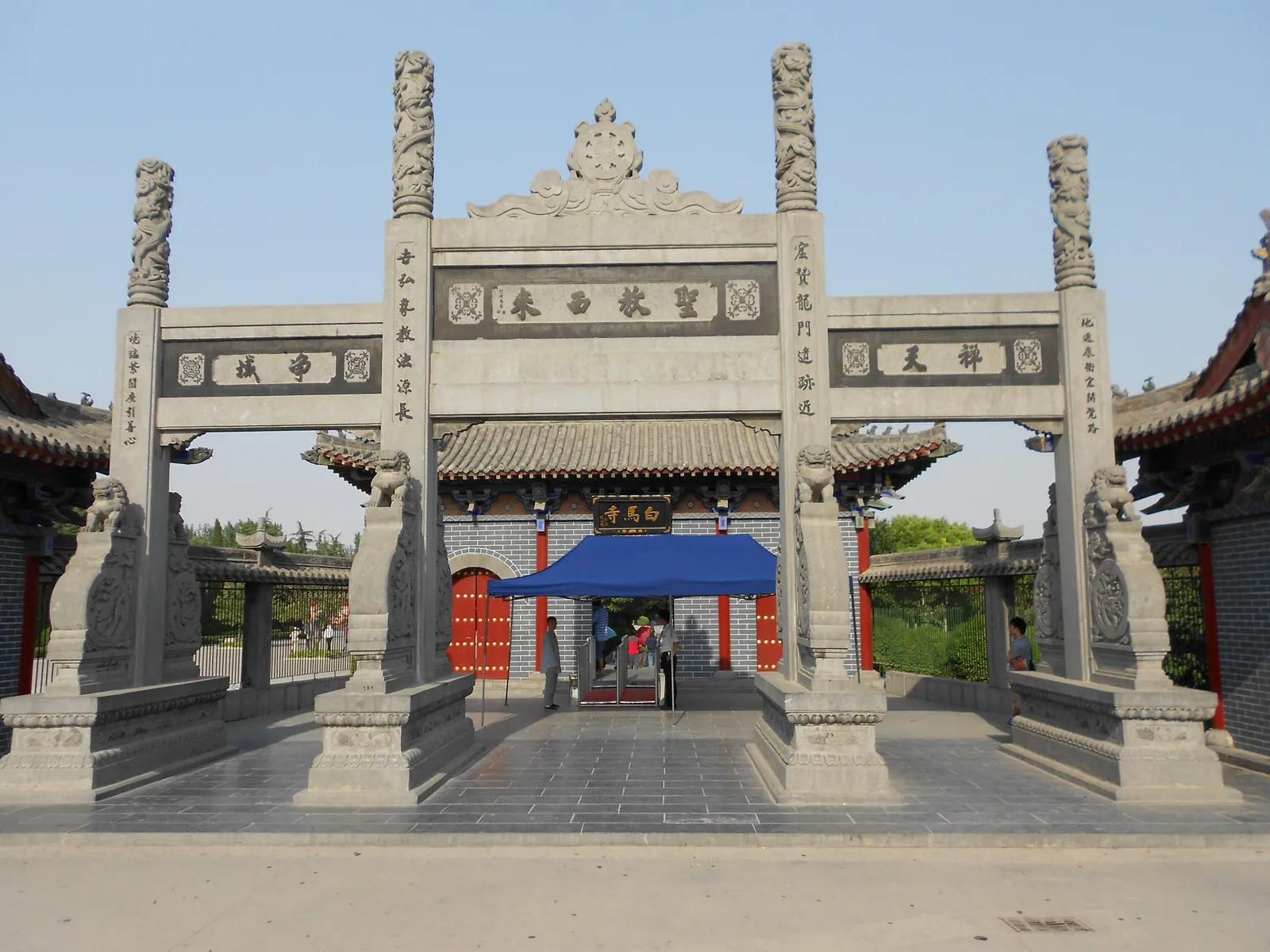
Buddhism reached China from India by way of Central Asia, probably in the 1st century AD. According to tradition, a Han emperor dreamed of a golden figure, sent envoys west, and they returned with two Indian monks and scriptures carried on a white horse; Luoyang’s White Horse Temple is honoured as the first Buddhist temple in China. Over the following centuries monks translated thousands of texts, pilgrims such as Xuanzang walked to India for more, and rulers sponsored vast cave temples at Mogao, Yungang and Longmen. Chinese schools grew from these roots, above all Chan, which tradition traces to the Indian monk Bodhidharma at Shaolin and which became Zen in Japan. Alongside Confucianism and Taoism it shaped Chinese culture, and when you visit a temple today you will see the same pattern almost everywhere: Heavenly Kings guarding the gate, a laughing Maitreya, a main hall of Buddhas, and the merciful Guanyin.
Also known as: Chinese Buddhism · Han Buddhism
Where to see it in China
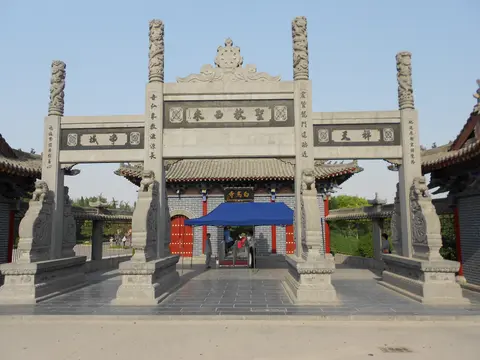 LuoyangWhite Horse Temple 白马寺Traditionally China’s first Buddhist temple, from the 1st century, with Indian, Thai and Burmese-style halls beside it.
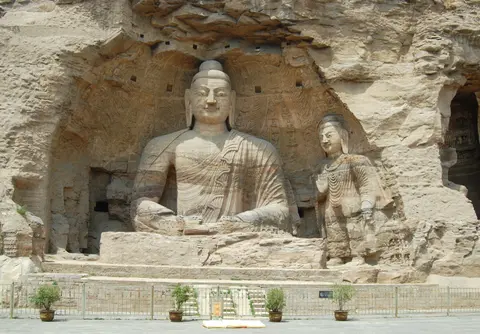 DatongYungang Grottoes 云冈石窟Fifth-century Northern Wei caves with giant seated Buddhas, some open to the sky.
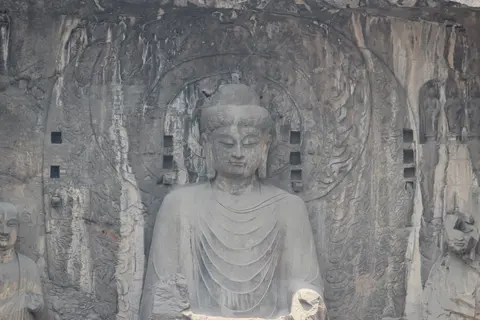 LuoyangLongmen Grottoes 龙门石窟Over 100,000 Buddha images carved into the cliffs of the Yi River, crowned by the great Vairocana Buddha.
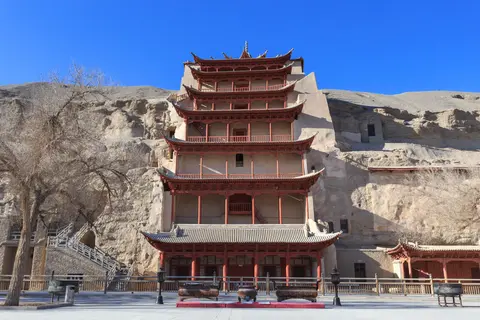 DunhuangMogao Caves 莫高窟Hundreds of Buddhist cave temples painted over a thousand years at a Silk Road oasis.
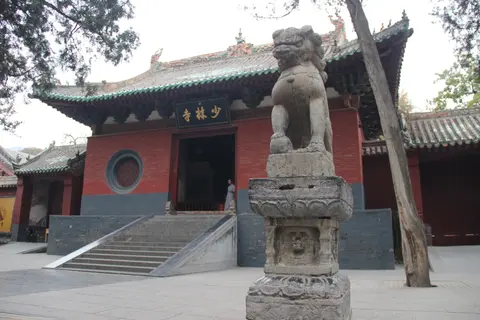 LuoyangShaolin Temple (day trip) 少林寺The temple on Mount Song linked by tradition to Bodhidharma and Chan (Zen), with a forest of monks’ stone pagodas.
Where we mention it
Related entries
Sources
- Chinese Buddhism — Wikipedia (en.wikipedia.org)
- Longmen Grottoes — UNESCO World Heritage Centre (whc.unesco.org)
- Yungang Grottoes — UNESCO World Heritage Centre (whc.unesco.org)