
Taoism
道教Dàojiào
China’s home-grown philosophy and religion of the Dao, “the Way”, traditionally traced to the sage Laozi; its temples and holy mountains are all over China.
Taoism (also spelled Daoism) is China’s home-grown philosophy and religion, built around the Dao, “the Way”: the natural order behind all things. Its best-known text, the Daodejing, is traditionally credited to Laozi, a sage said to have lived in the 6th century BC, though historians debate whether he was a single real person. As an organised religion it took shape in the 2nd century AD, and over the centuries it gave China temples, priests, monasteries, sacred mountains and a large family of gods. Taoist temples are usually called guan or gong (“palace”); look for the Three Pure Ones on the main altar, the yin-yang and eight-trigram symbols, and priests with their long hair tied up in a topknot. Many things you will meet on a trip, from the God of Longevity to tai chi in the parks, are closely tied to Taoist ideas.
Also known as: Daoism
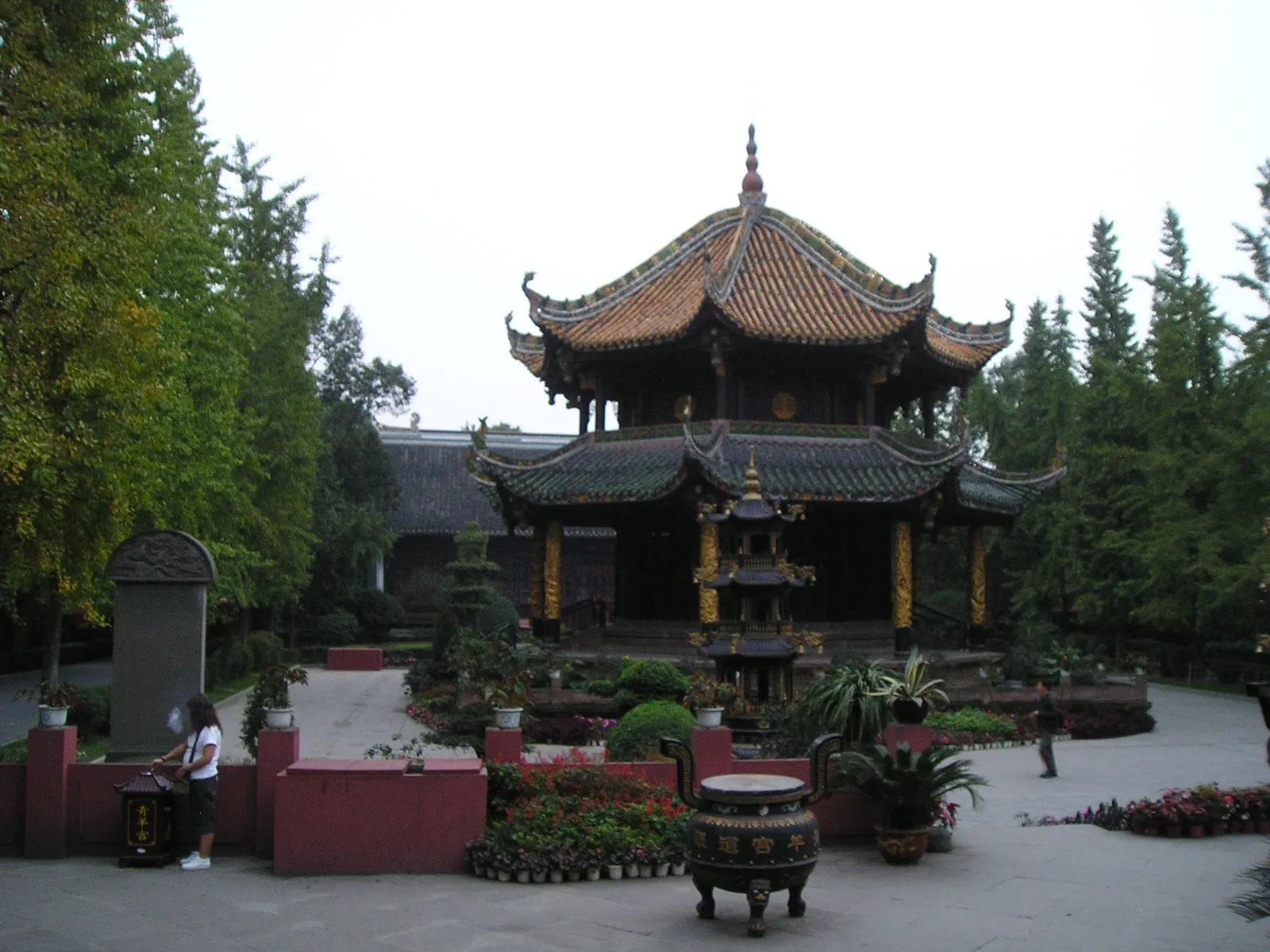
Where to see it in China
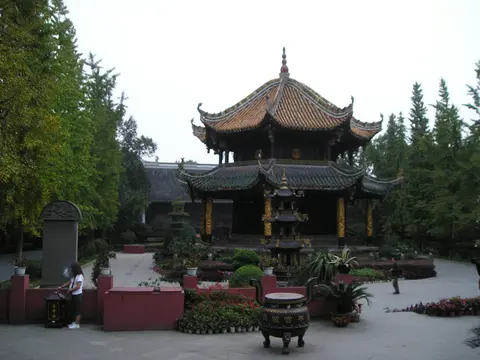 ChengduQingyang Palace 青羊宫Chengdu’s oldest and largest Taoist temple, still active; find the bronze goats in the Hall of the Three Pure Ones.
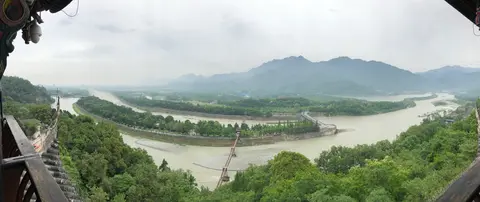 ChengduDujiangyan and Mount Qingcheng 都江堰与青城山Mount Qingcheng, a forested UNESCO-listed mountain counted among the cradles of religious Taoism, with temples along its paths.
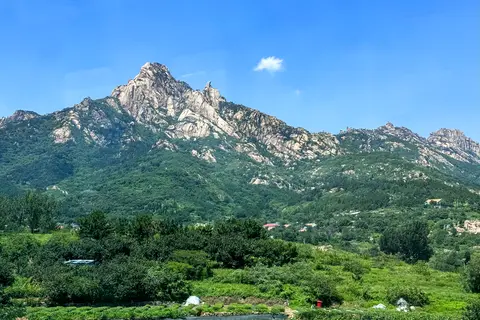 QingdaoLaoshan Mountain 崂山Granite peaks above the sea with old Taoist temples; the Taiqing area has the seaside temple.
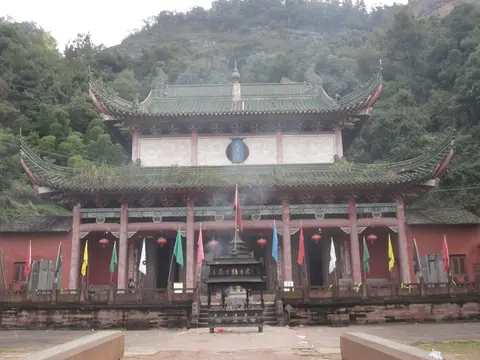 HuangshanMount Qiyun 齐云山One of China’s four sacred Taoist mountains, with red cliffs, inscriptions and a village of temples near the top.
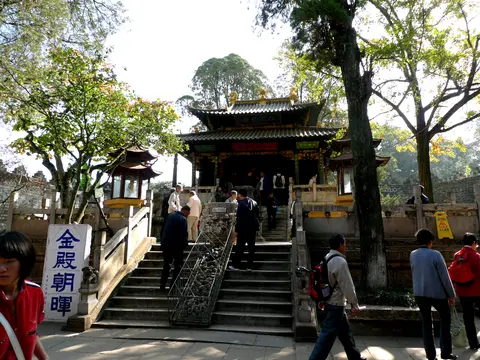 KunmingGolden Temple (Jindian) 金殿A 17th-century Taoist hall cast entirely in bronze, in a pine-covered hill park.
Where we mention it
Related entries
Sources
- Daoism — Encyclopaedia Britannica (britannica.com)
- Mount Qingcheng and the Dujiangyan Irrigation System — UNESCO World Heritage Centre (whc.unesco.org)
- Taoism — Wikipedia (en.wikipedia.org)