
Han dynasty
汉朝Hàncháo206 BC – AD 220
China’s second imperial dynasty (206 BC–AD 220), which gave the Han Chinese their name and opened the routes of the Silk Road.
The Han ruled China for about four centuries, with a short break from AD 9 to 23, and the period is so central that China’s majority people still call themselves Han, and Chinese characters are “Han characters” (hanzi). It was founded by Liu Bang, a commoner who rose in the rebellions after the fall of the Qin and became Emperor Gaozu. The capital was Chang’an (today’s Xi’an) under the Western Han and Luoyang under the Eastern Han. Han envoys such as Zhang Qian opened contacts with Central Asia along what became the Silk Road, Confucian learning became the basis of government, papermaking was improved, and Buddhism first reached China. Travellers today mostly meet the Han through its tombs: clay figures, jade, lacquer and silk from royal burials, plus ruined forts and wall sections on the desert frontier.
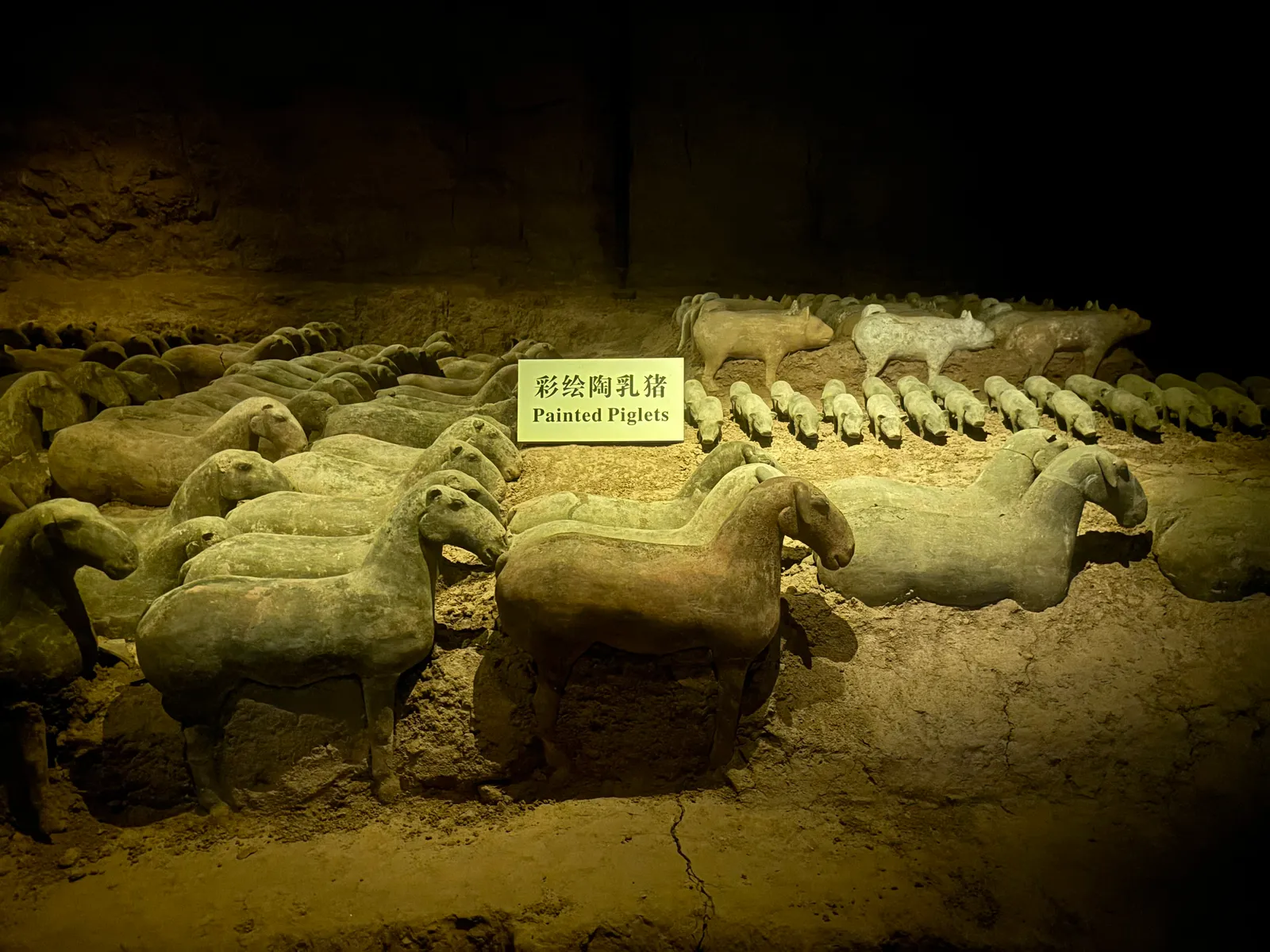
Where to see it in China
 Xi'anHanyangling Museum 汉景帝阳陵博物院(汉阳陵)The tomb of a Han emperor, where glass walkways pass over pits full of small clay figures.
 ChangshaHunan Museum 湖南博物院The Mawangdui Han tombs: Lady Xin Zhui’s preserved body, a featherlight silk robe, lacquerware and silk paintings.
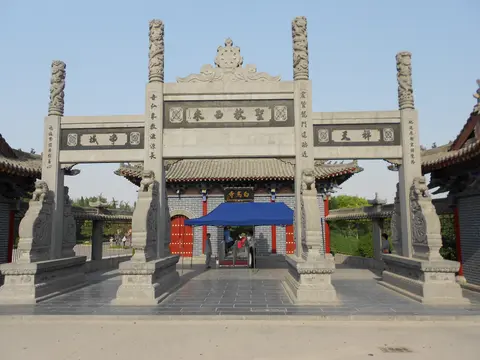 LuoyangWhite Horse Temple 白马寺Traditionally China’s first Buddhist temple, founded in the 1st century under the Eastern Han.
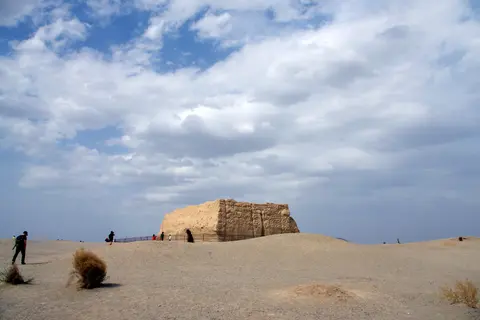 DunhuangYumen Pass (Jade Gate) 玉门关遗址A mud-brick frontier fort on the Silk Road, with Han dynasty Great Wall ruins nearby.
Where we mention it
Related entries
Sources
- Han dynasty — Encyclopaedia Britannica (britannica.com)
- Han dynasty — Wikipedia (en.wikipedia.org)