
Silk Road
丝绸之路Sīchóu zhī Lùc. 2nd century BC – 15th century
The network of trade routes that linked China with Central Asia, India, Persia and the Mediterranean for over 1,500 years.
The Silk Road was never one road but a web of caravan routes, opened up after the Han dynasty sent the envoy Zhang Qian to Central Asia in the 2nd century BC. From the capital Chang’an (today’s Xi’an) traders followed the Hexi Corridor in Gansu to the oasis of Dunhuang, then skirted the Taklamakan Desert to Kashgar and on over the mountains. Silk, and later porcelain, travelled west; horses, glass, silver, spices and grapes came east, and few merchants ever covered the whole distance. Just as important were ideas: Buddhism reached China this way, along with music, art and later Islam. The name itself is modern, coined as “Seidenstraße” by the German geographer Ferdinand von Richthofen in 1877, and in 2014 the Chang’an–Tianshan corridor was listed by UNESCO as a World Heritage site.
Also known as: Silk Routes
Where to see it in China
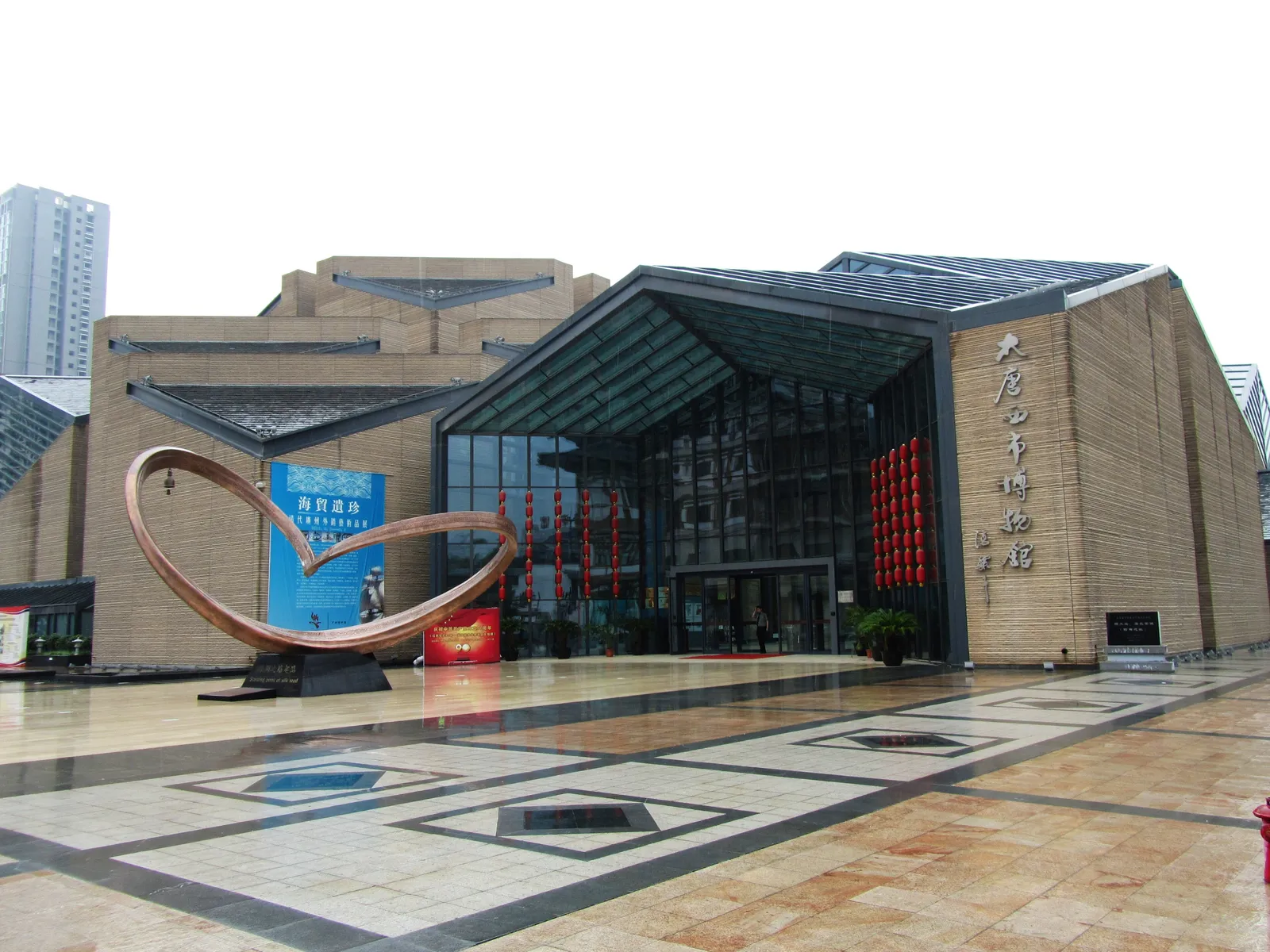
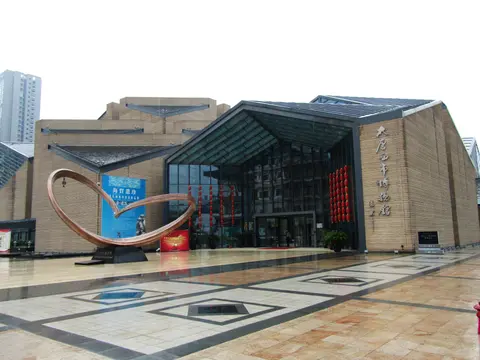 Xi'anTang West Market Museum 大唐西市博物馆Excavated streets of the Tang capital’s West Market, the eastern end of the Silk Road, with coins from many countries.
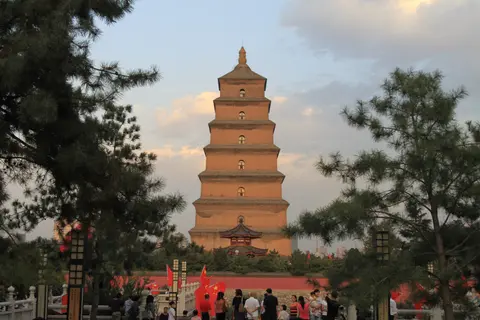 Xi'anBig Wild Goose Pagoda 大雁塔A Tang pagoda built for scriptures carried back along the Silk Road, part of the UNESCO Silk Roads listing.
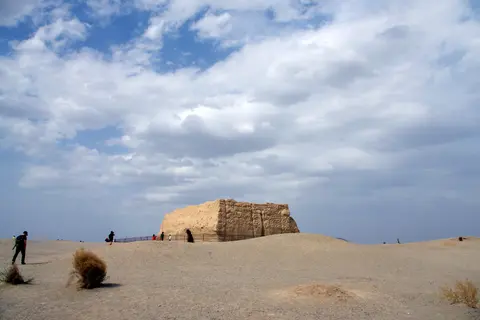 DunhuangYumen Pass (Jade Gate) 玉门关遗址The Jade Gate fort on the western frontier, with Han dynasty Great Wall ruins nearby.
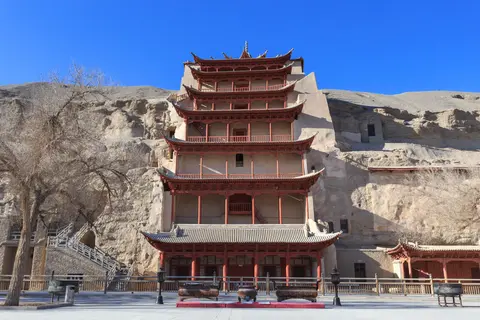 DunhuangMogao Caves 莫高窟Hundreds of painted Buddhist caves created over a thousand years at a great Silk Road oasis.
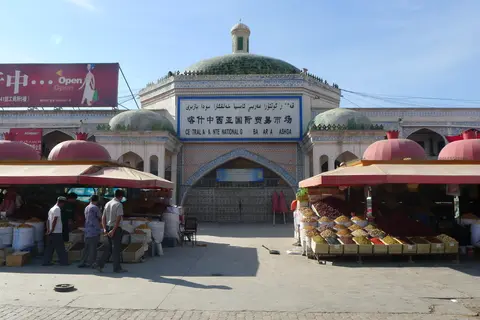 KashgarKashgar Grand Bazaar 喀什国际大巴扎A huge market in the old oasis city where routes met before crossing the Pamirs, still selling spices, carpets and dried fruit.
Where we mention it
- The monk who walked to India Zouzou Stories · Travelers of the past
- How many days in China? What fits in 7, 10 and 14 days Travel guides
- China National Silk Museum Hangzhou
- Dunhuang Museum Dunhuang
- Yangguan Pass Dunhuang
- Encore Dunhuang (immersive show) Dunhuang
- Suoyang City Ruins Dunhuang
- Zhangye Museum Zhangye
- Biandukou (rapeseed fields and mountain pass) Zhangye
- Shandan Han and Ming Great Wall Zhangye
Related entries
Sources
- Silk Roads: the Routes Network of Chang’an-Tianshan Corridor — UNESCO World Heritage Centre (whc.unesco.org)
- Mogao Caves — UNESCO World Heritage Centre (whc.unesco.org)
- Silk Road — Wikipedia (en.wikipedia.org)