
Porcelain
瓷器cíqì
The hard, white, high-fired ceramic that China invented; Jingdezhen has made it for a thousand years, and English simply calls it “china”.
Porcelain is a hard, white, often translucent ceramic fired at very high temperatures, and it was invented in China: early forms appeared under the Han dynasty, and true white porcelain was being made by the Tang. Its key ingredients are porcelain stone and kaolin, a white clay named after Gaoling village near Jingdezhen, fired at around 1,300 °C. Under the Song dynasty, kilns across China perfected subtle glazes such as jade-green celadon, and in the Yuan dynasty potters in Jingdezhen began painting in cobalt blue, creating the famous blue-and-white ware. From the Ming dynasty on, an imperial kiln there made porcelain for the court, while huge quantities were shipped to the rest of Asia, the Middle East and Europe. So much reached the West that in English the material itself came to be called simply “china”.
Where to see it in China
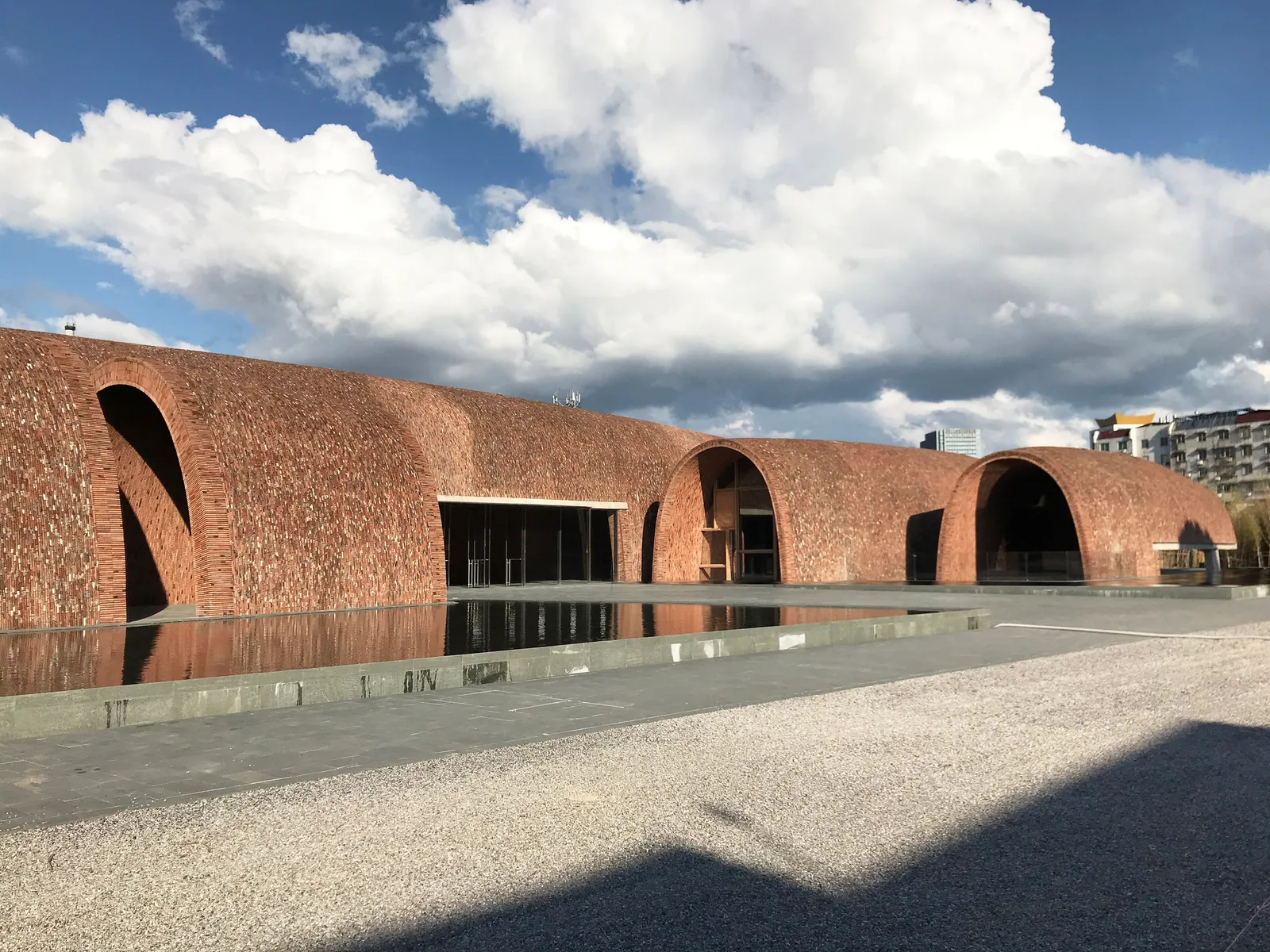
 JingdezhenImperial Kiln Museum & Imperial Kiln Site Park 御窑博物馆 · 御窑厂国家考古遗址公园The site where porcelain for the Ming and Qing emperors was fired, with excavated kilns and a museum of imperial wares.
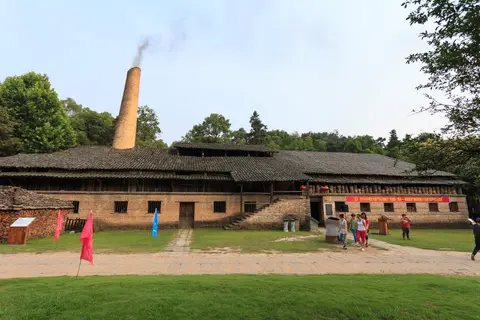 JingdezhenAncient Kiln Folk Custom Museum 古窑民俗博览区Rebuilt Song-to-Qing kilns still fired with wood, and craftsmen throwing and painting porcelain by hand.JingdezhenGaoling Village (home of “kaolin”) 高岭村 · 高岭国家矿山公园The hill village that gave the world the word “kaolin”, with old clay pits, water-powered mills and a stone dock.JingdezhenHands-on pottery class (The Pottery Workshop and others) 乐天陶社陶艺体验课Try the wheel or paint your own blue-and-white piece with local masters.
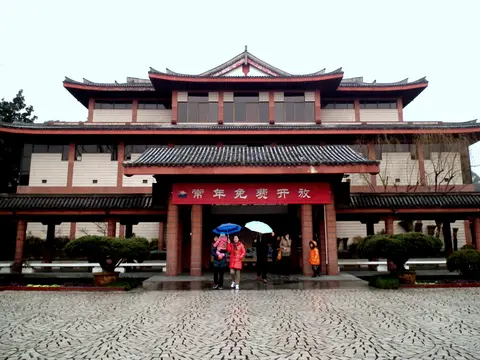 HangzhouZhejiang Provincial Museum (Solitary Hill) 浙江省博物馆孤山馆区A free museum on West Lake with fine celadon ceramics from Zhejiang’s historic kilns.
Where we mention it
Related entries
Sources
- Porcelain — Encyclopaedia Britannica (britannica.com)
- Jingdezhen — Encyclopaedia Britannica (britannica.com)
- Chinese ceramics — Wikipedia (en.wikipedia.org)