
Ming dynasty
明朝Míngcháo1368–1644
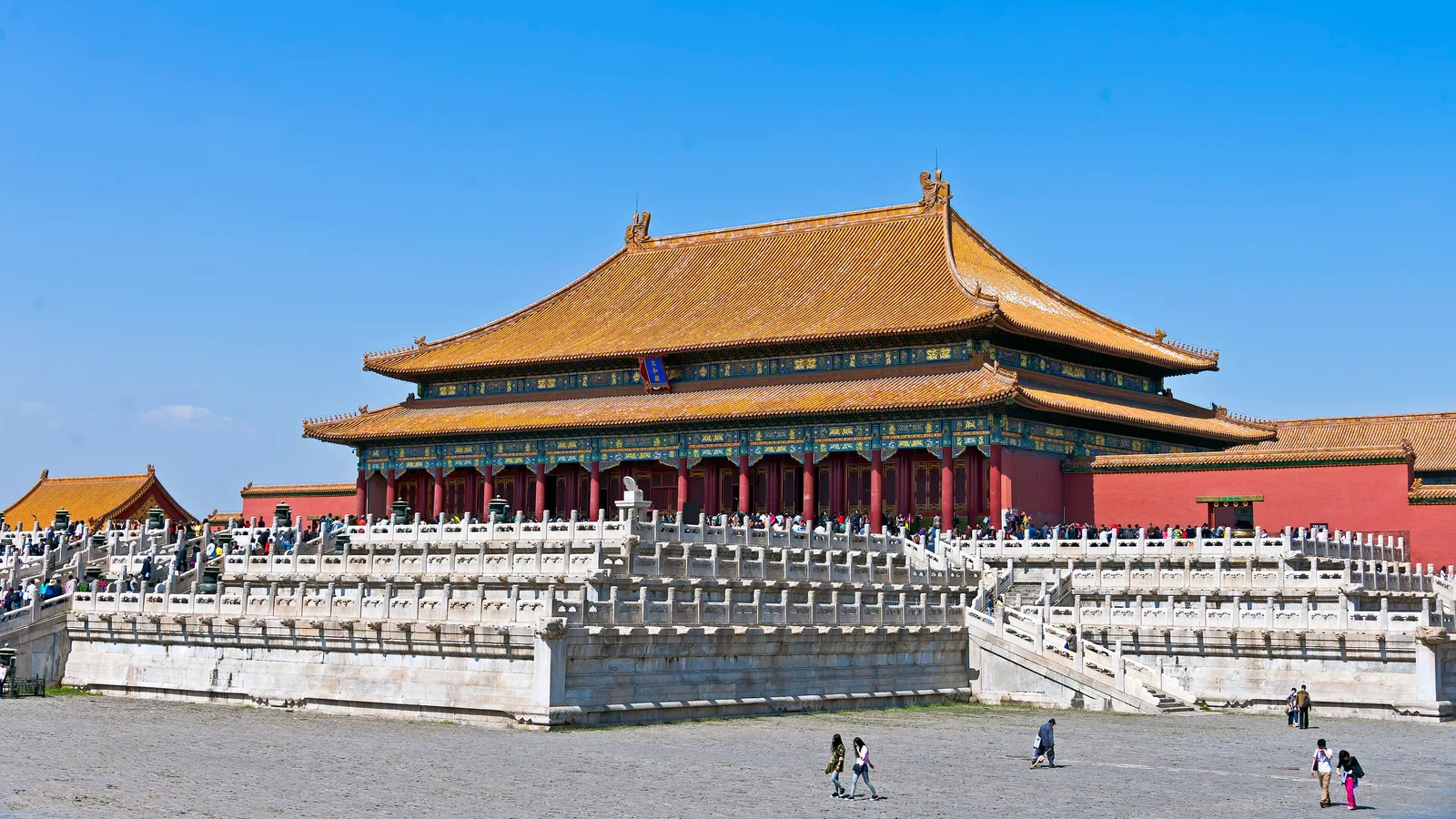
The dynasty (1368–1644) that built the Forbidden City and most of the Great Wall seen today, ruling first from Nanjing and then Beijing.
The Ming was founded in 1368 by Zhu Yuanzhang, a man from a poor farming family who rose through the rebellions against the Mongol Yuan dynasty and ruled from Nanjing as the Hongwu Emperor. His son, the Yongle Emperor, moved the capital to Beijing, where the Forbidden City was completed in 1420, and sent Admiral Zheng He on great fleet voyages across the Indian Ocean. Much of what visitors picture as “old China” is Ming: most of the brick Great Wall near Beijing, the Temple of Heaven, many surviving city walls and the blue-and-white porcelain of Jingdezhen. The dynasty ended in 1644, when rebels captured Beijing and the last Ming emperor took his own life; the Manchu Qing then took the city. Ming emperors’ tombs can be visited in both Nanjing and Beijing.
Where to see it in China
 BeijingForbidden City (Palace Museum) 故宫博物院The imperial palace the Yongle Emperor completed in 1420, home to Ming and later Qing emperors.
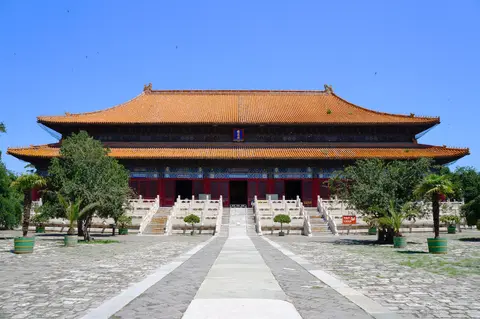 BeijingMing Tombs 明十三陵The valley where 13 Ming emperors are buried, with the great hall at Changling and an underground palace at Dingling.
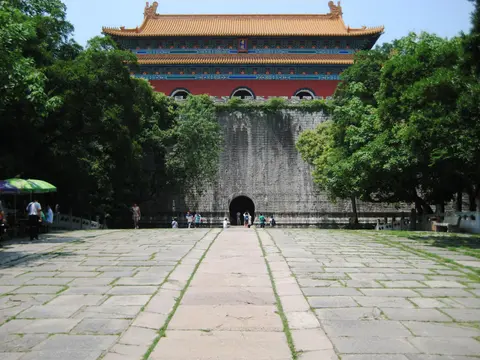 NanjingMing Xiaoling Mausoleum 明孝陵The tomb of the founding Hongwu Emperor, approached by a Sacred Way of stone animals and officials.
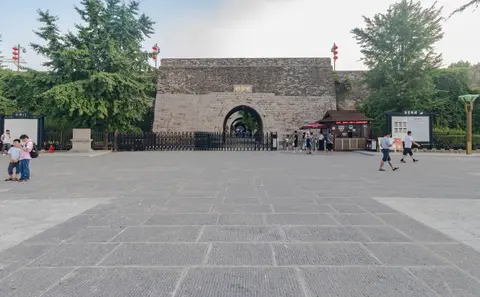 NanjingMing City Wall and Zhonghua Gate 南京城墙·中华门The wall of the first Ming capital, the longest surviving city wall in China, with the vast Zhonghua Gate.
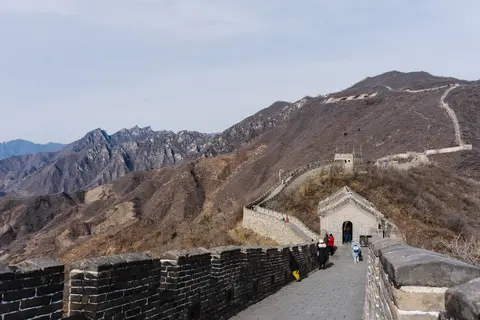 BeijingMutianyu Great Wall 慕田峪长城A restored, forested stretch of the brick Ming wall, with a cable car and toboggan.
Where we mention it
- Marco Polo’s City of Heaven Zouzou Stories · Travelers of the past
- The monk who walked to India Zouzou Stories · Travelers of the past
- Yu Garden Shanghai
- Jingjiang Princes’ City and Solitary Beauty Peak Guilin
- Daxu old town Guilin
- Guilin Museum Guilin
- Humble Administrator’s Garden Suzhou
- Dali Old Town Dali
- Shaxi Ancient Town Dali
- Baisha village and murals Lijiang
Related entries
Sources
- Ming dynasty — Encyclopaedia Britannica (britannica.com)
- Imperial Tombs of the Ming and Qing Dynasties — UNESCO World Heritage Centre (whc.unesco.org)
- Ming dynasty — Wikipedia (en.wikipedia.org)