
Hutong
胡同hútòng
The narrow lanes of old Beijing, lined with grey-brick courtyard houses; walking or cycling them is the best way to see everyday city life.
A hutong is a lane between rows of traditional courtyard houses, the basic fabric of old Beijing; the word is often said to come from Mongolian, and many lanes date back to the Yuan dynasty, when the city was laid out as the capital Dadu. Most run east–west, so that the houses along them can face south toward the sun. Hutong names record their history: some recall markets, crafts or officials once based there, and a few are barely wider than a person’s shoulders. Much of the old maze has been replaced by the modern city, but protected areas around Shichahai, Nanluoguxiang and the Drum Tower still hold lanes where neighbours chat, cook and play chess outside their gates. Explore on foot, by bike or by pedicab, and remember that these are homes: keep your voice down and ask before photographing people.
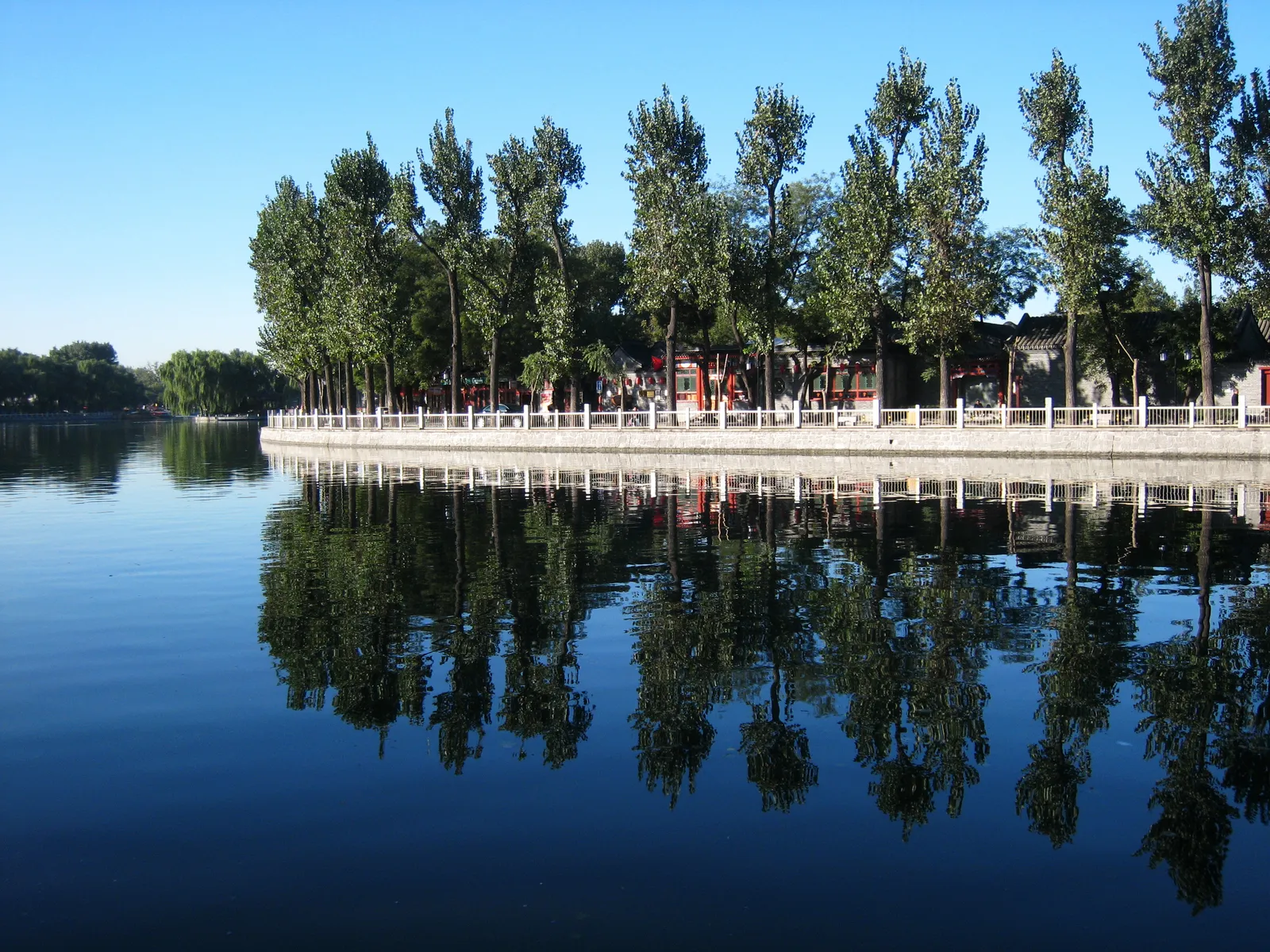
Where to see it in China
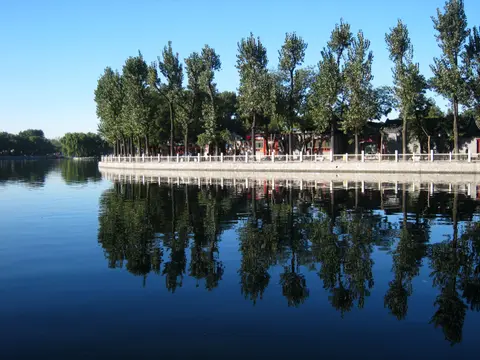 BeijingShichahai and Houhai hutongs 什刹海Old hutong alleys and courtyard homes around three linked lakes; best walked or cycled by day.
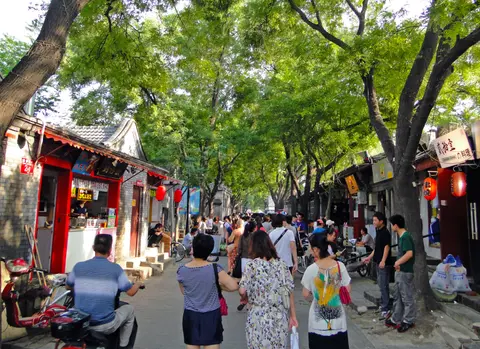 BeijingNanluoguxiang 南锣鼓巷An 800-metre Yuan-dynasty hutong, now busy with snack shops; the side lanes such as Mao’er Hutong are quieter.
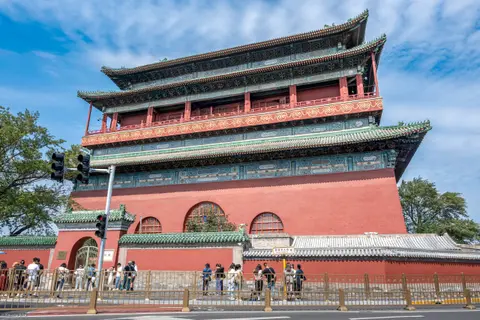 BeijingDrum and Bell Towers 北京钟鼓楼The old timekeeping towers stand among hutongs; walk here from Nanluoguxiang through the lanes.
Where we mention it
Related entries
Sources
- Beijing: Cultural life — Encyclopaedia Britannica (britannica.com)
- Hutong — Wikipedia (en.wikipedia.org)