
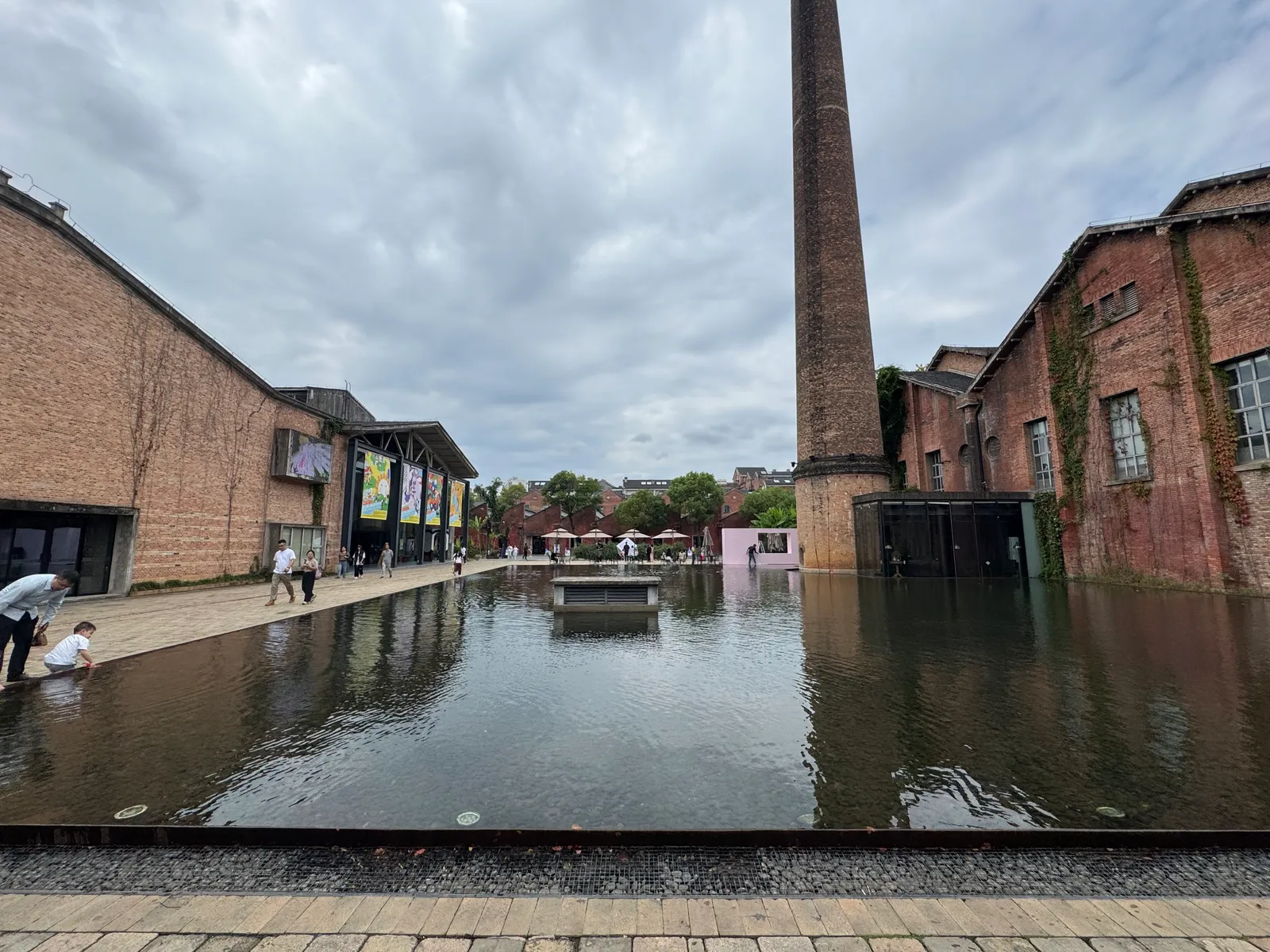
Taoxichuan Ceramic Art Avenue
陶溪川文创街区 · Táoxīchuān Wénchuàng Jiēqū
A state porcelain factory turned creative district: brick workshops, chimneys and an old tunnel kiln now hold galleries, studios, cafés and Jingdezhen’s biggest weekend craft market.
No booking neededHalf a day; come back for the evening market
Tip
Come Friday to Sunday from late afternoon for the market, when hundreds of young potters set out their work. Prices are fair and haggling is gentle; ask makers whether they ship abroad.
- Opening hours
- Streets open all day. Creative market Fri–Sun about 15:30–21:30. CAFA Taoxichuan Art Museum Tue–Sun 09:00–21:00 (last entry 20:30). To be confirmed
- Price
- Free to enter the district and the market. The art museum and some exhibitions charge a small fee. To be confirmed
- How to book
- Just walk in. Buy art-museum tickets at the door.
- Getting there
- Bus 901 from Jingdezhen North Station to Taoxichuan south gate (about 25 min), or a taxi for about ¥20 To be confirmed
- Address in Chinese
- 江西省景德镇市珠山区新厂西路150号
Photo: Simon Wade · CC BY-SA 4.0
From other travelers
Write a reviewSources
Checked against these sources on 2026-10-02. Rules change often, so confirm on the official site before you go.
Not yet confirmed by an official source: Opening hours, Price, Getting there
More in Jingdezhen
御窑博物馆 · 御窑厂国家考古遗址公园Imperial Kiln Museum & Imperial Kiln Site ParkThe site where porcelain for the Ming and Qing emperors was made for about 600 years, with excavated kilns and a striking brick-vaulted museum full of imperial wares and restored shards.古窑民俗博览区Ancient Kiln Folk Custom MuseumA wooded open-air museum where rebuilt Song, Yuan, Ming and Qing kilns are still fired with wood, and old craftsmen throw, trim and paint porcelain by hand in Qing workshops.景德镇中国陶瓷博物馆China Ceramics MuseumChina’s first large museum devoted to ceramics, with more than 50,000 pieces tracing Chinese pottery and porcelain from Neolithic times to today, plus international ceramics.陶阳里历史文化旅游区Taoyangli Historic DistrictThe old porcelain town around the Imperial Kiln: brick lanes, merchants’ guild halls, Ming–Qing kiln workshops, Longzhu Pavilion on Zhushan hill and the restored Zhongshan North Road.