
Vegetarian and vegan in China: how to eat well without meat
Buddhist vegetarian restaurants, the hidden lard, stock and oyster sauce to watch for, safe dishes to order and the Chinese phrases that work.
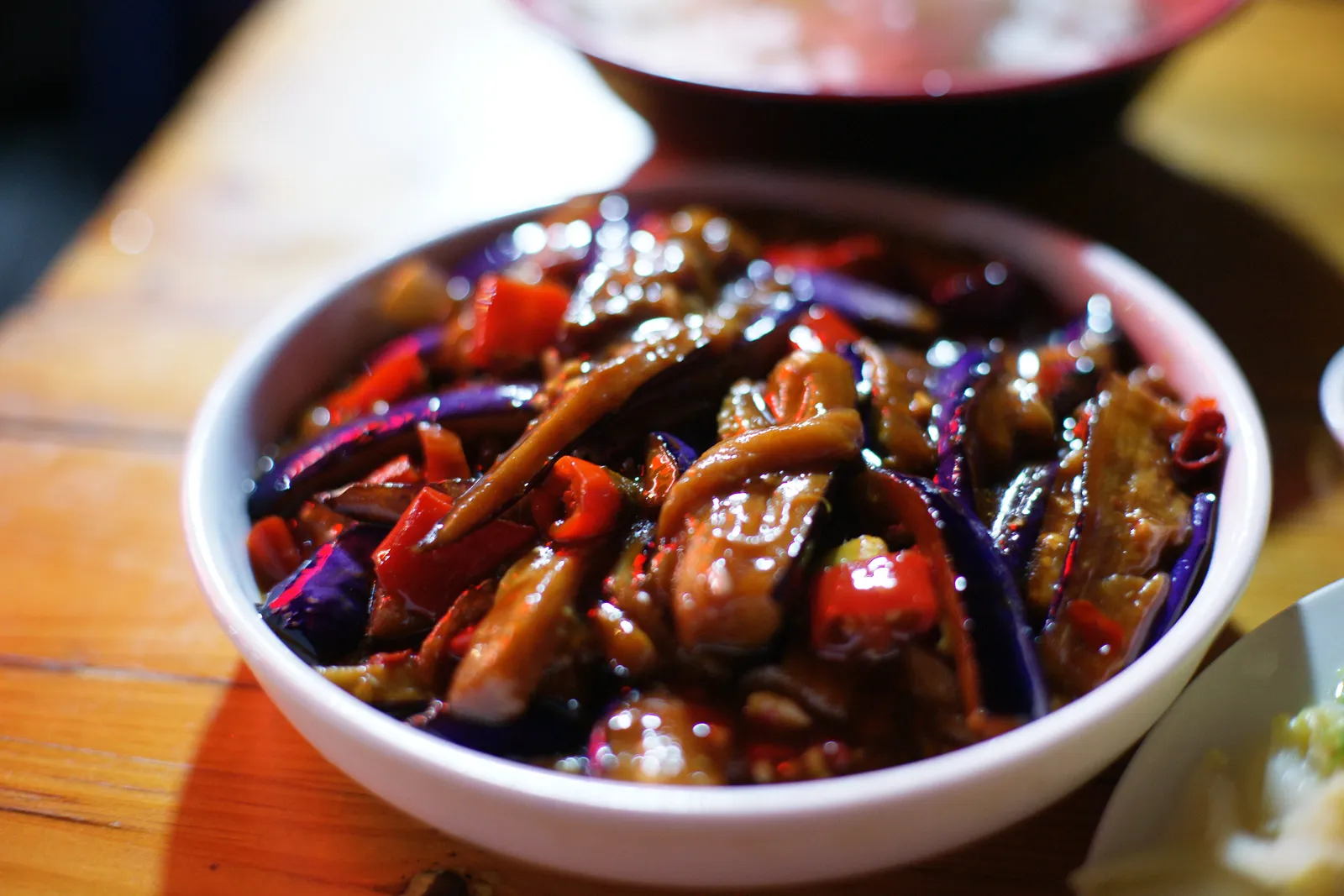
China has one of the oldest vegetarian cooking traditions in the world, thanks to Buddhism. At the same time, everyday Chinese cooking uses meat as a seasoning, so a dish of green beans or eggplant can arrive with minced pork in it. Eating vegetarian is very doable. It just takes a few words and some knowledge of where meat hides.
Buddhist vegetarian restaurants
Look for restaurants with 素食 (sùshí, vegetarian food) or 素菜馆 in the name. Many are near large temples, and some temples run their own dining halls that are open to visitors. They serve inventive dishes, including “mock meat” made from tofu, gluten and mushrooms that imitates duck, fish or pork. Shanghai’s Gongdelin, open since 1922, is one of the best known.
These places are the easiest option for vegans too, because traditional Buddhist cooking leaves out meat, fish and eggs, and rarely uses dairy. Strict Buddhist kitchens also avoid garlic, onions, leeks and chives, so the food tastes milder than you might expect.
To find them, search for 素食 in the Dianping or Meituan mini-programs inside Alipay or WeChat (see the apps you need), or on Amap.
Where meat hides
In ordinary restaurants, “no meat” is often understood as “no chunks of meat”. Watch for:
- Lard (猪油, zhūyóu), still used for frying and in some pastries and noodle soups
- Meat stock (高汤 or 肉汤) in soups, noodle broths and braised vegetables
- Oyster sauce (蚝油), standard on Cantonese greens such as lettuce in oyster sauce
- Chicken powder (鸡精), a common seasoning that tastes like bouillon
- Dried shrimp (虾皮) in soups, fillings and cold dishes
- Minced pork in dishes that sound vegetarian: yu-shiang eggplant, dry-fried green beans and mapo tofu
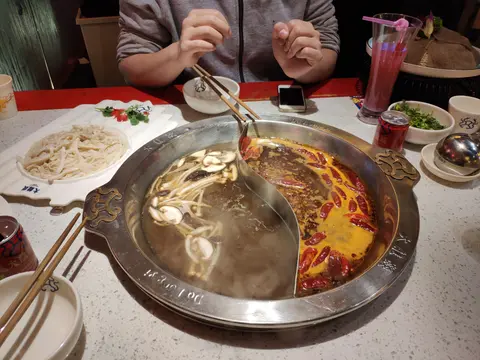
- Beef tallow in spicy Sichuan and Chongqing hot pot broths. Ask for a mushroom broth (菌汤锅) instead.
Dishes that are usually vegetarian
Ask anyway, but these are good bets in most restaurants:
- Tomato and scrambled eggs, a national comfort food (not vegan)
- Stir-fried seasonal greens and garlic broccoli
- Hot and sour shredded potato
- Smashed cucumber salad
- Plain steamed buns, steamed rice and soy milk with fried dough sticks for breakfast
Vegans have one advantage: traditional Chinese cooking uses little butter, milk or cheese. Eggs are the main thing to ask about.
Phrases that work
Our help cards have full-screen vegetarian and vegan cards in Chinese that mention stock, lard and oyster sauce, which is more reliable than a single word. Short phrases for the table:
- 我吃素 (wǒ chī sù): I’m vegetarian
- 不要肉 (bú yào ròu): no meat
- 不要猪油 (bú yào zhūyóu): no lard
- 不要肉汤 (bú yào ròutāng): no meat stock
- 不要鸡蛋 (bú yào jīdàn): no eggs
- 有素菜吗? (yǒu sùcài ma?): do you have vegetable dishes?
Practical tips
- Many people in China eat vegetarian on certain Buddhist days, so the word 素 is widely understood.
- Mock-meat dishes are usually made with wheat gluten. If you are also avoiding gluten, read our guide to food allergies in China.
- Big cities have modern vegan cafés; smaller towns rely on home-style dishes and temples.
- Instant noodles and packaged snacks often contain meat extracts. Check ingredient lists for 牛肉, 鸡肉, 猪肉 or 肉.
Sources
- Buddhist cuisine (overview of Chinese Buddhist vegetarian cooking) (en.wikipedia.org)
- HappyCow: Gongdelin (Godly), Shanghai (happycow.net)
Checked against these sources on 2026-09-27. Rules change often, so confirm on the official site before you go.
Read next
More on Food
 Chinese regional cuisines: a traveler’s guide to what to eat whereSichuan, Cantonese, Beijing, Shanghai, Hunan, Xi’an, Yunnan: how each regional cuisine tastes and the signature dishes to order when you are there.
 How to order food in China: QR menus, pointing and payingTable QR codes that open WeChat or Alipay, asking for a paper menu, picture menus, translating dishes, sharing, paying and why you do not tip.
 Food allergies in China: peanuts, shellfish, gluten and what to sayWhere peanuts, shellfish and gluten hide in Chinese food, why soy sauce matters, the truth about MSG, allergy cards in Chinese and what to do in an emergency.