
How to order food in China: QR menus, pointing and paying
Table QR codes that open WeChat or Alipay, asking for a paper menu, picture menus, translating dishes, sharing, paying and why you do not tip.
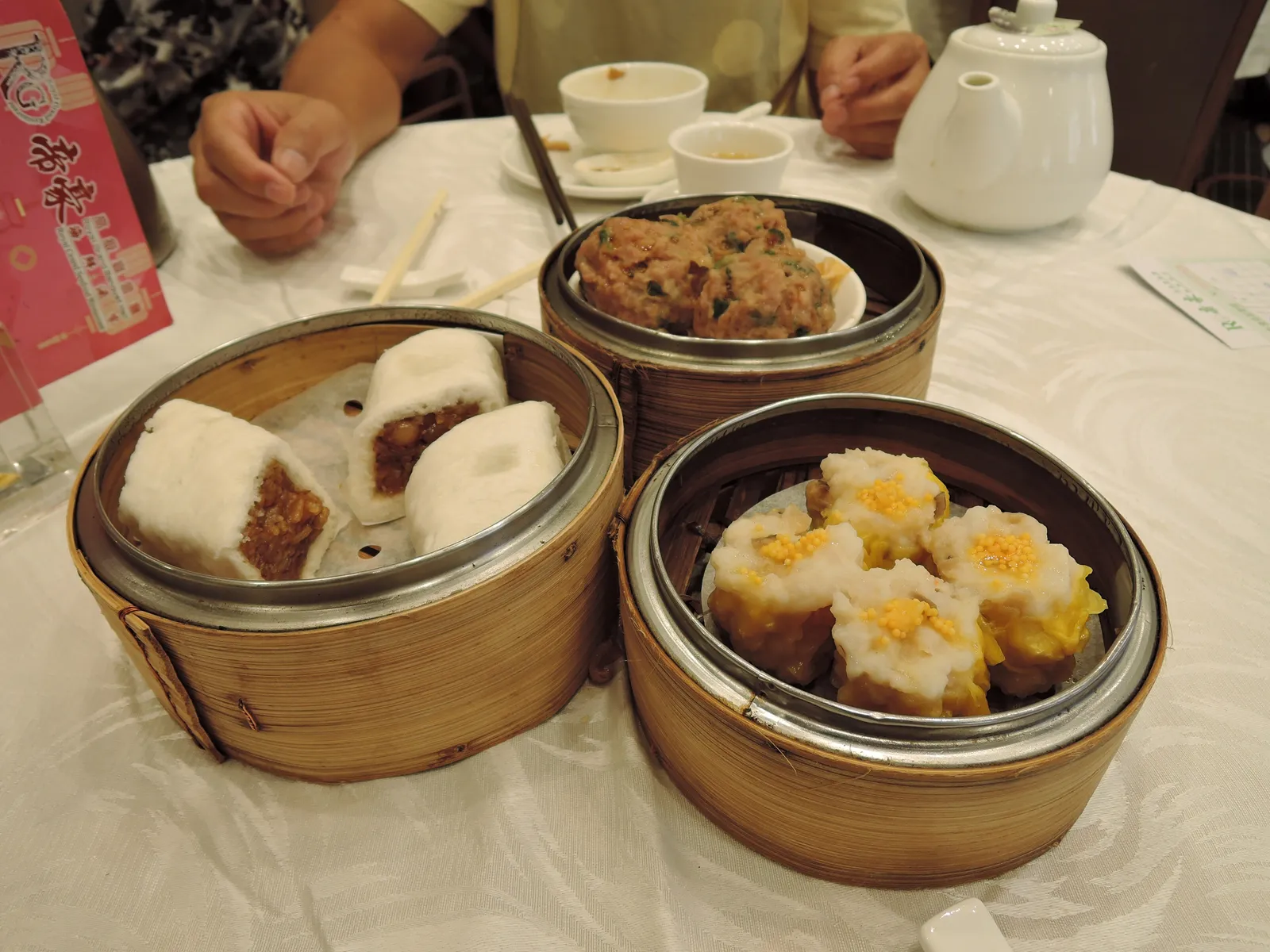
Ordering in a Chinese restaurant is easier than it looks, even if you cannot read a word. The biggest surprise for most visitors is not the language but the QR code on the table. Here is how a typical meal works.
Finding a table and getting the menu
In most casual restaurants you simply walk in and sit at any free table. In busy places, a host may give you a number; you wait until it is called or shown on a screen. Staff do not usually bring the menu over and wait. Instead, you will find one of these:
- A QR code stuck to the table. You scan it with WeChat or Alipay, and a menu opens as a mini-program. You add dishes, submit the order and often pay at the same time.
- A paper or picture menu, sometimes a big board on the wall, sometimes a laminated sheet with photos.
- A counter where you order and pay first, then take a number or a buzzer. This is common for noodle shops and fast food.
How to handle QR-code ordering
If you have set up Alipay or WeChat with a foreign card (see paying in China), scanning usually works. Many menus have an English option or photos. Some mini-programs ask for a Chinese phone number, and that is where foreigners get stuck.
You can also call a waiter and point. Most staff will happily take your order the old-fashioned way.
Choosing dishes without reading Chinese
- Point at photos on the menu or wall.
- Point at other tables. It is normal and nobody will mind.
- Use camera translation in a translation app. Dish names are often poetic, so results can be odd. Our menu translator lets you search a dish by its Chinese characters, pinyin or English name and shows what it usually contains and how spicy it is.
- Ask for the specialty: 你们的招牌菜是什么? (nǐmen de zhāopáicài shì shénme?), “what’s your signature dish?”
If you have allergies or do not eat meat, show a help card before you order.
How much to order
Chinese meals are shared. Everyone takes food from the dishes in the middle with their own chopsticks. A good rule is one dish per person, plus rice, and a mix of meat, vegetables and something mild. Rice (米饭, mǐfàn) is often ordered separately, per bowl, and sometimes arrives at the end unless you ask for it with the dishes.
Portions in many restaurants are large. Taking leftovers home is normal: ask for 打包 (dǎbāo).
Small charges you may see
- A sealed set of plates and cups (消毒餐具), usually a yuan or two per person.
- Tea: often free, but some restaurants charge per person or per pot.
- Hot water is free almost everywhere. Ice water is less common.
Paying
In QR-ordering restaurants you often pay in the mini-program when you order. Otherwise, pay at the counter as you leave, or call for the bill: 买单 (mǎidān). Most places take Alipay and WeChat Pay. Larger restaurants and hotels may accept foreign cards; small ones often do not. Keep some cash as a backup.
Tipping
Tipping is not expected in mainland China, in restaurants, taxis or hotels. Staff may be confused or run after you with your change. Some upmarket restaurants add a service charge, which will be printed on the bill.
Useful words
- 服务员 (fúwùyuán): waiter, to get attention
- 这个 (zhège): this one, while pointing
- 不要辣 (bú yào là): not spicy
- 买单 (mǎidān): the bill, please
More in our list of basic Chinese phrases, and see our regional cuisines guide for what to order where.
Sources
- China Daily: Shanghai cyberspace office guidance on scan-to-order dining (paper menus required alongside QR ordering) (china.chinadaily.com.cn)
- Beijing Consumers Association: restaurants must not force QR-code ordering (Southern Metropolis Daily, May 2023) (m.mp.oeeee.com)
- Cathay Pacific: a complete guide to tipping in the Chinese mainland (cathaypacific.com)
Checked against these sources on 2026-09-27. Rules change often, so confirm on the official site before you go.
Read next
More on Food
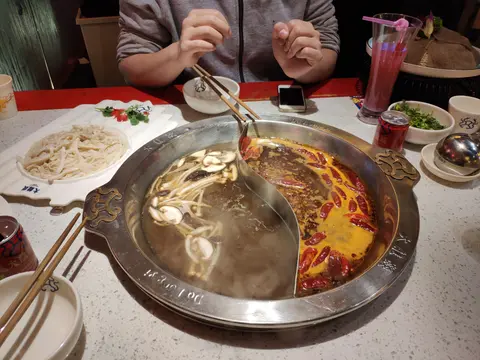 Chinese regional cuisines: a traveler’s guide to what to eat whereSichuan, Cantonese, Beijing, Shanghai, Hunan, Xi’an, Yunnan: how each regional cuisine tastes and the signature dishes to order when you are there.
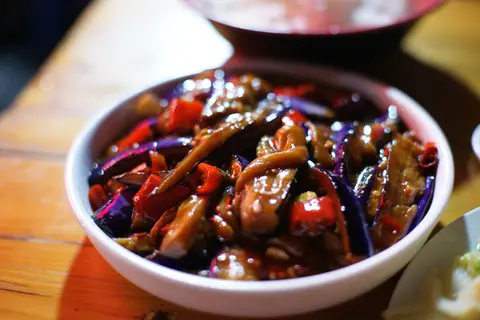 Vegetarian and vegan in China: how to eat well without meatBuddhist vegetarian restaurants, the hidden lard, stock and oyster sauce to watch for, safe dishes to order and the Chinese phrases that work.
 Food allergies in China: peanuts, shellfish, gluten and what to sayWhere peanuts, shellfish and gluten hide in Chinese food, why soy sauce matters, the truth about MSG, allergy cards in Chinese and what to do in an emergency.