
Tibetan Buddhism
藏传佛教Zàngchuán FójiàoFrom the 7th century
The form of Buddhism that grew in Tibet from the 7th century, known for its monasteries, prayer wheels, thangka paintings and pilgrim circuits.
Buddhism reached Tibet from India and China from the 7th century; according to tradition, Lhasa’s Jokhang was founded then to house a Buddha statue brought by a royal bride. Over the following centuries Indian masters and Tibetan translators built a tradition of its own, rich in ritual, meditation and art, and several schools grew up, including the Gelug, founded in the 14th–15th centuries by the scholar Tsongkhapa. Its painted scroll thangkas, mandalas, gilded statues and yak-butter sculptures are among the great religious arts of Asia, and the tradition also spread to Mongolia and to imperial courts: Qing emperors built Tibetan-style temples in Beijing and Chengde. What visitors notice first is practice: pilgrims walking the kora clockwise around a temple, spinning prayer wheels carved with the mantra *om mani padme hum*, prostrating at the gate and adding butter to the lamps. Follow their lead: walk clockwise, do not photograph inside the halls unless told you may, and ask before photographing people.
Where to see it in China
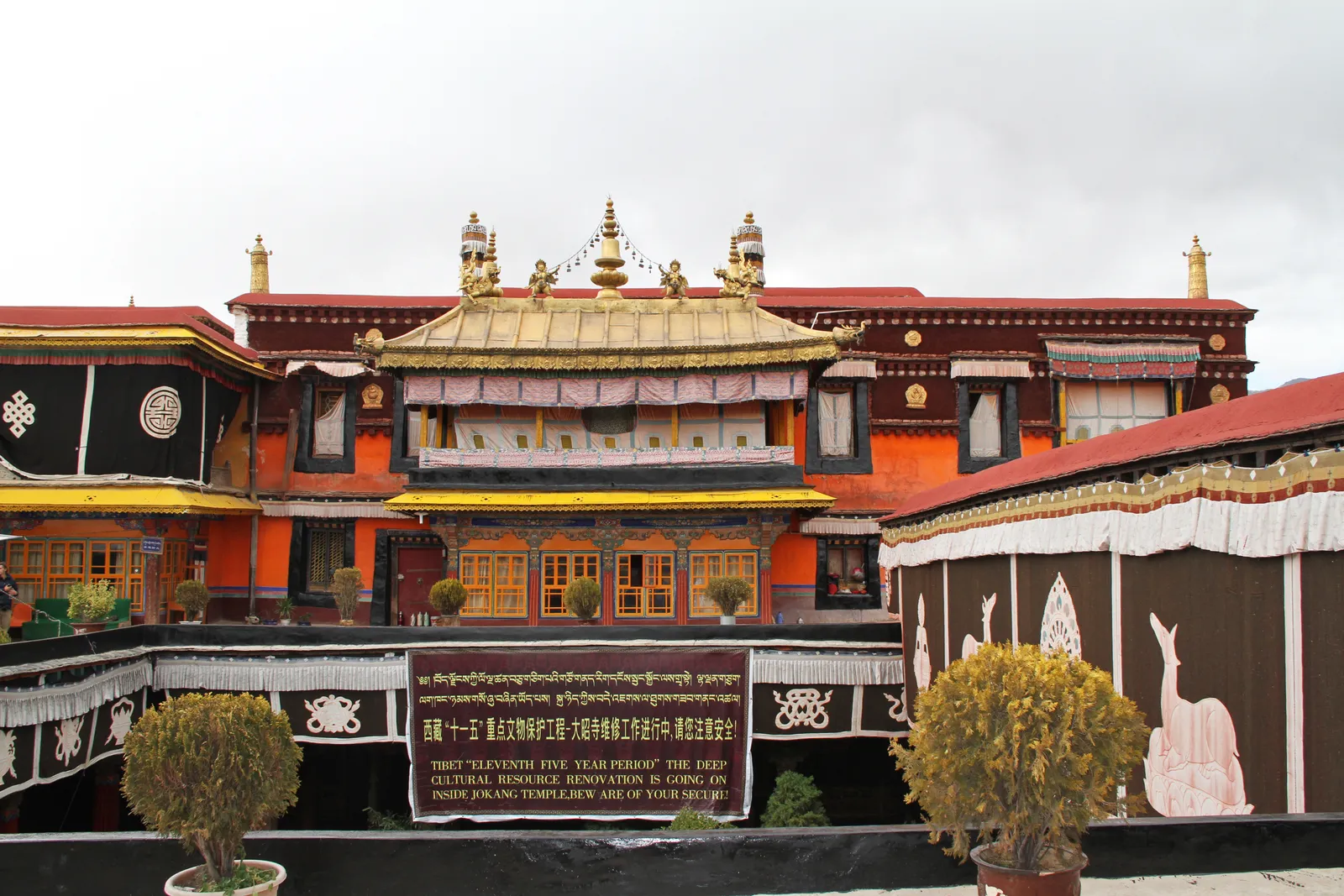
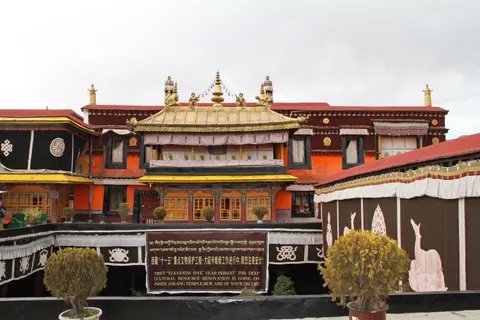 LhasaJokhang Temple 大昭寺Tibet’s most revered temple, from the 7th century, with pilgrims prostrating at the gate and the Barkhor circuit around it.
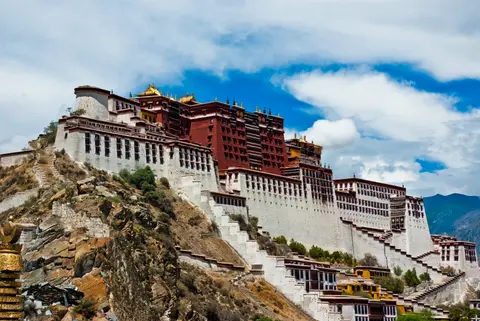 LhasaPotala Palace 布达拉宫The white and red palace above Lhasa, with chapels, gilded stupa tombs and murals on thirteen storeys.
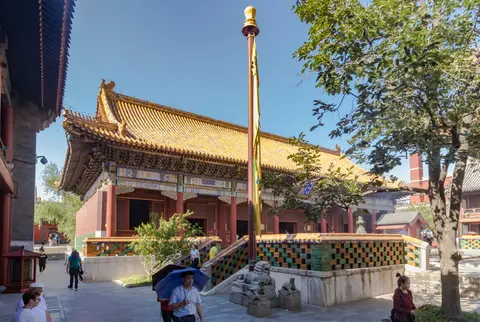 BeijingLama Temple (Yonghe Temple) 雍和宫Beijing’s largest active Tibetan Buddhist temple, with an 18-metre sandalwood Buddha.
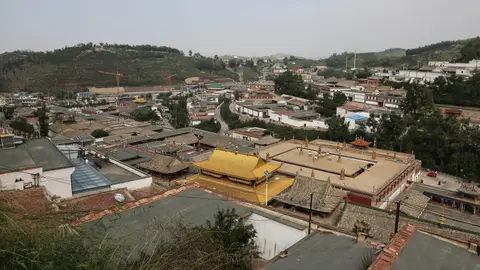 XiningKumbum Monastery (Ta’er Si) 塔尔寺A great Gelug monastery at Tsongkhapa’s birthplace, with golden roofs, eight white stupas and yak-butter sculptures.
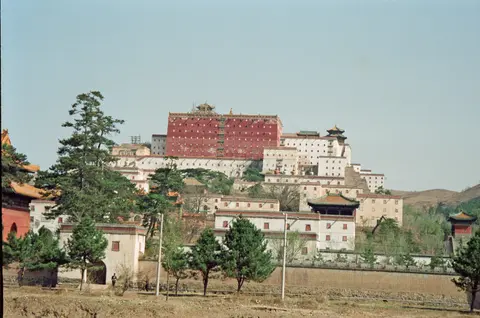 ChengdePutuo Zongcheng Temple (Little Potala) 普陀宗乘之庙A Qing-dynasty copy of the Potala Palace (1767–1771), with a great red terrace climbing the hillside.
Where we mention it
Related entries
Sources
- Tibetan Buddhism — Wikipedia (en.wikipedia.org)
- Historic Ensemble of the Potala Palace, Lhasa — UNESCO World Heritage Centre (whc.unesco.org)
- Mountain Resort and its Outlying Temples, Chengde — UNESCO World Heritage Centre (whc.unesco.org)