
China etiquette tips: tipping, chopsticks, temples and more
Practical etiquette for China: no tipping, chopstick manners, queues, what not to photograph, temples, gifts, bargaining and topics to handle with care.
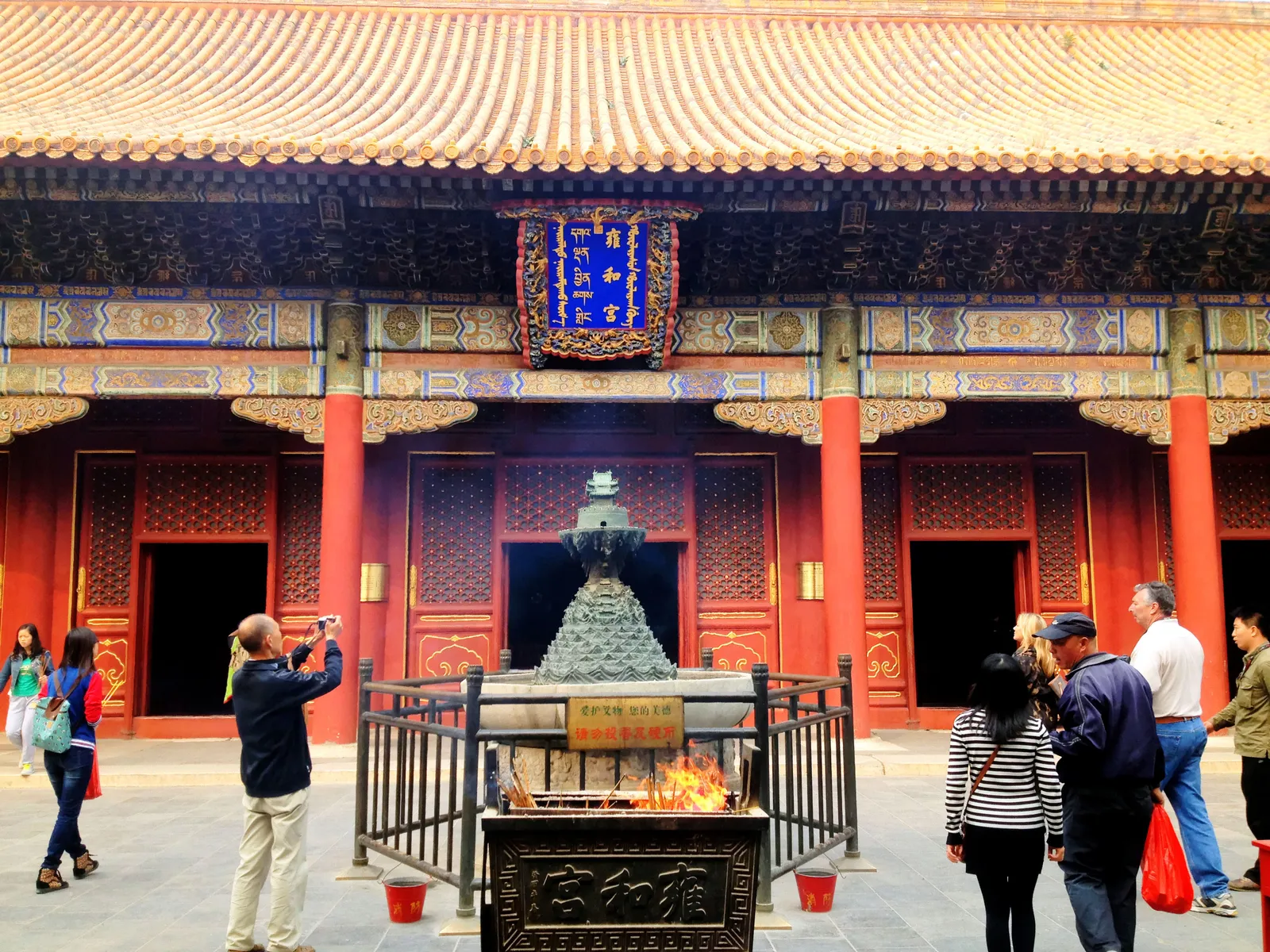
China is used to foreign visitors, and nobody expects you to know every custom. Friendliness and a little effort go a long way. Still, a few habits and a few rules are worth knowing before you go, because some of them are about the law, not just manners.
Money: tipping and bargaining
- Tipping is not expected in mainland China: not in restaurants, taxis or hotels. Staff may be confused if you leave money behind. Some upmarket restaurants add a service charge to the bill instead.
- Bargaining is normal at markets and at tourist stalls selling souvenirs, clothes, tea or antiques. Start well below the asking price, stay friendly and be willing to walk away. It is not done in shopping malls, supermarkets, chain stores or restaurants, where prices are fixed.
- When someone invites you for a meal, the host usually pays. Offering to pay is polite; a friendly tug of war over the bill is part of the ritual.
At the table
- Do not stand your chopsticks upright in a bowl of rice. It looks like incense sticks at a funeral. Rest them across your bowl or on the holder.
- Do not point at people with your chopsticks or tap them on your bowl.
- Dishes are shared. Use the serving chopsticks or spoon (公筷) if the table has them.
- If someone toasts you, lifting your glass is enough. Holding your glass slightly lower than an older person’s when clinking is a sign of respect.
- Hot water is the default drink for many people. Asking for cold water is fine.
See how to order food in China for the practical side of eating out.
Public behaviour
- Queues are usually orderly, especially on the metro, where lines are marked on the platform. At busy ticket windows, stand close to the person in front or someone may step in.
- People speak loudly and crowds are normal. Personal space is smaller than in many Western countries.
- Smoking indoors in public places is banned in big cities such as Beijing and Shanghai. Look for signs.
- Avoid causing someone to lose face. If something goes wrong, stay calm and polite; raising your voice rarely helps.
- A handshake is the usual greeting. Hugs and kisses on the cheek are not common between new acquaintances.
Photography
- Ask before photographing people, especially older people, children and monks.
- Do not photograph military sites, police, checkpoints, border areas or immigration halls. The UK government warns that restricted military areas exist where foreigners can be detained, fined or deported.
- Many museums and temple halls do not allow photos, or at least no flash. Follow the signs.
- Drones are strictly regulated; do not fly one without checking the rules first.
Temples and religious sites
- Dress modestly: cover shoulders and knees.
- Speak quietly and do not touch statues or offerings.
- Step over the raised threshold at the entrance of a hall, not on it.
- In Tibetan Buddhist areas, walk clockwise around temples and stupas.
- Distributing religious material or holding religious gatherings is restricted for foreigners. Personal worship is fine.
Gifts
If you visit someone’s home, bring a small gift, such as something from your country, fruit or good tea. Offer and receive gifts, and business cards, with both hands. The person may not open it in front of you. Avoid clocks, which sound like a phrase about death, and umbrellas or pears for couples, which suggest separation. Red and gold wrapping is always a safe choice.
Politics and the law
- Avoid demonstrations and large gatherings. Chinese law enforces public order strictly.
- Political topics, especially criticism of the government or questions of territory, are best left alone with people you do not know. Posting critical political statements online can be treated as illegal.
- Carry your passport at all times. Police can ask for it, and a copy is not accepted.
- Drug laws are very strict, with heavy penalties.
A few words of Chinese always help: start with our basic Chinese phrases.
Sources
- UK FCDO travel advice: China, safety and security (laws, photography, protests, passports) (gov.uk)
- Cathay Pacific: a complete guide to tipping in the Chinese mainland (cathaypacific.com)
Checked against these sources on 2026-09-27. Rules change often, so confirm on the official site before you go.
Read next
More on Practical tips
 30 basic Chinese phrases for travelers, with pinyinThirty essential Mandarin phrases in characters and pinyin: greetings, numbers, directions, ordering food, paying and asking for help, plus tones in brief.
 Hotels in China for foreigners: booking, check-in and registrationWhich hotels take foreign passports, how check-in and deposits work, where to book, and how to register with police within 24 hours if you stay privately.
 What to pack for China: plugs, power banks and essentialsPlug types and voltage, the 3C power bank rule, passport copies, tissues, medicine, clothes for each season and the apps to install first.