
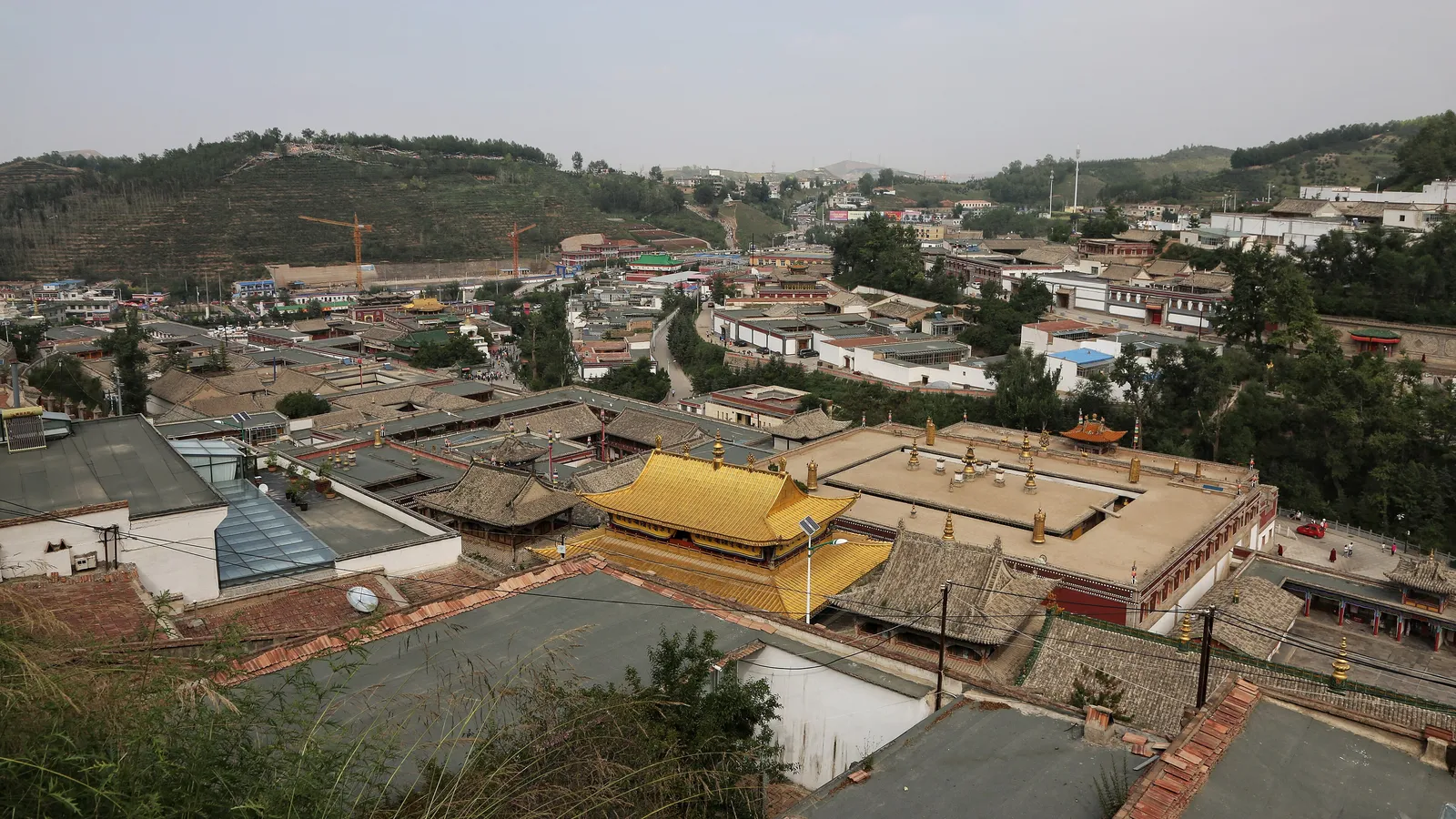
Kumbum Monastery (Ta’er Si)
塔尔寺 · Tǎ’ěr Sì
One of the six great monasteries of the Gelug school of Tibetan Buddhism, built at the birthplace of its founder Tsongkhapa: golden-roofed halls, eight white stupas and famous yak-butter sculptures.
Booking recommendedBring your passport3 hours (half a day from Xining)
Tip
No photos inside the halls; walk clockwise around halls and stupas and turn prayer wheels clockwise. Don’t miss the Butter Sculpture Hall. At about 2,650 m it is higher than Xining, so take the slopes slowly.
- Opening hours
- Apr–Oct about 07:00–17:30, Nov–Mar about 08:00–16:30 (last entry times; check before you go) To be confirmed
- Price
- ¥70 (Apr–Oct), ¥40 (Nov–Mar); students half price
- How to book
- Book with your passport on the official WeChat account “塔尔寺景区” or on Trip.com, or buy at the ticket office. Book ahead for summer weekends and Chinese holidays.
- Getting there
- About 28 km south-west of central Xining in Huangzhong (Lushar), 40 minutes by taxi or DiDi; city buses to Huangzhong take about 1 hour To be confirmed
- Address in Chinese
- 青海省西宁市湟中区金塔路56号
Photo: Charlie fong · CC BY-SA 4.0
From other travelers
Write a reviewIn the encyclopedia
Sources
Checked against these sources on 2026-10-02. Rules change often, so confirm on the official site before you go.
Not yet confirmed by an official source: Opening hours, Getting there
More in Xining
青海湖二郎剑景区Qinghai Lake (Erlangjian scenic area)China’s largest lake, a vast blue saltwater lake on the grassland at about 3,200 m. Erlangjian, a long spit on the south shore, is the main managed area closest to Xining, with a lakeside walk and boat trips.东关清真大寺Dongguan MosqueQinghai’s largest mosque, founded in the 14th century and the heart of Xining’s Hui Muslim quarter; the vast courtyard fills with worshippers at Friday prayers.茶卡盐湖Chaka Salt LakeA working salt lake at about 3,060 m whose thin layer of water mirrors the sky on calm days, walked on salt paths or crossed by a small train.青海省博物馆Qinghai Provincial MuseumA free museum on Xinning Square covering the plateau’s history: Neolithic painted pottery, finds from the Tibetan-plateau Silk Road and Tibetan Buddhist art.