
Wu Zetian
武则天Wǔ Zétiān624–705
The only woman to rule China as emperor in her own name, proclaiming her own Zhou dynasty (690–705) in the middle of the Tang era.
Wu Zetian rose from junior consort to empress at the Tang court, and in 690 she proclaimed her own Zhou dynasty, becoming the only woman in Chinese history to reign as emperor in her own name. She first entered the palace as a consort of Emperor Taizong, became empress to his son Gaozong in 655, and after his death in 683 governed through her sons before taking the throne herself. She made Luoyang her “Divine Capital”, was a generous patron of Buddhism and widened the recruitment of officials through the examinations. In 705, old and ill, she was made to step down, the Tang dynasty was restored, and she died later that year. Traditional historians, writing in a culture that disapproved of women in power, often described her harshly, and her reign is still judged in very different ways.
Also known as: Empress Wu · Wu Zhao
Where to see it in China
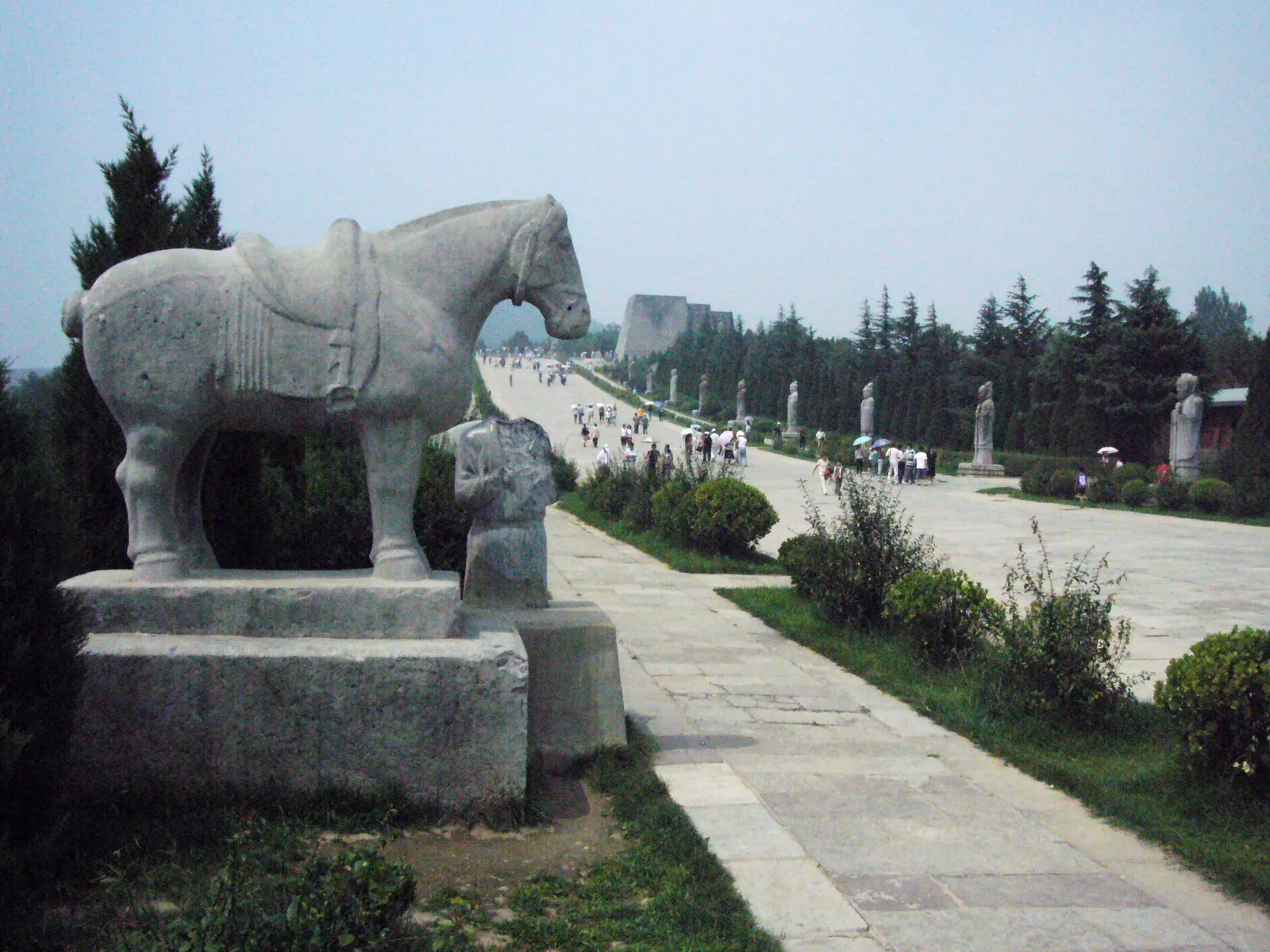
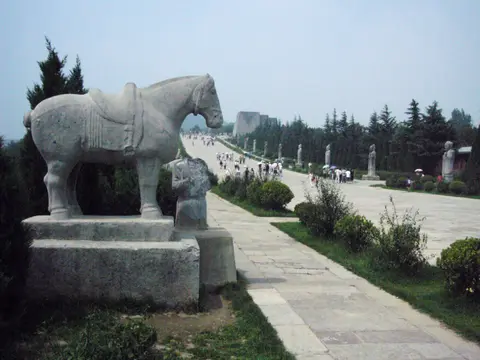 Xi'anQianling Mausoleum 乾陵The hillside tomb she shares with Emperor Gaozong, with a spirit road of stone statues and the blank “Wordless Stele” traditionally linked to her.
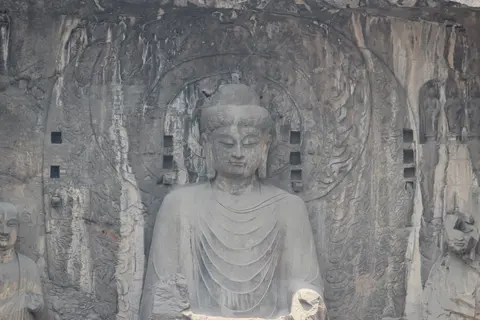 LuoyangLongmen Grottoes 龙门石窟The giant Vairocana Buddha, finished in 675, was partly paid for by her; legend says its face was modelled on hers.
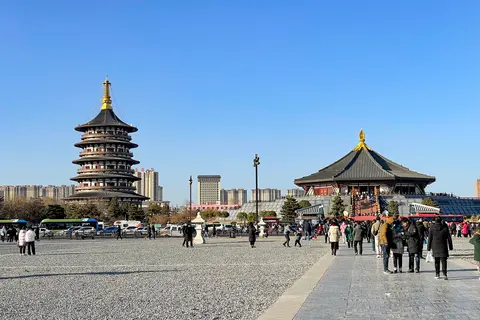 LuoyangSui–Tang Luoyang City: Mingtang, Tiantang and Yingtian Gate 隋唐洛阳城Reconstructions of her Mingtang ritual hall and Tiantang Buddhist tower on the site of her palace in Luoyang.
Where we mention it
Related entries
Sources
- Wu Zetian — Wikipedia (en.wikipedia.org)
- Wuhou — Encyclopaedia Britannica (britannica.com)
- Longmen Grottoes — UNESCO World Heritage Centre (whc.unesco.org)