
The monks who carried silkworm eggs
A 6th-century Greek historian says monks carried silkworm eggs to Constantinople. It is one account, and much of it is disputed.
Silk had been made in China for thousands of years before anyone in the Mediterranean learned how. Romans wore it and paid for it, and according to one later Byzantine writer they did not even know that worms spun it. Then, around the middle of the 6th century, silk making began in the eastern Roman Empire. How that happened is told in a very short story, and it is the story most people repeat.
This is an account, not an established fact. It survives in a few lines of Greek, and writers have argued about it for a long time.
What Procopius wrote
Procopius of Caesarea was a historian of the reign of the emperor Justinian. In his *History of the Wars* he says that some monks came from India to Justinian, who wanted the Romans to stop buying silk from the Persians, Rome’s rivals at the time. The monks said they could solve this. They had lived for a long time in a land called Serinda, where they had learned how silk was made.
Procopius gives the craft in plain terms. Silk came from caterpillars. Living caterpillars could not be carried so far, but their eggs could. The eggs could be kept for a long time and then hatched by covering them with dung for warmth. So the monks went back, returned to Byzantium with eggs, hatched them, and fed the caterpillars on mulberry leaves. According to Procopius, that was how silk making started in Roman lands.
He does not describe a daring escape, hidden bundles or border guards. Those details came later.
A second version
Another Greek writer, Theophanes of Byzantium, tells it differently. As quoted in Henry Yule’s collection of sources, *Cathay and the Way Thither*, he writes near the end of the 6th century of “a certain Persian”, not monks. This man came from the country of the Seres, a Greek name usually linked with the Chinese, and carried the eggs concealed in a walking stick.
So the stick, which later became a bamboo cane in many popular retellings, does not come from Procopius at all. Modern retellings often mix the two.
What is disputed
Almost everything beyond the main point.
Where was Serinda? The name seems to join the Greek words for the silk people and for India. Yule wrote that China may be meant, but that there can be no certainty. Other writers point to the oasis lands of Central Asia, where silk was also being made by then.
Who were the travellers? Procopius names no one. Modern guesses about their church, their route and any help from Sogdian merchants are guesses.
When? Procopius wrote in the 550s. Modern writers give dates such as about 550, 552 or 553 to 554.
The sources we read are all from the western side. We did not find a Chinese record of the episode, so we cannot say whether anyone in China knew or cared.
A princess with a hat
China’s side of the map has its own smuggling story, and it is told as legend. It concerns Khotan, an oasis kingdom on the southern Silk Road. In the version recorded by the monk Xuanzang (玄奘) in his *Great Tang Records on the Western Regions*, a Chinese princess going to marry the king of Khotan hid mulberry seeds and silkworm eggs in her headdress.
Around 1900 the archaeologist Aurel Stein found a small painted panel at Dandan-Uiliq, in today’s Xinjiang, that seems to show this tale. A noblewoman sits at the centre with a basket of cocoons before her, and a servant points to her headdress. It is usually dated to between the 6th and 8th centuries. The two tales share one practical truth: silk moved in very small parcels. A few eggs and some seeds could start an industry.
What followed
Whatever really happened, the result is clearer. The Byzantine state kept tight control over silk production and purple dyeing, and silk became part of court ceremony. Workshops are recorded in cities such as Constantinople, Beirut, Antioch, Tyre and Thebes.
Seeing the craft
You can see what the monks would have needed to learn at two museums in China. The China National Silk Museum (中国丝绸博物馆) in Hangzhou covers silkworm rearing, weaving and textile conservation. The Suzhou Silk Museum (苏州丝绸博物馆) has live silkworms, old looms and weavers at work.
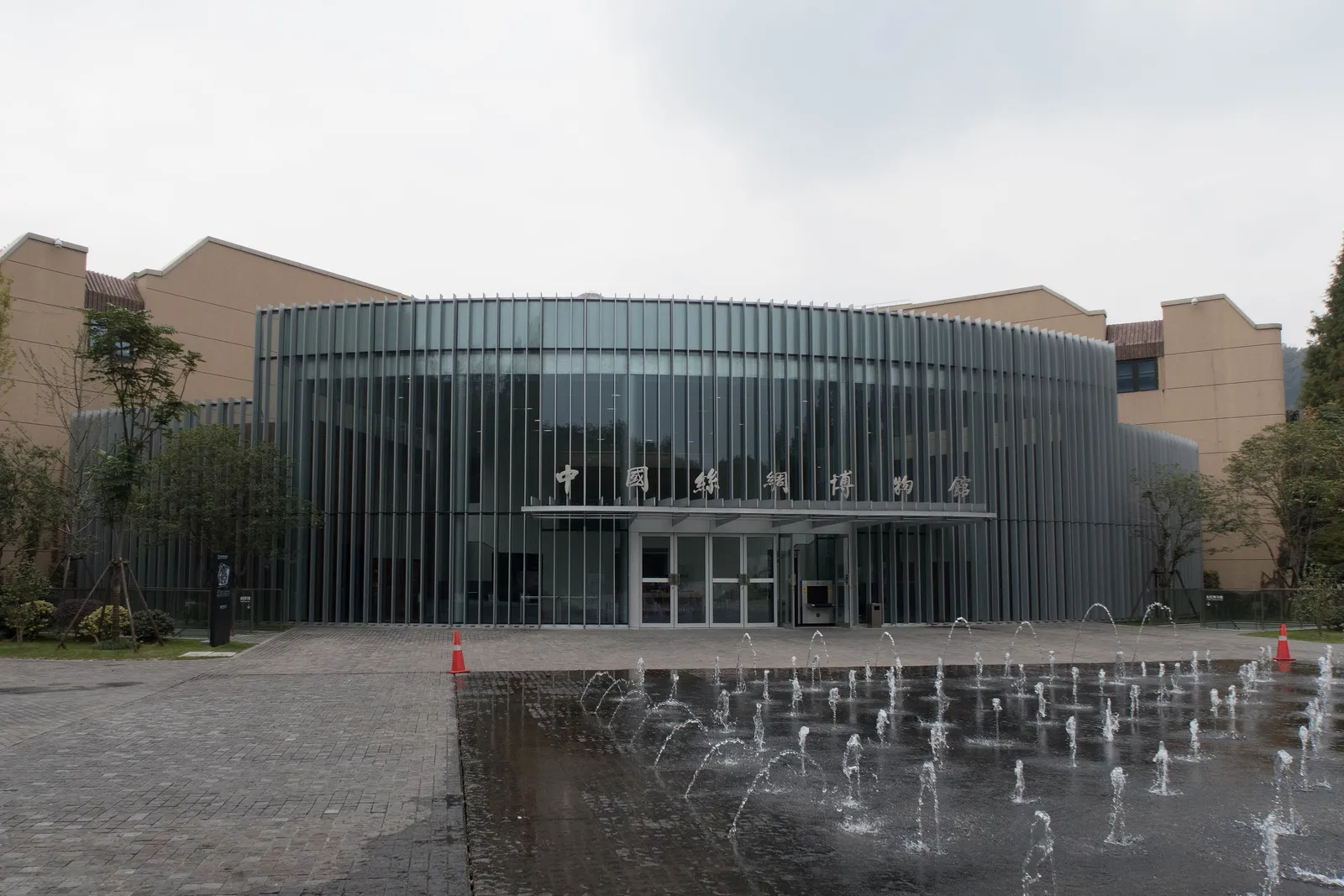
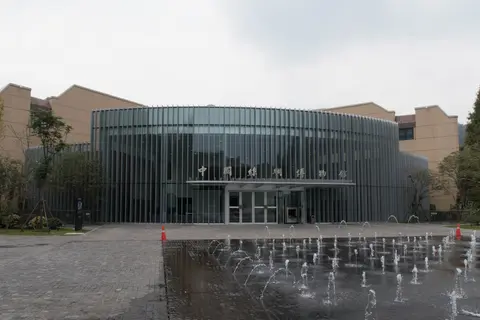 Sight in HangzhouChina National Silk Museum 中国丝绸博物馆A large free museum on silk: 5,000 years of Chinese textiles, the Silk Road, silkworm-rearing and weaving crafts, and a textile conservation gallery.
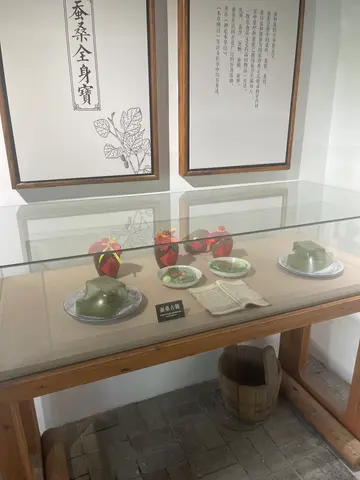 Sight in SuzhouSuzhou Silk Museum 苏州丝绸博物馆A small free museum on Suzhou’s silk history, with live silkworms, old looms and weavers at work.
Places in this story
Sources
- Procopius, History of the Wars, on the silk industry (Internet Medieval Sourcebook, Fordham University) (sourcebooks.fordham.edu)
- Henry Yule, Cathay and the Way Thither, vol. 1, p. 175: Procopius and Zonaras (Digital Silk Road, Toyo Bunko) (dsr.nii.ac.jp)
- Henry Yule, Cathay and the Way Thither, vol. 1, p. 176: Theophanes of Byzantium (Digital Silk Road, Toyo Bunko) (dsr.nii.ac.jp)
- Henry Yule, Cathay and the Way Thither, vol. 1, p. 62: on Serinda (Digital Silk Road, Toyo Bunko) (dsr.nii.ac.jp)
- University of Washington, Silk Road Seattle: Byzantium and the East (depts.washington.edu)
- Art of the Middle Ages: Smuggling silk in Central Asia (the Dandan-Uiliq plaque) (artofthemiddleages.com)
- Wikipedia: Smuggling of silkworm eggs into the Roman Empire (secondary, flagged on the page for contradictions) (en.wikipedia.org)
- Digital Silk Road (NII): Following in the footsteps of Xuanzang, Aurel Stein and Dandan-Uiliq (dsr.nii.ac.jp)
Legends are told as legends. Where historians disagree, we say so.
More stories
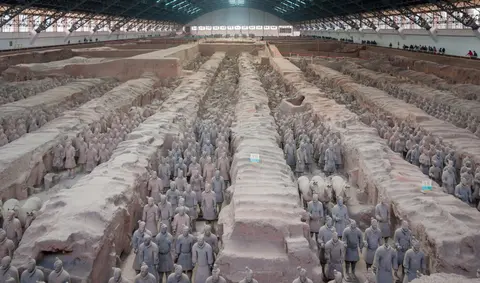 HistoryThe well that found an armyIn 1974 farmers digging a well near Xi’an hit pieces of clay. They had found the First Emperor’s army, and the tomb it guards is still sealed.
 LegendsThe White Snake and Leifeng PagodaA snake spirit in love, a monk who stood in her way, and a real pagoda on West Lake that fell in 1924 and rose again.
 Travelers of the pastMarco Polo’s City of HeavenIn the 13th century a Venetian called Hangzhou the finest city in the world. What did he really see, and what is still there at West Lake?