
The Governor Behind Kung Pao Chicken
The dish is said to be named after a real Qing official, Ding Baozhen. The rest, including who cooked it first, is story.
Kung pao chicken (宫保鸡丁, gōngbǎo jīdīng) is generally said to be named after a real man: Ding Baozhen (丁宝桢, born 1820 or 1821, sources differ, died 1886), a Qing official from Guizhou who ended his career governing Sichuan. "Gongbao" comes from his court title. That much is widely repeated. How he is connected to the dish is tradition rather than record, and we could find no recipe from his lifetime.
What the name means
Break the name in two. *Jiding* just means diced chicken. *Gongbao*, "palace guardian", is a shortened form of honorary titles at the Qing court, such as *taizi shaobao*, Junior Guardian of the Crown Prince.
The *Draft History of Qing* tells us how Ding got his. In 1868 a rebel force threatened the region around Beijing, and Ding, then governor of Shandong, marched north with about 4,000 troops carrying five days of food. The court was pleased and added the title of *taizi shaobao*. People could then call him Ding Gongbao. After he died, he was raised to *taizi taibao*, Senior Guardian.
The man
He was not a person you would expect to find on a menu. Ding was born in Pingyuan, today's Zhijin in Guizhou, and passed the highest imperial examination in 1853. The *Draft History* describes him as stern and known for his clean hands: when he died, it says, his colleagues had to collect money before his coffin could go home.
His best-known act has nothing to do with food. In 1869 a palace eunuch called An Dehai, a favourite of the Empress Dowager Cixi, sailed down the Grand Canal in a grand boat, collecting gifts and claiming a secret mission. Eunuchs were not allowed to leave the capital without permission. Ding had him arrested in Shandong and reported to the throne, and An Dehai was executed. The story was still famous when the *Draft History* was written.
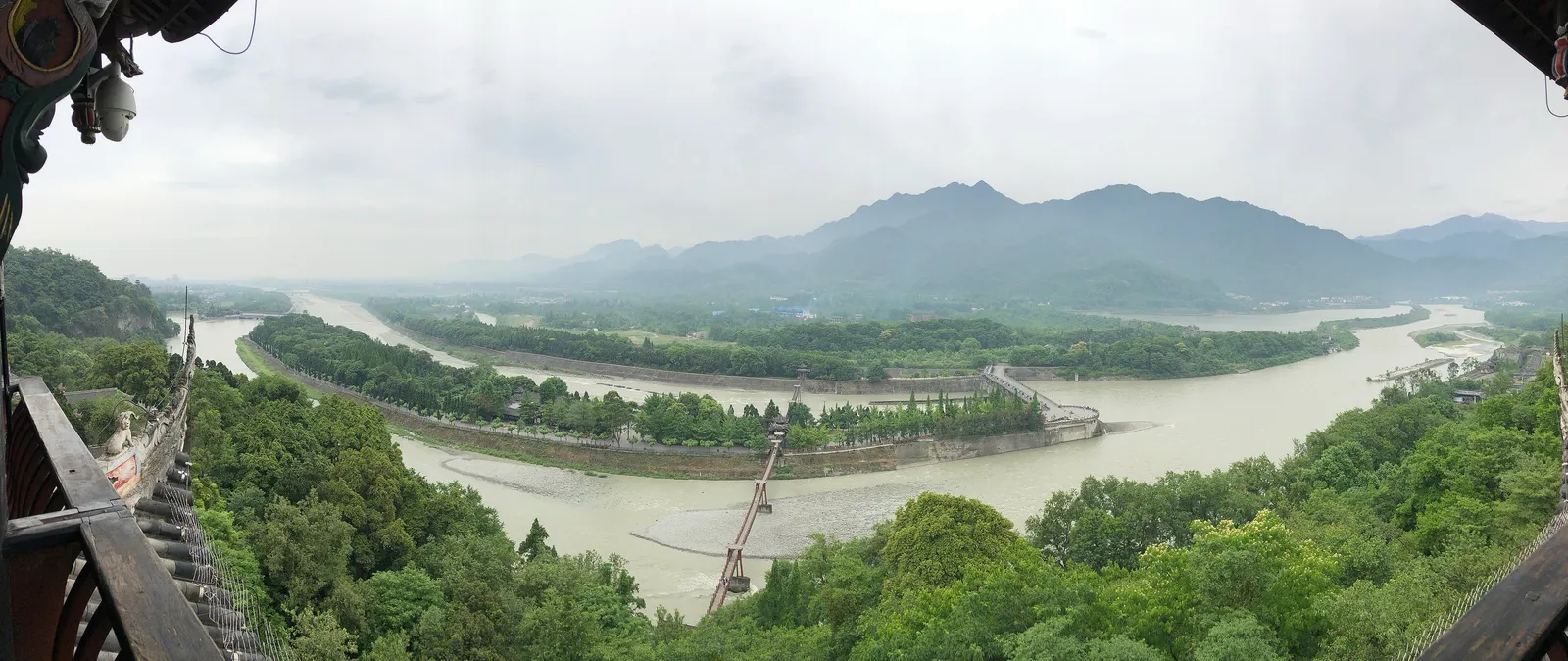
In 1876 Ding went to Sichuan as acting governor-general. He stayed about ten years. He reformed the salt trade, set up a machinery works and repaired the Dujiangyan waterworks. The repairs did not go smoothly: when the dyke was damaged, he was punished with a reduction in rank. Today a statue of him stands in the Erwang Temple at Dujiangyan.
The stories about the dish
Now to the chicken. The tradition goes like this. Ding liked diced chicken from his home in Guizhou. His cooks picked up techniques as he moved from post to post, and at his house in Chengdu guests were served chicken fried with chillies and peanuts. Guests liked it, and people named it after their host.
There are several versions:
- Chinese Wikipedia sums it up as a dish that began in Guizhou, moved through Shandong and took its final form in Sichuan, with a different name in each: 糊辣子鸡丁 in Guizhou, 酱爆鸡丁 in Shandong, 宫保鸡丁 in Sichuan.
- Some say he invented it himself and had his household cook make it for guests.
- A newspaper story from Zhaohua in Sichuan says local people renamed a peanut-and-chicken dish after his death, to honour him.
None of these comes with a recipe dated to his lifetime that we could find. The historian Thomas DuBois, writing in Sixth Tone, puts it fairly: there is no particular evidence for or against the Ding story. He adds that even if we found the first plate, we would not know how it tasted. Treat the tale as a tradition with a real man at the centre.
Which is the real one?
There isn't one. DuBois has eaten it on Mount Tai and on the Hulunbuir grasslands, spicy, salty and sweet, and his friends in Chengdu's restaurant trade tell him everyone makes it differently.
A rough guide:
- In Sichuan, expect diced chicken thigh, dried chillies, Sichuan pepper, spring onion and fried peanuts, with a sweet and sour edge and a toasted chilli taste.
- In Guizhou, the sauce is often built on *ciba lajiao*, chillies pounded to a paste, for a salty, hot flavour with a slight sweet-sour edge.
- Abroad, you will often get something much sweeter, with vegetables.
Trying it
It is on menus across China, so order it by name: 宫保鸡丁. In Chengdu, ask for it at any Sichuan restaurant. In Guiyang, the capital of Ding's home province, try the local version and compare. If you visit Dujiangyan, you can look for his statue in the Erwang Temple.
 City guideChengdu 成都Giant pandas, Sichuan hot pot and slow afternoons in teahouses.
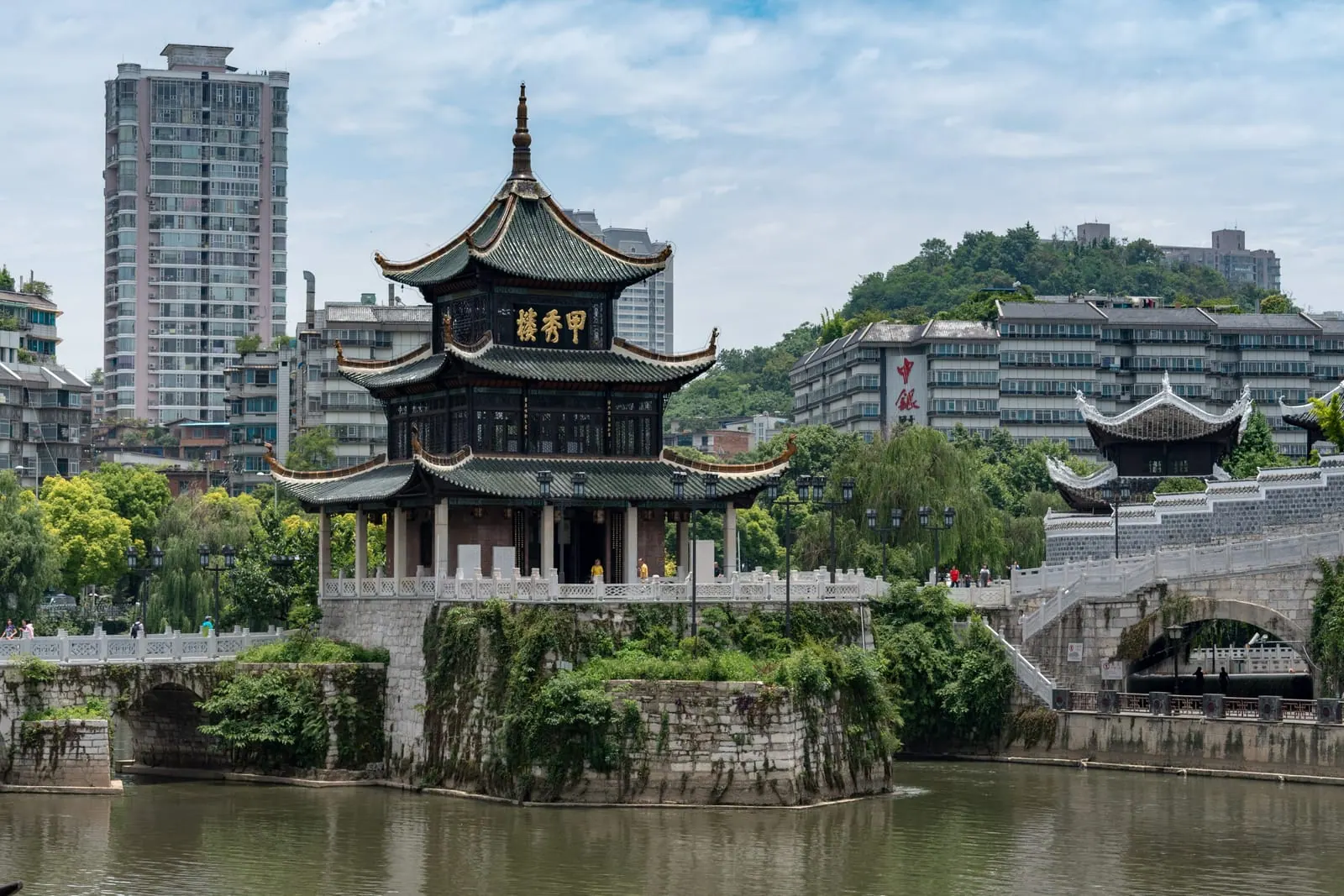 City guideGuiyang 贵阳Gateway to Huangguoshu Waterfall, Miao villages and the karst hills of Guizhou.
Places in this story
Sources
- Draft History of Qing, chapter 447: biography of Ding Baozhen (Chinese text) (zh.wikisource.org)
- Thomas DuBois, Sixth Tone (2023): The Real Kung Pao Chicken (sixthtone.com)
- Sichuan Daily (Sichuan Online): Zhaohua and the story of the Ding family (Chinese) (cbgc.scol.com.cn)
- Wikipedia (Chinese): Kung Pao chicken (secondary) (zh.wikipedia.org)
- Wikipedia (Chinese): Ding Baozhen (secondary) (zh.wikipedia.org)
- Wikipedia: Ding Baozhen (secondary) (en.wikipedia.org)
Legends are told as legends. Where historians disagree, we say so.
More stories
 HistoryThe well that found an armyIn 1974 farmers digging a well near Xi’an hit pieces of clay. They had found the First Emperor’s army, and the tomb it guards is still sealed.
 LegendsThe White Snake and Leifeng PagodaA snake spirit in love, a monk who stood in her way, and a real pagoda on West Lake that fell in 1924 and rose again.
 Travelers of the pastMarco Polo’s City of HeavenIn the 13th century a Venetian called Hangzhou the finest city in the world. What did he really see, and what is still there at West Lake?