
Empress Dowager Cixi
慈禧太后Cíxǐ Tàihòu1835–1908
Qing empress dowager (1835–1908) who, as regent for two boy emperors, at times controlled the government from 1861 until her death.
Cixi came to the court as a concubine of the Xianfeng Emperor and bore his son in 1856. When Xianfeng died in 1861 during the court’s stay at Chengde, the boy became the Tongzhi Emperor, and she and the senior widow Ci’an ousted the appointed regents with the support of Prince Gong. She went on to act as regent for Tongzhi and then for the Guangxu Emperor, and at times controlled the government until her death in 1908. Historians still disagree about her record. Travellers meet her in the rebuilt Summer Palace and the imperial residences of Beijing and Chengde.
Also known as: Cixi

Where to see it in China
 BeijingSummer Palace 颐和园The Qing garden around Kunming Lake, burned in 1860 and rebuilt in the 1880s and 1890s under her rule.
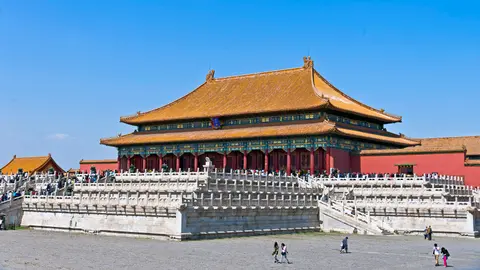 BeijingForbidden City (Palace Museum) 故宫博物院The palace where she lived in the western Chuxiu Palace, which gave her the name “Western Dowager”.
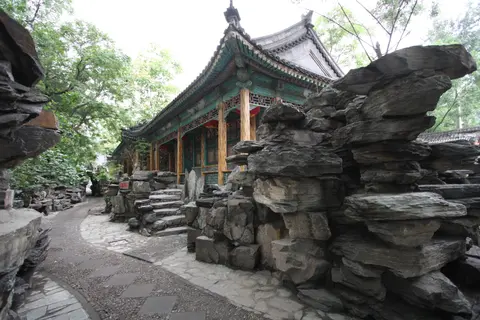 BeijingPrince Gong’s Mansion 恭王府博物馆The home of Prince Gong, her ally in 1861, with courtyards, a large garden and a wooden opera house.
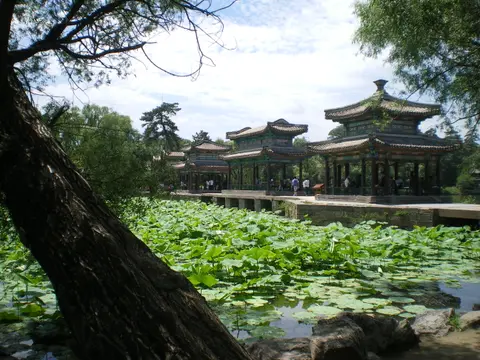 ChengdeChengde Mountain Resort 避暑山庄The Qing summer capital, the area where the court was staying when Xianfeng died in 1861.
Where we mention it
Related entries
DynastiesQing dynasty 清朝China’s last imperial dynasty (1644–1912), founded by the Manchus, whose palaces and gardens fill Beijing, Shenyang and Chengde.Arts and craftsPeking opera 京剧China’s best-known stage art, born in Beijing around 1800: singing, acting and acrobatics with painted faces and lavish costumes.Ideas and beliefsManchu people 满族The people of north-east China who founded the Qing dynasty, ruling China from 1644 to 1912 from their first capital at Shenyang and then Beijing.
Sources
- Empress Dowager Cixi: Wikipedia (en.wikipedia.org)
- Summer Palace: Wikipedia (en.wikipedia.org)
- Prince Gong Mansion: Wikipedia (en.wikipedia.org)