
The Jesuit and the Forbidden City
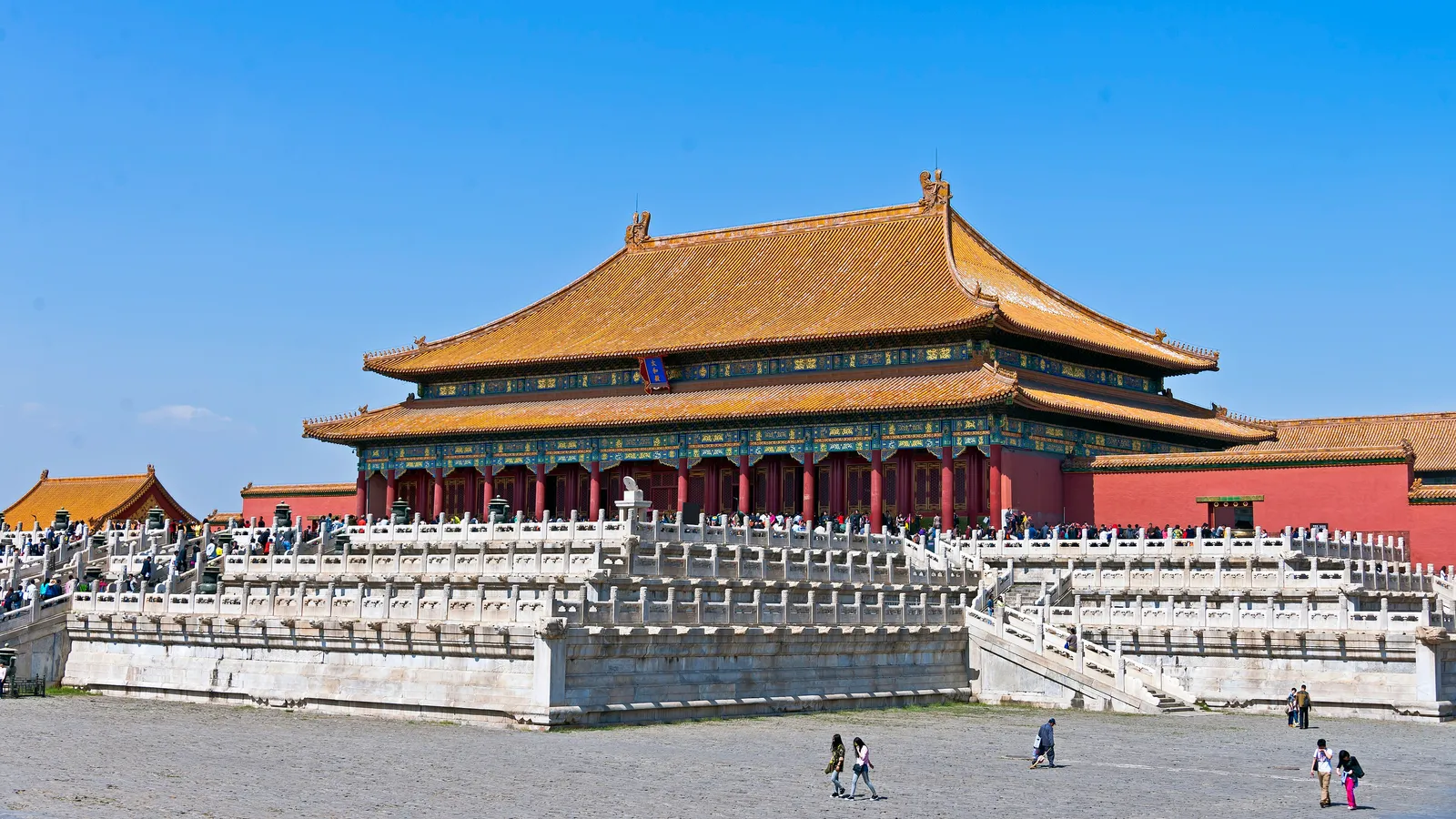
Photo: Daniel Case · CC BY-SA 3.0
Matteo Ricci reached Beijing in 1601 with two clocks. He never met the emperor, but the clocks helped keep him in the capital until he died.
Matteo Ricci (利玛窦, Lì Mǎdòu) was an Italian Jesuit born in Macerata in 1552. He came to China as a missionary and spent the rest of his life there. This story leaves questions of faith aside. It follows something simpler: how a foreigner came to live in the Ming capital, what he did there, and what remains.
The long road north
Ricci reached Macau in 1582, and for years he moved slowly through southern China, living in Guangdong, Nanchang and Nanjing and learning the language and the classics. The capital was the goal. He reached Beijing for the first time on 7 September 1598, but the timing was poor. China was at war in Korea, and after about two months he left without entering the palace.
He tried again in 1600, travelling north by the Grand Canal with gifts for the Wanli Emperor (万历帝). At Tianjin a palace eunuch held the party for nearly six months and took some of the goods. In January 1601 they finally entered Beijing.
Two clocks
The accounts list a world map, a spinet, religious paintings and, most usefully, two chiming clocks: a large one driven by hanging weights and a small spring-driven one for a desk. Mechanical clocks of this kind were a rarity in China. The emperor was interested, and the gifts earned Ricci something no foreigner had easily won. He was allowed to stay in Beijing, with lodging and a small stipend, and in return he looked after the clocks.
Some accounts go further, describing him as the first Westerner invited into the Forbidden City, with access to the palace to tend the clocks. How far inside he really went is hard to pin down. According to China Daily, he wrote that its courtyards could hold 30,000 people. On one point the sources we read agree: he never met the Wanli Emperor, who was known for staying out of sight. For nine years Ricci lived in the same city as the man who supported him, and they never spoke.
 Sight in BeijingForbidden City (Palace Museum) 故宫博物院The Ming and Qing imperial palace, now China’s largest museum of imperial art.
A map and a book
His most lasting work in Beijing was done with Chinese scholars.
The first was a map. In 1602, reportedly at the emperor’s request, Ricci and his collaborators, including the scholar Li Zhizao (李之藻), printed the *Kunyu Wanguo Quantu* (坤舆万国全图). It was carved on six wooden blocks and printed on six panels of mulberry paper, about 1.5 metres high and 3.7 metres wide when joined, like a folding screen. For many readers it was a first look at the wider world in Chinese. Only a handful of original printed copies are known today.
The second was a book. Ricci and Xu Guangqi (徐光启), a scholar-official who later became Minister of Rites, translated the first six books of Euclid’s *Elements* into Chinese, published in 1607. Xu went on to lead a reform of the calendar and to write a great treatise on agriculture. The translation is one of the best-known results of the meeting between the two traditions of learning.
Death in the capital
Ricci died in Beijing on 11 May 1610, aged 57. Ming rules required foreigners who died in China to be buried in Macau. His colleague Diego de Pantoja petitioned the court for a burial plot in the capital instead, and the emperor agreed, assigning a former Buddhist temple. Ricci’s remains were later moved there, and sources differ on the date. It was a remarkable honour for a man he had never seen.
His papers travelled further. His colleague Nicolas Trigault edited and translated them into Latin, and they appeared in Augsburg in 1615. Much of what Europe learned about Ming China came from this book, and much of what we know about Ricci’s life rests on it, so it gives his view of events as reworked by Trigault.
What followed
Chiming clocks soon became fashionable among wealthy Chinese. By the 18th century the imperial court had its own workshop for making and repairing them, and by later tradition Chinese clockmakers honoured Ricci as their patron.
Today
The Palace Museum holds a collection of more than 1,500 clocks, including Western ones from the 17th to the 19th centuries. None of the sources we read says that Ricci’s own clocks survive, so do not expect to see them. Check our Forbidden City page and the museum’s notices to see what is on display when you go.
Ricci’s tombstone still stands in the Zhalan Cemetery (栅栏墓地), now inside the campus of the Beijing Administrative College in Xicheng District. It is not an ordinary tourist site, and we could not confirm visiting rules, so ask before you go.
 City guideBeijing 北京Forbidden City, the Great Wall and hutong life in China's capital.
Places in this story
Sources
- Encyclopedia.com: Ricci, Matteo (encyclopedia.com)
- EBSCO Research Starters: Matteo Ricci travels to Beijing (ebsco.com)
- China Daily: Western clocks in the Palace Museum and Ricci (2020) (chinadaily.com.cn)
- East Watch Review: Matteo Ricci and self-ringing bells (2015) (eastwatchreview.com)
- Wikipedia: Matteo Ricci (secondary) (en.wikipedia.org)
- Wikipedia: Kunyu Wanguo Quantu (secondary) (en.wikipedia.org)
- Wikipedia: Xu Guangqi (secondary) (en.wikipedia.org)
Legends are told as legends. Where historians disagree, we say so.
More stories
 HistoryThe well that found an armyIn 1974 farmers digging a well near Xi’an hit pieces of clay. They had found the First Emperor’s army, and the tomb it guards is still sealed.
 LegendsThe White Snake and Leifeng PagodaA snake spirit in love, a monk who stood in her way, and a real pagoda on West Lake that fell in 1924 and rose again.
 Travelers of the pastMarco Polo’s City of HeavenIn the 13th century a Venetian called Hangzhou the finest city in the world. What did he really see, and what is still there at West Lake?