
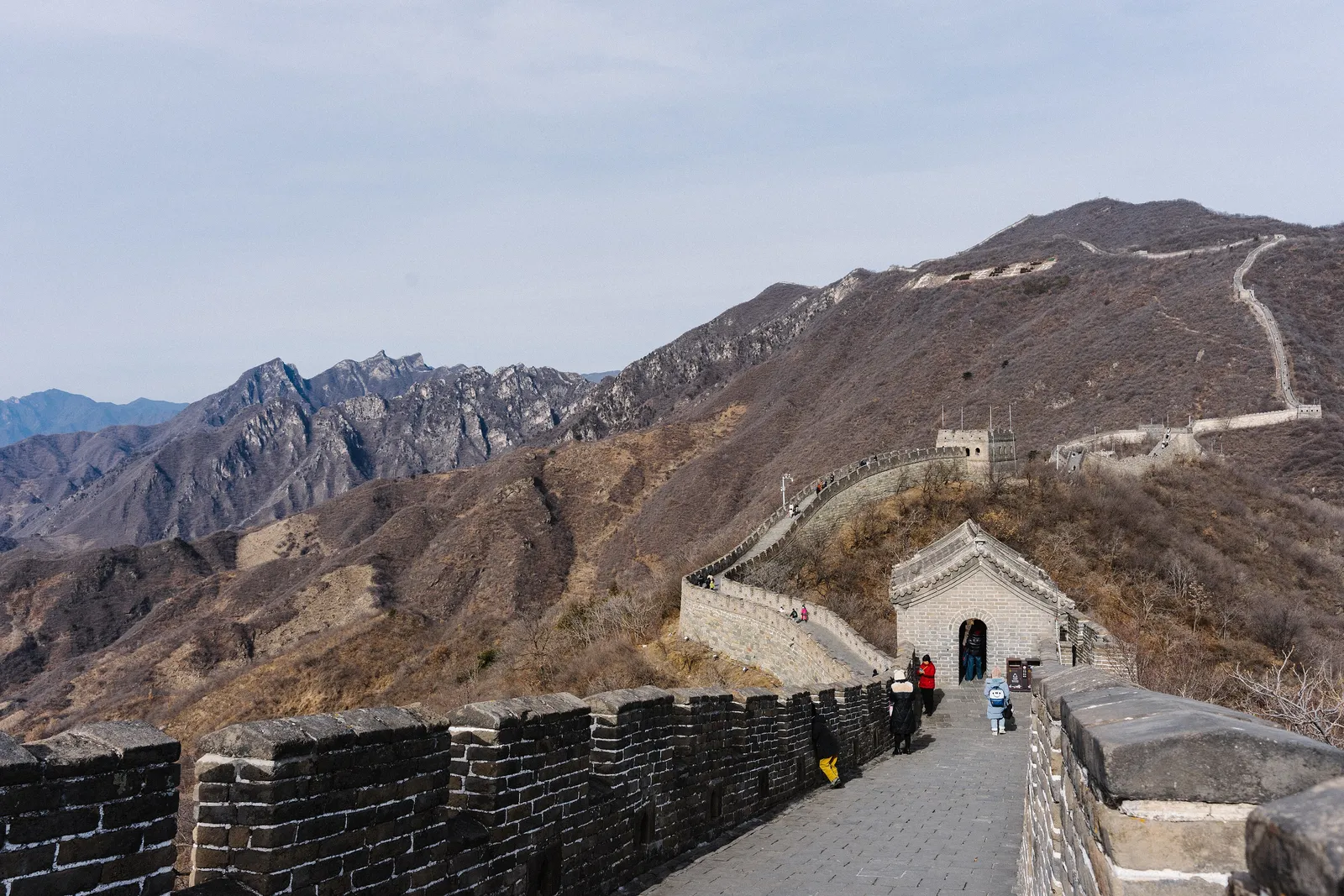
The woman whose tears broke the wall
Photo: Lloyd Tudor · CC BY-SA 4.0
Legend says one widow’s weeping brought down a stretch of the Great Wall. The tale took 2,500 years to grow, and its steps can still be traced.
Legend says that a woman once wept so hard beside a wall that the wall fell down. Across China she is known as Meng Jiangnü, and her story is still told at the Great Wall. It is a legend, and a long-lived one: the version told today was put together over some two and a half thousand years, and most of the steps can be followed in old books.
A widow on a road
The seed is a short passage in the Zuozhuan, a chronicle of the Spring and Autumn period. It says that when the ruler of Qi came home from a campaign against the state of Ju, he met the wife of a fallen officer, Qi Liang, out in the countryside and sent a messenger to offer condolences. She refused to receive them on the road. If her husband had done wrong, she said, there was nothing to mourn; if not, the family still had its old house, and condolences belonged there. So the duke went to her home. In this scene there is no wall, no weeping and no name for her.
The Book of Rites (Liji) mentions her too, as an example of someone who knew proper conduct. It says she met her husband’s coffin on the road and wept for him with great sorrow.
The wall falls
Modern reference works say that the weeping and the wall come from the Han dynasty, in two books by the scholar Liu Xiang. There she cries over the body beside a city wall, and after ten days the wall collapses. We could not check those texts directly, so take this as their usual summary. Either way, this is still a city wall in the state of Qi, not the Great Wall.
Becoming Meng Jiangnü
The big changes come later. A poem by the Tang monk-poet Guanxiu moves the story to the Qin dynasty and makes the fallen wall the Great Wall. A fragmentary ballad found at Dunhuang adds a search through piles of bones and a test with blood. A Tang tale gives her the family name Meng, and the husband’s name drifts to forms such as Wan Xiliang. Later tellers make the First Emperor the villain, and by the Ming the story names the wall.
In the familiar telling, she carries winter clothes to her husband, who has been forced to work on the wall, and learns he is dead. Her weeping brings down a stretch of wall and she finds his bones. The emperor then wants to marry her; she sets three conditions, and in most versions she ends her life in the water. Details differ from place to place and from teller to teller. Opera, ballads and a women’s script called Nüshu all kept reshaping it, and in 2006 the legend was added to China’s first national list of intangible cultural heritage.
What do scholars make of it?
In the 1920s the folklorist Gu Jiegang traced the whole tale back to that widow in the Zuozhuan and argued that the later details were added gradually by storytellers. Other scholars, such as Wilt Idema, warn against reading modern romantic love into the Tang versions, where the moral world is different. Historians disagree about many things here, but not about the main point: the legend grew, and it was not written down in one go.
The wall itself is a separate question. The earliest walls date to the 7th century BC and the Qin joined some together, but their exact course is unknown and most have eroded away. The towers and brick ramparts visitors climb today are mostly Ming work, built between 1368 and 1644. The legend borrowed the idea of a wall as a symbol of hardship; it does not describe one particular place.
Where you meet her
You will not find a monument to Meng Jiangnü on the Great Wall sections we cover, but her story is a good companion when you walk them. Each of these is Ming work:
 Sight in BeijingMutianyu Great Wall 慕田峪长城A restored, forested stretch of the Ming wall with a cable car and toboggan, quieter than Badaling.
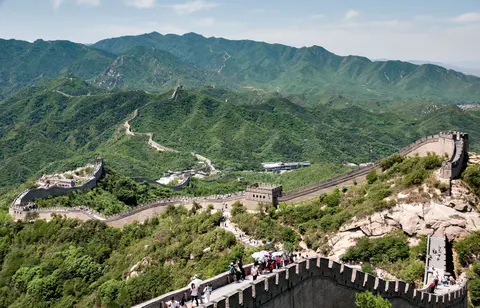 Sight in BeijingBadaling Great Wall 八达岭长城The most visited and most restored section of the wall, and the easiest to reach by train.
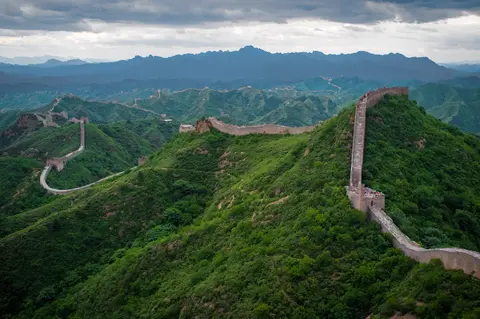 Sight in ChengdeJinshanling Great Wall 金山岭长城A dramatic Ming dynasty section with dense watchtowers along a mountain ridge, partly restored and partly wild; one of the most photographed stretches of the Great Wall.
A temple dedicated to her stands on a hill near Shanhaiguan, about 6 km from the pass and facing the sea; Shanhaiguan is traditionally the eastern end of the Ming wall. One reference says it was built or rebuilt in 1594, and its origins are sometimes dated to the Song, which is uncertain. It is not yet one of our own place guides, so check opening details locally before you go.
Places in this story
Sources
- Zuozhuan, Duke Xiang year 23 (Chinese text, Wikisource) (zh.wikisource.org)
- Book of Rites (Liji), Tan Gong II (Chinese text, Wikisource) (zh.wikisource.org)
- Wikipedia: Lady Meng Jiang (en.wikipedia.org)
- Wikipedia (Chinese): Meng Jiangnü (zh.wikipedia.org)
- Wikipedia: Great Wall of China (en.wikipedia.org)
Legends are told as legends. Where historians disagree, we say so.
More stories
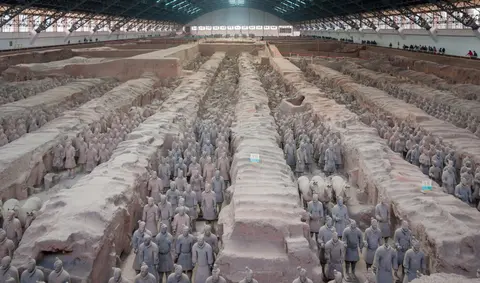 HistoryThe well that found an armyIn 1974 farmers digging a well near Xi’an hit pieces of clay. They had found the First Emperor’s army, and the tomb it guards is still sealed.
 LegendsThe White Snake and Leifeng PagodaA snake spirit in love, a monk who stood in her way, and a real pagoda on West Lake that fell in 1924 and rose again.
 Travelers of the pastMarco Polo’s City of HeavenIn the 13th century a Venetian called Hangzhou the finest city in the world. What did he really see, and what is still there at West Lake?