
The Lovers Who Became Butterflies
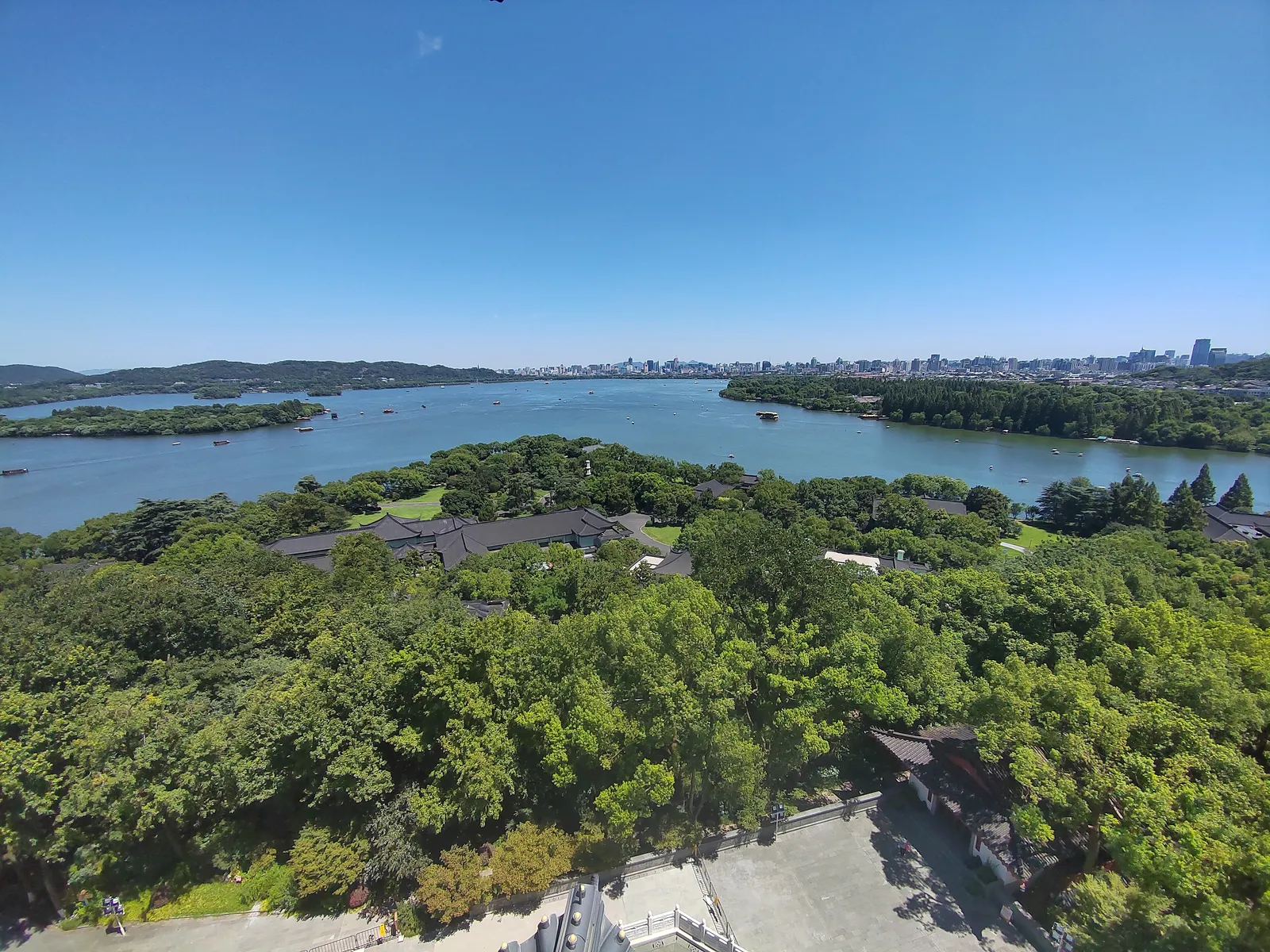
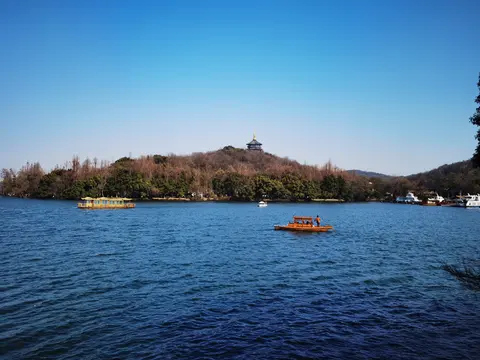
Photo: HoweyYuan · CC BY-SA 4.0
A girl disguised as a student, a friend who never guessed, and a grave that opened. Hangzhou is one of six places that keep the legend.
Ask people in China to name a tragic love story, and many will name this one. Liang Shanbo and Zhu Yingtai have been called China's Romeo and Juliet abroad, but their story is older than Shakespeare, and it ends not with poison but with two butterflies. Nobody has shown that either of them lived. What can be traced is how a single line in an old book grew into a national legend, and how Hangzhou came to claim their classroom.
The story as it is usually told
Legend says Zhu Yingtai was the only daughter of a family in Shangyu, in today's Zhejiang, at a time when girls did not go away to study. She dressed as a man and set out anyway. On the road she met Liang Shanbo, a young scholar from Kuaiji, now Shaoxing. The two swore brotherhood and shared their studies for three years, and he never guessed.
Then her father called her home. Liang walked with her a long way, and she hinted again and again at the truth, comparing the two of them to pairs of birds and flowers. He missed every hint. This walk, the "Eighteen Partings", is the scene audiences love best.
When Liang finally visited and found a young woman in place of his friend, it was too late. Her parents had promised her to a rich family's son, Ma Wencai. Liang fell ill and died. On her wedding day, the legend continues, a great wind stopped the procession beside his grave. She went to the tomb, it split open, and she threw herself inside. Two butterflies rose from it and flew away together.
From one line to a long story
The tale is set in the Jin dynasty, some 1,600 years ago, but the written record starts later. The earliest trace is a sentence from a Tang geography by Liang Zaiyan, a book now lost: "The righteous woman Zhu Yingtai was buried together with Liang Shanbo." A local gazetteer of Ningbo from 1169, by Zhang Jin, cites that book and describes a "Righteous Woman's Tomb" near the city.
A fuller account is attributed to the Tang writer Zhang Du. In it, Zhu's boat passes the grave, the ground cracks, and she is buried within. There is a tomb, a betrothal to the Ma family and a miracle, but no butterflies yet. The Yuan playwright Bai Pu wrote a drama on the theme, now lost. The butterflies are on record by the late Ming, in the writings of the story collector Feng Menglong.
In the 1920s, Chinese folklorists grouped the tale with three others as the Four Great Folktales. In 2006 it joined China's first national list of intangible cultural heritage, with six places named: Ningbo, Hangzhou and Shangyu in Zhejiang, Yixing in Jiangsu, Jining in Shandong and Runan in Henan. Several of them show a tomb or a study of their own, and no one can say which came first.
Hangzhou's claim
Hangzhou's claim rests on Wansong Academy (万松书院, Wànsōng Shūyuàn), on a wooded ridge south of West Lake. In many versions this is where the pair studied.
The academy's real history is well documented, and it starts long after the story's setting. In 1498 a Zhejiang official named Zhou Mu turned the site of an old temple into an academy. It was rebuilt in 1671 and renamed in 1716 after an imperial inscription, and it became one of the leading schools of the province. In 1892 it moved into the city. The buildings seen today date from a reconstruction begun in 2001, which opened in 2002.
According to a former head of the academy, it was a later play, Tongchuang Ji, that first set the couple's schooling here. So the link is a literary tradition, not a historical record. The academy keeps it alive with a "Liang-Zhu study" in its Yuxiu Pavilion and scenes of the Eighteen Partings along the hillside.
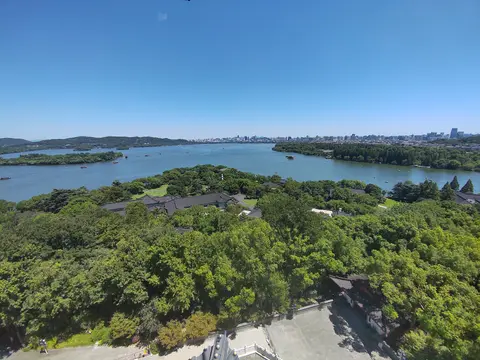 Sight in HangzhouWest Lake 西湖Hangzhou’s famous lake, ringed by hills, pagodas and willow-lined causeways. A UNESCO World Heritage site.
The sound of the story
Many people outside China first meet the lovers through music. The Butterfly Lovers Violin Concerto was written by two students at the Shanghai Conservatory, He Zhanhao and Chen Gang, who drew on the melodies of Yue opera, the opera of Zhejiang. It premiered in Shanghai on 27 May 1959, with the 18-year-old Yu Lina as soloist, and it remains one of the best-known Chinese orchestral works.
Visiting today
To see Hangzhou's version, ask for 万松书院 and check opening times and tickets locally before you go, as we have not confirmed them. It is close to the south side of the lake, so it fits with a day around West Lake. Nearby Leifeng Pagoda holds another of the Four Great Folktales, the White Snake.
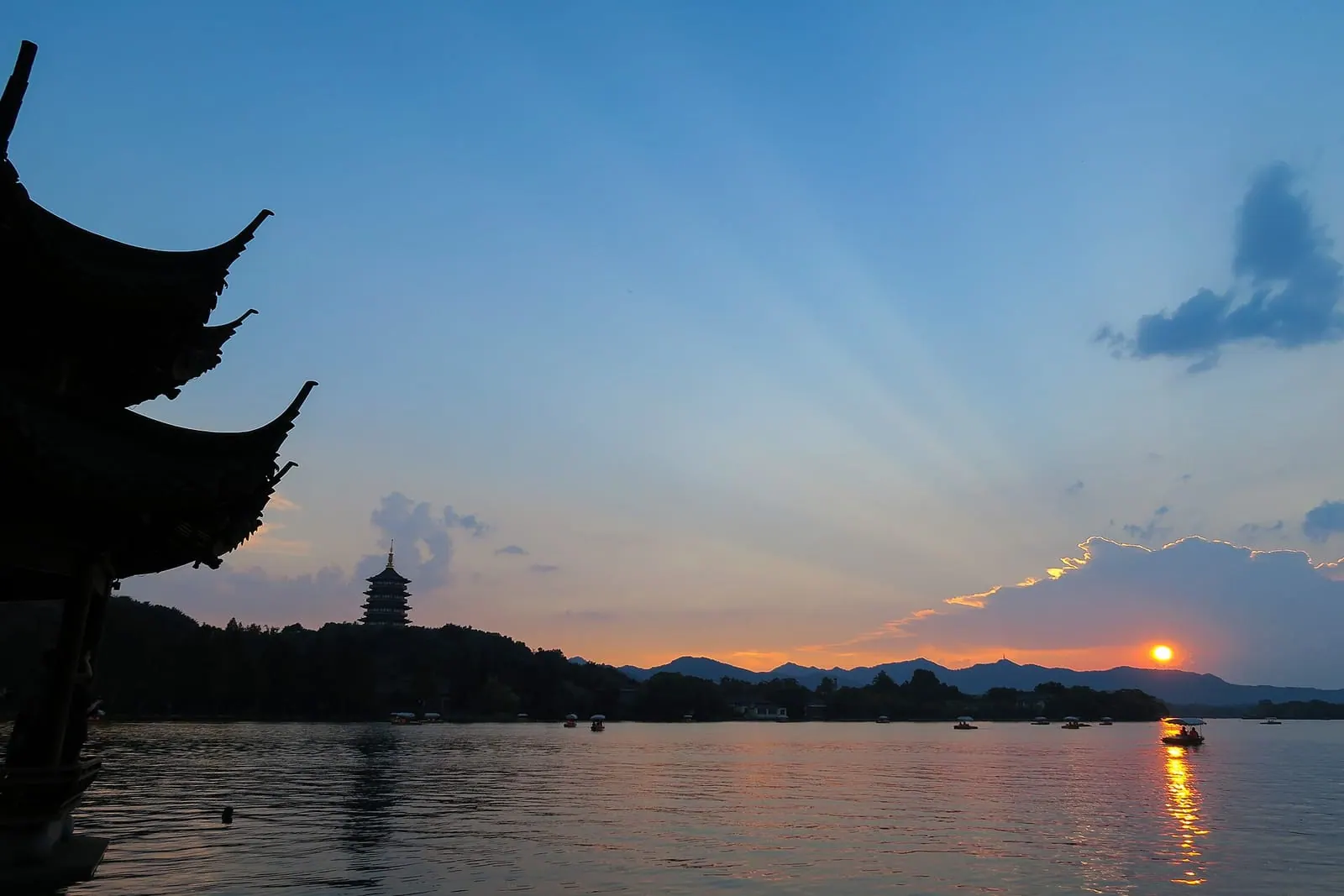 City guideHangzhou 杭州West Lake, Longjing tea villages and a quick train from Shanghai.
Places in this story
Sources
- China Intangible Cultural Heritage Network: Liang-Zhu legend, national list entry (ihchina.cn)
- Interview with Shao Qun, former head of Wansong Academy (Chinese) (rujiazg.com)
- Hangzhou News: inscriptions at Wansong Academy (Chinese) (hznews.hangzhou.com.cn)
- The Paper: on the texts of the Liang-Zhu story (Chinese, contributor article) (thepaper.cn)
- Wikipedia (Chinese): Liang Shanbo and Zhu Yingtai (secondary) (zh.wikipedia.org)
- Wikipedia: Butterfly Lovers (secondary) (en.wikipedia.org)
- Wikipedia: Butterfly Lovers Violin Concerto (secondary) (en.wikipedia.org)
Legends are told as legends. Where historians disagree, we say so.
More stories
 HistoryThe well that found an armyIn 1974 farmers digging a well near Xi’an hit pieces of clay. They had found the First Emperor’s army, and the tomb it guards is still sealed.
 LegendsThe White Snake and Leifeng PagodaA snake spirit in love, a monk who stood in her way, and a real pagoda on West Lake that fell in 1924 and rose again.
 Travelers of the pastMarco Polo’s City of HeavenIn the 13th century a Venetian called Hangzhou the finest city in the world. What did he really see, and what is still there at West Lake?