
Chinese Breakfast Guide: What to Eat and How to Order
What Chinese people eat for breakfast, from soy milk and fried dough to congee and hot dry noodles, how to order at a stall, and allergens to check.
A typical Chinese breakfast is hot, savoury and quick: soy milk with fried dough, steamed buns, rice porridge or a crepe from a street stall. Walk up, point and pay by phone. Go early, because breakfast stalls are busiest before people start work and some sell out or close by mid-morning. What you find depends on the region.
What to order
- Fried dough stick (油条, yóutiáo). A long, golden, lightly salted stick that you pull apart by hand. It is often dipped in soy milk or porridge. See the fried dough stick page.
- Soy milk (豆浆, dòujiāng). Served hot or cold. Sweet soy milk has sugar added. Savoury soy milk (咸豆浆, xián dòujiāng) can include pickled mustard greens, dried shrimp, fried dough, vinegar and chili oil. See the soy milk page.
- Steamed buns (包子, bāozi). Filled with pork, vegetables, or sweet fillings such as bean paste. Plain buns without filling are called 馒头 (mántou). See the steamed buns page.
- Rice porridge (粥, zhōu). Soft rice boiled in plenty of water, often with century egg and pork, salted duck egg or pickles on the side. It is a gentle choice if your stomach is tired. See the congee page.
- Jianbing (煎饼, jiānbǐng). A crepe cooked to order with egg, scallion, sauce and something crisp. Northern China's classic. See the jianbing page.
- Tofu pudding (豆腐脑, dòufunǎo). Soft tofu, sweet or savoury. See the tofu pudding page.
Breakfast by region
- Beijing and the north. Jianbing, baozi, fried dough and soy milk.
- Shanghai and the Yangzi delta. Pan-fried pork buns, soup dumplings, soy milk and flatbread.
- Wuhan. Hubu Alley is known for breakfast snacks. Hot dry noodles (热干面, règānmiàn) with sesame paste are the city's signature, and carts can start around 05:00.
- Guangzhou. Morning dim sum with tea, plus rice noodle rolls. See our tea house guide.
- Yunnan and Guilin. Rice noodles, such as Guilin rice noodles.
- Lanzhou and the northwest. A bowl of Lanzhou beef noodle soup is a common morning meal.
How to order
- Find the queue. A line of local people usually means fresh food.
- Order by pointing, or say 一个 (yí gè), one, for a single item.
- For drinks, say 一杯豆浆 (yì bēi dòujiāng), a cup of soy milk. Add 热的 (rè de), hot, or 不要糖 (bú yào táng), no sugar.
- For jianbing, say 不要辣 (bú yào là), not spicy, or 不要香菜 (bú yào xiāngcài), no coriander.
- Pay by scanning a QR code. Alipay and WeChat Pay work at most stalls. See how to pay in China.
Many hotels include a Chinese breakfast buffet. It is an easy way to try several of these foods at once. For sit-down meals, see how to order food in China.
If you want something familiar
Coffee chains and bakeries are common in big cities, and convenience stores sell milk, bread, boiled tea eggs and buns. Coffee and pastries often cost more than a local breakfast.
Allergens and diet
Breakfast is heavy in common allergens:
- Wheat: fried dough, buns, jianbing and noodles.
- Soy: soy milk, tofu and soy sauce. Ordinary soy sauce also contains wheat.
- Egg: jianbing, tea eggs and porridge toppings.
- Sesame and peanut: hot dry noodles and chili oils.
- Shellfish: dried shrimp can be in savoury soy milk and porridge.
- Meat: plain-looking porridge may be cooked in stock. Vegetarians should ask.
Read the food allergies guide and show a help card before ordering.
Sources
- Wikipedia: Youtiao (en.wikipedia.org)
- Wikipedia: Soy milk (sweet and savoury breakfast styles) (en.wikipedia.org)
- Wikipedia: Baozi (en.wikipedia.org)
- Wikipedia: Congee (en.wikipedia.org)
- Wikipedia: Jianbing (en.wikipedia.org)
- Wikipedia: Hot dry noodles (en.wikipedia.org)
Checked against these sources on 2026-11-04. Rules change often, so confirm on the official site before you go.
Ask about this page
Stuck on something? Ask here. Our team answers within 24 hours and emails you the answer.
Questions are public (your email is not). We check them before they appear.
Read next
More on Food
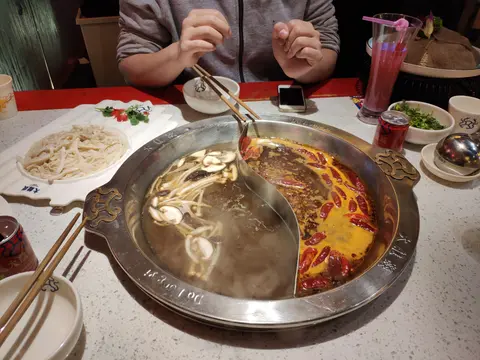 Chinese regional cuisines: a traveler’s guide to what to eat whereSichuan, Cantonese, Beijing, Shanghai, Hunan, Xi’an, Yunnan: how each regional cuisine tastes and the signature dishes to order when you are there.
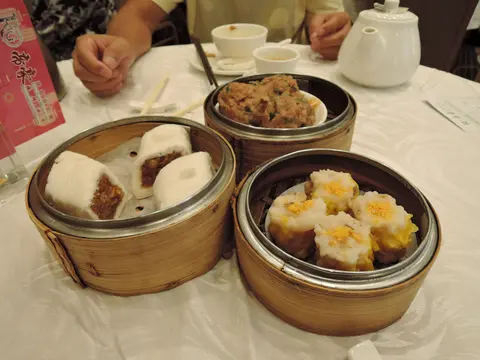 How to order food in China: QR menus, pointing and payingTable QR codes that open WeChat or Alipay, asking for a paper menu, picture menus, translating dishes, sharing, paying and why you do not tip.
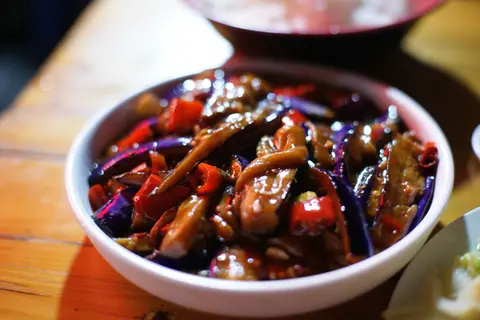 Vegetarian and vegan in China: how to eat well without meatBuddhist vegetarian restaurants, the hidden lard, stock and oyster sauce to watch for, safe dishes to order and the Chinese phrases that work.