
Tea houses in China: how to order and what it costs
Chengdu teahouses, Hangzhou tea farms, Guangzhou yum cha seat fees (¥3–20), Beijing and Shanghai classics: how to order, refills, prices, phrases and the tea scam.
In a Chinese teahouse you usually pay for a cup or pot of tea (in Chengdu often per person, roughly ¥16–58 at the best-known old teahouse), and the hot water refills are part of the deal: you can sit for hours. In Guangzhou dim sum halls you pay a per-person tea seat fee (茶位费) of about ¥3–20 on top of the food. The places to be wary of are the ones a friendly stranger walks you into.
Five kinds of tea place, five ways to pay
- Old-style Sichuan teahouse. Bamboo chairs, a gaiwan (lidded bowl) each, and an attendant topping up from a long-spouted kettle. The classic is Heming Teahouse (鹤鸣茶社) in People's Park, Chengdu: open about 07:00–22:00, tea from about ¥16 to ¥58 depending on the leaf, and an upstairs area with a ¥48-per-person minimum that includes performances such as face-changing (prices reported September 2025). Other Chengdu teahouses range from a ¥5 bowl of jasmine tea to rooms at ¥48–128.
- Tea-farm tasting in Hangzhou. In Longjing village, families pour their own Dragon Well (龙井) green tea for visitors. The tasting is usually free if you buy; the leaf is sold by the jin (斤, 500 g), so ask the price per jin before the kettle goes on. The free China National Tea Museum nearby explains what you are tasting.
- Yum cha in Guangzhou (饮茶). This is a dim sum meal, not a tea session. You pick a tea, the restaurant charges a tea seat fee per person, and the dumplings are extra. A 2024 survey found fees of ¥3–20, typically ¥5–10 in traditional halls, higher for river views or private rooms; one old restaurant charged ¥9 in its main hall but ¥3.8 if you settled before 08:30. Since 1 May 2026, Guangzhou rules require every charge to be clearly priced and any restaurant charging the fee to offer a choice of teas (black, green, oolong, pu'er, chrysanthemum). See our Guangzhou guide.
- Show teahouse in Beijing. Lao She Teahouse (老舍茶馆), on West Qianmen Street, is listed by Beijing's official tourism site as open daily 10:00–22:00; individual visitors can walk in without a reservation. Performances are ticketed separately: check the current programme and book through the teahouse's official channel.
- Heritage teahouse in Shanghai. Huxinting (湖心亭), the pavilion in the lake by the zigzag bridge at Yu Garden, has served tea for over 240 years and reopened on 10 July 2025 after nearly two years of restoration, now with tea-art service as well as modern tea drinks. Expect landmark prices and check the menu before you sit.
Chain tea shops such as Chagee (霸王茶姬) and Heytea (喜茶) are something else: milk tea and fruit tea to go, ordered by QR code or mini-program, roughly ¥15–25 a cup. Good, but not a teahouse.
How ordering works
- Sit first, then order. Someone brings a menu or points to a price board. You order per cup/bowl (杯 / 碗), per pot (壶), or per person.
- Check what the price covers. Ask whether there is a seat fee or minimum spend, and whether the price is per person or per pot. In Guangzhou the fee must be on the menu.
- Refills are normal. In Sichuan teahouses an attendant tops up the hot water or leaves a thermos. In Cantonese restaurants, tip the teapot lid open or leave it ajar and staff will bring more water.
- Pay at the end. Mobile payment works almost everywhere; see Alipay for foreigners.
Drinking from a gaiwan: hold the saucer, tilt the lid slightly and use it to hold back the leaves while you sip. Don't fish the leaves out; they stay in for every refill.
Ear cleaning (采耳) is a Chengdu teahouse tradition. At Heming it was ¥30, plus ¥10 for disposable tools. Agree the price first.
The tea ceremony scam
The UK government warns that friendly strangers may invite you to a bar or to drink tea, after which the place demands a large bill. It often starts with "practising English" near a landmark and ends in a private room with a menu without prices. Choose your own teahouse, ask the price before you order, and walk out if no price is shown. More in scams to avoid in China.
Phrases to show
- 加水 (jiā shuǐ): more hot water, please
- 一壶茶 (yì hú chá): a pot of tea
- 一杯 (yì bēi): one cup
- 茉莉花茶 (mòlìhuā chá): jasmine tea
- 绿茶 (lǜchá) / 普洱 (pǔ'ěr) / 菊花茶 (júhuā chá): green / pu'er / chrysanthemum
- 茶位费多少? (chá wèi fèi duōshao?): how much is the seat fee?
- 一斤多少钱? (yì jīn duōshao qián?): how much per jin?
- 买单 (mǎidān): the bill, please
Etiquette in one minute
When someone pours for you, tap two fingers on the table a couple of times: a quiet thank-you that doesn't interrupt the conversation. Pour for others before yourself, and don't fill cups to the brim. For more table manners, see China etiquette tips.
Sources
- Guangming Online: Guangzhou Early Tea Heritage Protection Regulations, in force 1 May 2026 (Chinese) (m.gmw.cn)
- Dayoo (Guangzhou Daily): Guangzhou yum cha tea seat fees ¥3–20 per person (Sept 2024, Chinese) (news.dayoo.com)
- China National Tea Museum (official site) (teamuseum.cn)
- Lao She Teahouse (official site, Chinese) (laosheteahouse.com)
- Visit Beijing (official): Lao She Teahouse (english.visitbeijing.com.cn)
- Xinhua: Huxinting teahouse at Yu Garden reopens after restoration (July 2025, Chinese) (news.cn)
- UK FCDO travel advice: China safety and security (tea-tasting scam) (gov.uk)
- HK01: six old teahouses in Chengdu, prices incl. Heming Teahouse (Sept 2025, Chinese) (global.hk01.com)
- Visit Beijing (official): Lao She Teahouse current visitor hours and reservations (english.visitbeijing.com.cn)
Checked against these sources on 2026-10-28. Rules change often, so confirm on the official site before you go.
Ask about this page
Stuck on something? Ask here. Our team answers within 24 hours and emails you the answer.
Questions are public (your email is not). We check them before they appear.
Read next
More on Food
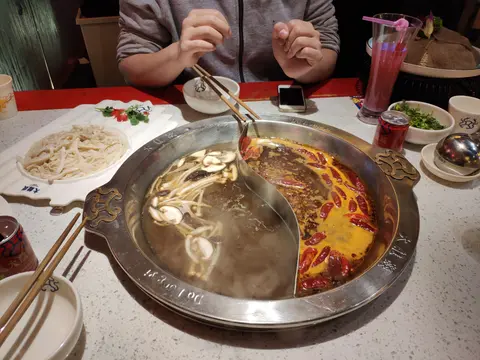 Chinese regional cuisines: a traveler’s guide to what to eat whereSichuan, Cantonese, Beijing, Shanghai, Hunan, Xi’an, Yunnan: how each regional cuisine tastes and the signature dishes to order when you are there.
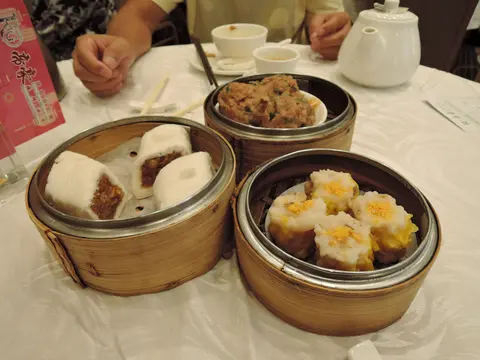 How to order food in China: QR menus, pointing and payingTable QR codes that open WeChat or Alipay, asking for a paper menu, picture menus, translating dishes, sharing, paying and why you do not tip.
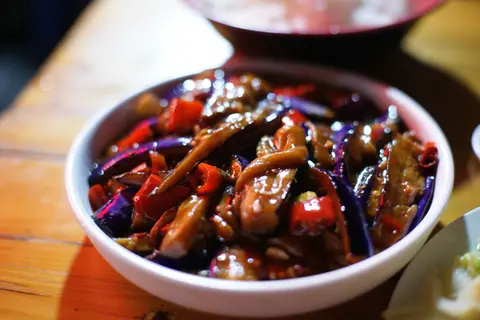 Vegetarian and vegan in China: how to eat well without meatBuddhist vegetarian restaurants, the hidden lard, stock and oyster sauce to watch for, safe dishes to order and the Chinese phrases that work.