
Buying Tea in China: Types, Prices by Weight and How to Check
How to buy tea in China: the six types, famous teas and their regions, what to ask before you pay, how to avoid fakes and scams, and bringing tea home.
To buy tea in China, decide which type you want, taste before you buy, and ask the price per 斤 (jīn, 500 g) before anyone pours. Buy small amounts at first, from a shop that gives a clear price and sealed packaging. Be wary of anyone who invites you to a tea tasting on the street.
The six types
Chinese tea is grouped by how it is processed. UNESCO, which added China's traditional tea processing to its intangible heritage list in 2022, names the same six:
- Green tea (绿茶, lǜchá). Fresh and grassy. Examples: Longjing (龙井) from Hangzhou, Biluochun (碧螺春) from Suzhou, Huangshan Maofeng (黄山毛峰) from Anhui.
- White tea (白茶, báichá). Delicate. Example: Baihao Yinzhen (白毫银针) from Fuding, Fujian.
- Yellow tea (黄茶, huángchá). Rare and mellow. Example: Junshan Yinzhen (君山银针) from Hunan.
- Oolong (乌龙茶, wūlóngchá). Floral to toasty. Examples: Tieguanyin (铁观音) from Anxi, Da Hong Pao (大红袍) from the Wuyi Mountains.
- Black tea (红茶, hóngchá). Note the name: in Chinese this is "red tea". Example: Keemun (祁门红茶) from Anhui.
- Dark tea (黑茶, hēichá). Aged or fermented. Pu'er (普洱茶, pǔ'ěr chá) from Yunnan is the best known, sold raw (生, shēng) or ripe (熟, shú), often as a pressed cake of about 357 g.
Asking for 黑茶 gets you dark tea, not what Europeans call black tea. Ask for 红茶 instead.
Where to buy
- Near where it grows. For Longjing, visit Longjing Village in Hangzhou. For Wuyi rock tea, see the Wuyi Tea Expo Park.
- Learn first. The China National Tea Museum in Hangzhou explains the types.
- Tea markets and shops in large cities. Many have tasting tables. Ask for a clear price list.
For drinking tea rather than buying it, see how to order in a tea house.
How to buy
- Ask: 这个多少钱一斤? (zhège duōshao qián yì jīn?), how much per jin? A 两 (liǎng) is 50 g, so 10 liang make a jin.
- Ask to taste: 可以试喝吗? (kěyǐ shì hē ma?). Tasting is often free, but ask whether there is a fee first.
- Ask for a small amount: 我只要一两 (wǒ zhǐ yào yì liǎng), I only want one liang.
- Ask for sealed packs: 请真空包装 (qǐng zhēnkōng bāozhuāng), vacuum-packed, please.
- Check the total on the scale or the phone before you scan to pay.
Pre-Qingming (明前, míngqián) green tea, picked before the Qingming Festival in early April, is the most prized and usually costs more. Ask the harvest date.
Fakes and scams
- Longjing. Only tea from the protected area of about 168 km² around West Lake may be labelled West Lake Longjing (西湖龙井). Much tea sold as Longjing comes from elsewhere. Look for official labels, and do not pay top prices without proof of origin.
- Pu'er. The name is legally tied to specific Yunnan regions. Be cautious about very old cakes: age is hard to verify, so pay for what you enjoy.
- Street invitations. A friendly stranger who takes you to a tea tasting can lead to a very large bill. See scams to avoid.
- Tour stops. Cheap tours may include long stops at tea shops. You do not have to buy.
Taking tea home
Keep leaves sealed, dry and away from strong smells. Tea is generally accepted in reasonable personal quantities when entering China, as our customs guide explains. Your home country has its own rules on plant products, so check them before you buy a lot.
Allergens
Plain tea leaves are simple, but scented teas, flower teas and blends may contain other ingredients, and milk tea usually contains dairy. If you have an allergy, ask what is in the blend and read our food allergies guide.
Sources
- UNESCO: Traditional tea processing techniques and associated social practices in China (2022) (ich.unesco.org)
- Wikipedia: Chinese tea (categories, famous teas and origins) (en.wikipedia.org)
- Wikipedia: Longjing tea (protected origin, harvest, counterfeits) (en.wikipedia.org)
- Wikipedia: Pu'er tea (raw and ripe, geographical indication, cakes) (en.wikipedia.org)
Checked against these sources on 2026-11-04. Rules change often, so confirm on the official site before you go.
Ask about this page
Stuck on something? Ask here. Our team answers within 24 hours and emails you the answer.
Questions are public (your email is not). We check them before they appear.
Read next
More on Food
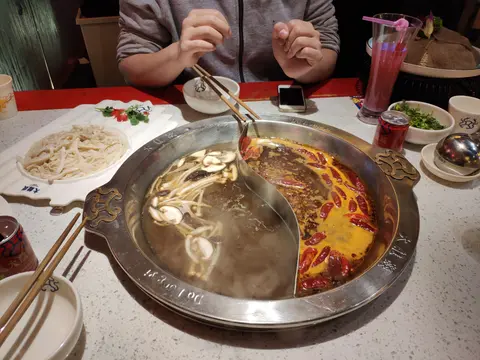 Chinese regional cuisines: a traveler’s guide to what to eat whereSichuan, Cantonese, Beijing, Shanghai, Hunan, Xi’an, Yunnan: how each regional cuisine tastes and the signature dishes to order when you are there.
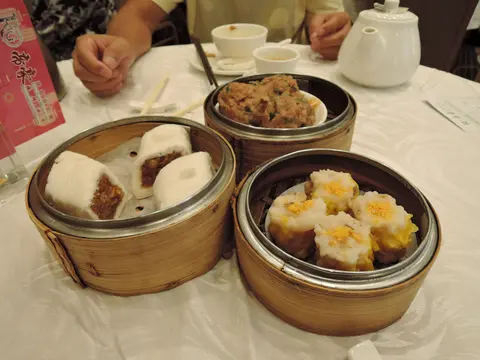 How to order food in China: QR menus, pointing and payingTable QR codes that open WeChat or Alipay, asking for a paper menu, picture menus, translating dishes, sharing, paying and why you do not tip.
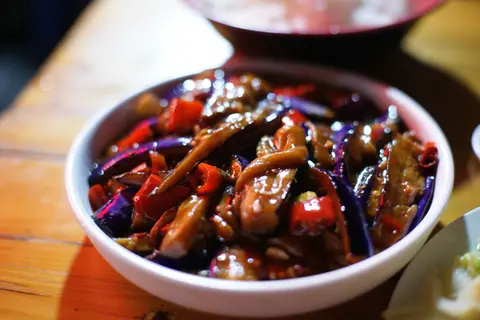 Vegetarian and vegan in China: how to eat well without meatBuddhist vegetarian restaurants, the hidden lard, stock and oyster sauce to watch for, safe dishes to order and the Chinese phrases that work.