
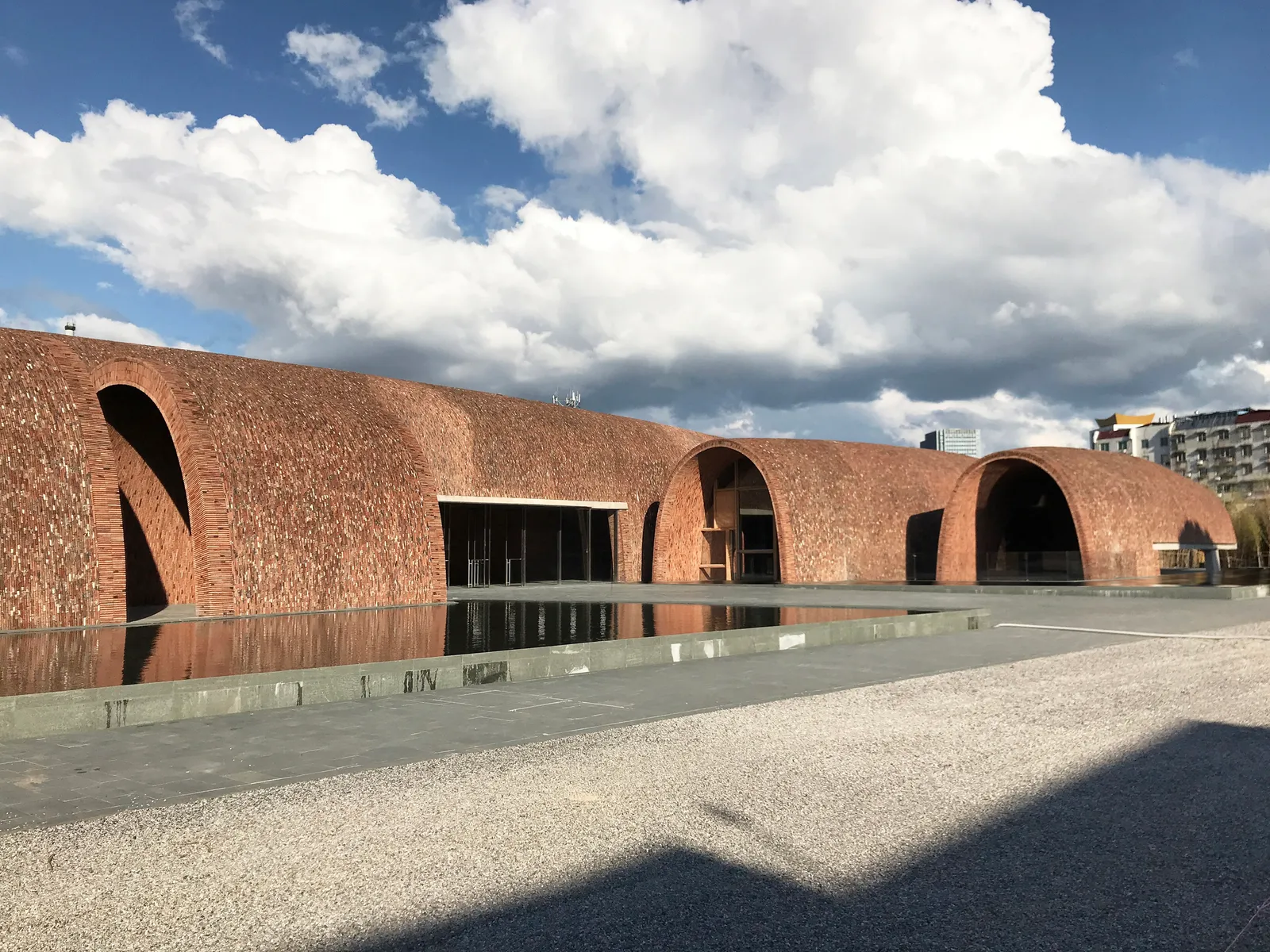
The blue that crossed the sea
Persian cobalt met Jingdezhen clay and became blue-and-white porcelain, which sailed to Istanbul and Amsterdam and is still made in the town.
A potter in Jingdezhen needs two things that sound simple: a white clay that survives a fierce fire, and a blue that stays blue. For the blue, the story runs through Persia. For the clay and the kilns, it runs through a river town in Jiangxi. Put them together and you get blue-and-white porcelain, which ended up on tables from Istanbul to Amsterdam.
A first try, and a shipwreck
Blue-and-white is older than Jingdezhen’s fame. Tang-period pieces with a whitish slip have been found at kilns in Gongxian, Henan. The best-known find at sea is the Belitung wreck, an Arab-style dhow that sank off Indonesia around 830 with some 60,000 objects, mostly Changsha bowls, among them the earliest intact blue-and-white dishes known. They are now in Singapore’s Asian Civilisations Museum. Historians disagree about where the idea came from. One account says it arrived from Abbasid Iraq, where cobalt was already painted on white-glazed earthenware in the 9th century, but recent research questions that. Whether true blue-and-white existed in the Song is also debated.
A town made for porcelain
Jingdezhen is named after the reign of Emperor Zhenzong, around 1004. It had good pottery stone nearby, pine forests for fuel and a river to carry fragile cargo. In the Song and Yuan its speciality was qingbai, “bluish-white”, a translucent, jade-like ware. Not far away, the hill village of Gaoling gave the world the word “kaolin”.
The costly blue
Then came cobalt. The pigment was called Huihui qing, “Islamic blue”, because the ore came from Persia, and at Jingdezhen it was valued, by one estimate, at roughly twice the price of gold. Mass production of blue-and-white porcelain began in the early 14th century. At first the blue tended to run in the kiln, until potters found glazes of the right thickness.
The key date comes from a pair of vases in the British Museum. Their inscription gives the year 1351 and says that Zhang Wenjin of Yushan had them made, with an incense burner, for a Daoist temple in what is now Wuyuan, to pray for his family. They show that blue-and-white was made for Chinese altars as well as for export. Historians disagree about the beginning. The current consensus puts it around 1300 to 1320, fully developed by mid-century. A minority argues for the Southern Song; most scholars reject that.
Imperial kilns
In the Ming, the imperial kiln at Zhushan (Pearl Hill) is most often dated to 1369, though some scholars give other dates. By 1402 there were twelve imperial kilns. Reign marks began under the Yongle emperor. Work was split among specialists, perhaps thousands of workers, while court artists in the capital supplied designs for the best pieces, and flawed ones were smashed on the spot. The kilns changed too: the long climbing dragon kiln gave way to a gourd-shaped one, and late in the Ming to an egg-shaped kiln with a chimney about 19 metres tall, which cut a firing to roughly 36 hours. Chinese cobalt began to be developed in the 16th century, yet Persian cobalt stayed the most expensive.
Over the sea
Merchants, many of them Muslim, shipped early production through southern ports such as Quanzhou to Southeast and Southwest Asia, and from the 14th century Chinese blue-and-white was very popular across the Middle East. Porcelain reached the Ottoman world as gifts or war booty, and potters at Iznik copied Ming designs. Some Zhengde-era pieces even carry Persian and Arabic script. Before the 16th century Europe got porcelain mostly through Islamic intermediaries; from the 16th century the Portuguese, and later the Dutch, traded for it directly by sea.
Then came kraak ware, panelled blue-and-white from the Wanli reign (1573 to 1620). Its name is usually linked to the Portuguese carracks that carried it, though other origins have been proposed. It fills Dutch Golden Age still lifes. The Dutch East India Company shipped an estimated 30 to 35 million pieces between 1602 and 1682, and from around 1640 the potters of Delft imitated the look.
Jingdezhen today
The city keeps the whole story within reach. The imperial site is a good place to start:
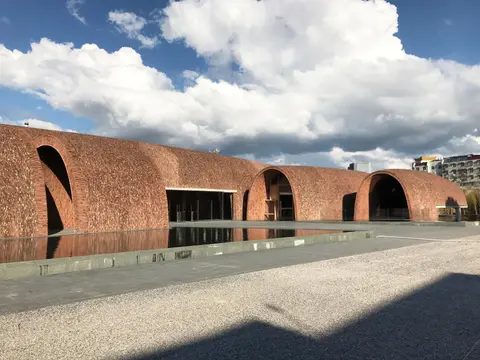 Sight in JingdezhenImperial Kiln Museum & Imperial Kiln Site Park 御窑博物馆 · 御窑厂国家考古遗址公园The site where porcelain for the Ming and Qing emperors was made for about 600 years, with excavated kilns and a striking brick-vaulted museum full of imperial wares and restored shards.
Rebuilt kilns from the Song to the Qing are still fired with wood, and craftsmen work in Qing-style workshops:
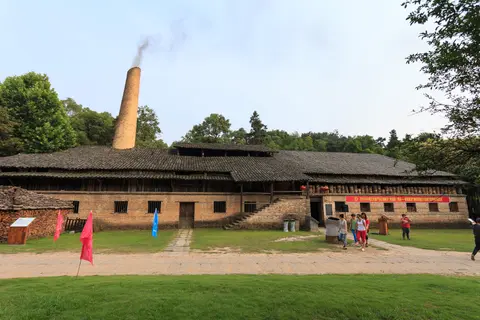 Sight in JingdezhenAncient Kiln Folk Custom Museum 古窑民俗博览区A wooded open-air museum where rebuilt Song, Yuan, Ming and Qing kilns are still fired with wood, and old craftsmen throw, trim and paint porcelain by hand in Qing workshops.
Out in the hills is the village that named kaolin:
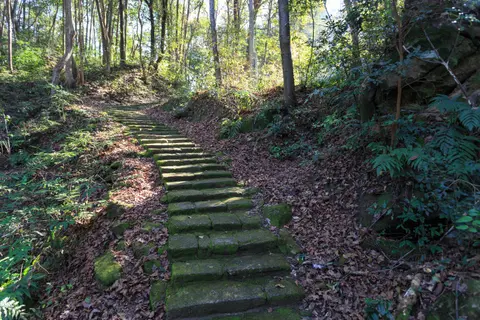 Sight in JingdezhenGaoling Village (home of “kaolin”) 高岭村 · 高岭国家矿山公园The hill village that gave the world the word “kaolin”: old clay pits, water-powered mills and the stone dock where porcelain clay was shipped down to Jingdezhen.
And you can try painting blue-and-white yourself:
Sight in JingdezhenHands-on pottery class (The Pottery Workshop and others) 乐天陶社陶艺体验课Try throwing on the wheel or painting blue-and-white porcelain with local masters; The Pottery Workshop runs 3-hour classes with English translation.More in [[city:jingdezhen]].
Places in this story
Sources
- Wikipedia: Blue and white pottery (en.wikipedia.org)
- Wikipedia: Jingdezhen porcelain (en.wikipedia.org)
- Wikipedia: David Vases (en.wikipedia.org)
- Wikipedia: Belitung shipwreck (en.wikipedia.org)
- Wikipedia: Kraak porcelain (en.wikipedia.org)
Legends are told as legends. Where historians disagree, we say so.
More stories
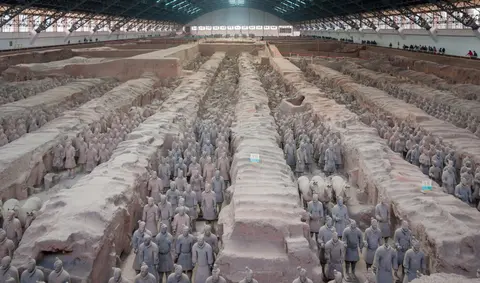 HistoryThe well that found an armyIn 1974 farmers digging a well near Xi’an hit pieces of clay. They had found the First Emperor’s army, and the tomb it guards is still sealed.
 LegendsThe White Snake and Leifeng PagodaA snake spirit in love, a monk who stood in her way, and a real pagoda on West Lake that fell in 1924 and rose again.
 Travelers of the pastMarco Polo’s City of HeavenIn the 13th century a Venetian called Hangzhou the finest city in the world. What did he really see, and what is still there at West Lake?