
Yongle Emperor
永乐帝Yǒnglè Dì1402–1424
The third Ming emperor (r. 1402–1424), who moved the capital to Beijing, built the Forbidden City and sent Zheng He’s fleets across the Indian Ocean.
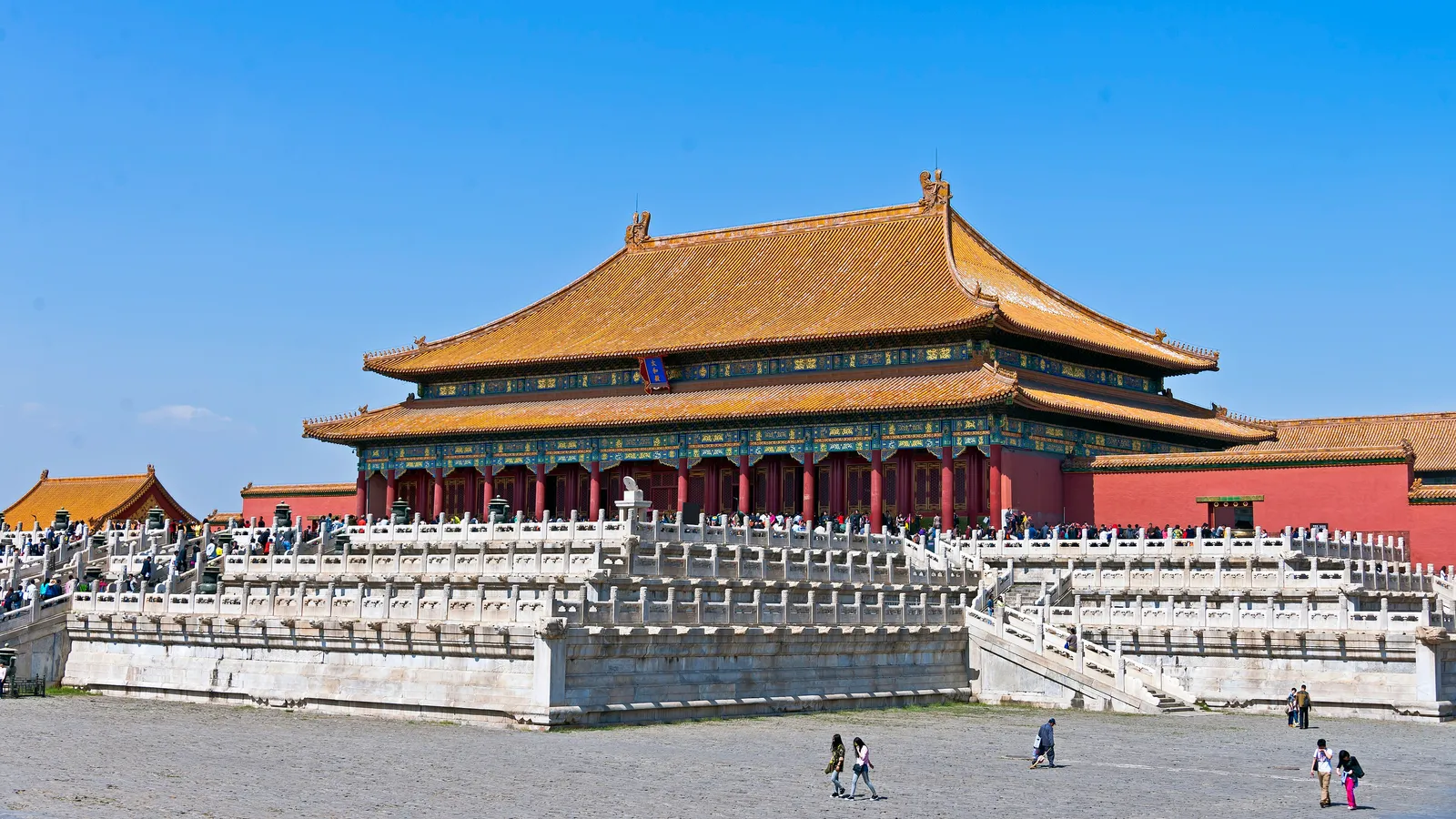
The Yongle Emperor (Zhu Di, 1360–1424) was the fourth son of the Ming founder, the Hongwu Emperor, and took the throne in 1402 after a civil war against his nephew. In 1403 he raised Beiping, as the city was then called, to a second capital and renamed it Beijing; building of the new palace began in 1407 and was completed in 1420, and Beijing formally became the main capital in 1421. His reign also produced the huge Yongle Encyclopedia, of which only a fraction survives, the repair of the Grand Canal, and the first great voyage of Zheng He in 1405. The Temple of Heaven was first built in his time, and he is buried at Changling, the first of the Ming Tombs north of the city. Together these places are the easiest way to see the legacy of the Ming dynasty in Beijing.
Also known as: Zhu Di · Ming Chengzu
Where to see it in China
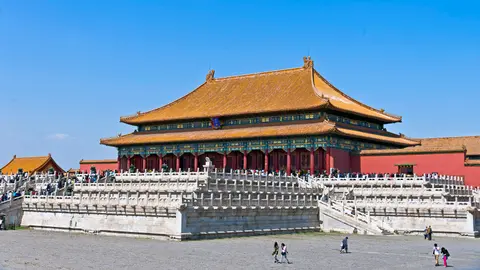 BeijingForbidden City (Palace Museum) 故宫博物院The palace he began building in 1407 and finished in 1420, later also home to the Qing emperors, now China’s largest museum of imperial art.
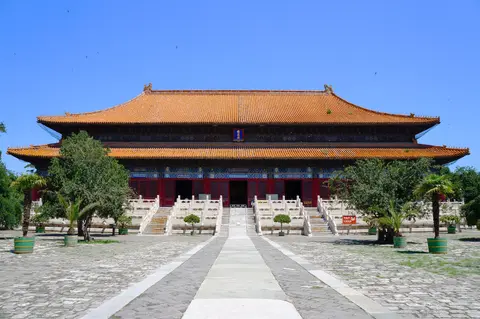 BeijingMing Tombs 明十三陵The valley where 13 Ming emperors lie; Changling, with its huge wooden hall, is the tomb of the Yongle Emperor.
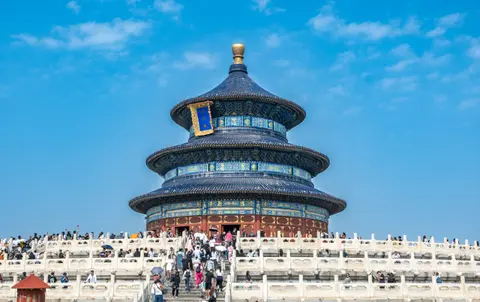 BeijingTemple of Heaven 天坛公园The Ming altar complex where emperors prayed for good harvests, first built in his reign and set in a large park.BeijingChangling 长陵His tomb, the first and largest of the Ming Tombs
Where we mention it
Related entries
Sources
- Yongle Emperor — Wikipedia (en.wikipedia.org)
- Yongle Emperor — World History Encyclopedia (worldhistory.org)
- Temple of Heaven — Wikipedia (en.wikipedia.org)