
Chinese Street Food Guide: What to Order and How to Buy It
Nine Chinese street foods to look for, with characters and pinyin, how to order and pay at a stall, how to choose a safe one, and allergens to check.
Chinese street food is mostly cheap, quick and cooked in front of you, so the safest and simplest approach is to point at what is on the grill and pay by phone. Start with jianbing in the morning, roujiamo or skewers later in the day, and tanghulu for something sweet. Pick food cooked fresh and hot, and show a card if you have an allergy.
What to order
These are widely sold, though each has a home region:
- Jianbing (煎饼, jiānbǐng). A crepe with egg, crispy cracker or fried dough, scallion and sauce. Mostly a breakfast food. See our jianbing page.
- Roujiamo (肉夹馍, ròujiāmó). Chopped meat in a crisp flatbread, from Shaanxi. In Muslim areas of Xi'an, the meat is usually beef. See the roujiamo page.
- Lamb skewers (羊肉串, yángròu chuàn). Grilled with cumin and chili. Tell the seller how spicy you want them. See the lamb skewers page.
- Liangpi (凉皮, liángpí). Cold, slippery noodles from wheat starch with a sour and spicy dressing. See the liangpi page.
- Stinky tofu (臭豆腐, chòu dòufu). Fermented tofu, often fried. It smells strong and usually tastes milder. Changsha's version is black and spicy. See the stinky tofu page.
- Tofu pudding (豆腐脑, dòufunǎo). Soft tofu, sweet or savoury depending on the region. See the tofu pudding page.
- Malatang (麻辣烫, málàtàng). Pick your own vegetables, tofu and meat. They are boiled in a spicy broth and charged by weight or by skewer. See the malatang page.
- Pan-fried pork buns (生煎, shēngjiān). Crisp below, soft above, juicy inside. See the pan-fried buns page.
- Tanghulu (糖葫芦, tánghúlu). Fruit on a bamboo skewer with a glassy sugar shell. The classic fruit is hawthorn, which is quite sour.
Sellers also often offer grilled squid, sausages and sweet potatoes. For the bigger picture, see regional cuisines.
How to order
- Watch first. Many stalls show what they sell on a board or a tray.
- Point and say: 这个,一份 (zhège, yí fèn), this one, one portion.
- Ask the price: 多少钱? (duōshao qián?). For food sold by weight or by skewer, ask before it is cooked.
- Adjust the spice: 不要辣 (bú yào là), not spicy, or 微辣 (wēi là), a little spicy.
- Pay. Scan the seller's QR code with Alipay or WeChat Pay. A phone with mobile data is often easier than cash, but keep some small change as a backup. See paying in China.
Eat at the stall or on the move, and use the nearest bin for your sticks and bowl.
How to choose a stall
Food safety authorities link raw and undercooked meat, poultry and seafood to foodborne illness, so these rules are worth following:
- Choose food cooked to order and served steaming hot.
- Be more careful with cold dishes, cut fruit and anything that has been sitting out.
- Look for stalls with regular customers and food moving quickly.
- Pick drinks sealed by the factory, or hot drinks.
For places to go, see our guide to night markets and Xi'an's Muslim Quarter.
Allergens and diet
Stalls rarely list ingredients, and one wok or griddle cooks everything:
- Wheat and egg: jianbing, flatbreads and buns.
- Soy: tofu dishes, sauces and marinades.
- Peanut and sesame: in dressings, on liangpi and as crushed toppings.
- Shellfish: dried shrimp in savoury tofu pudding and soups.
Read the food allergies guide and show a help card before you order. If you eat halal, look for 清真 (qīngzhēn) and see the halal food guide.
Sources
- Wikipedia: Jianbing (en.wikipedia.org)
- Wikipedia: Roujiamo (en.wikipedia.org)
- Wikipedia: Stinky tofu (en.wikipedia.org)
- Wikipedia: Tanghulu (en.wikipedia.org)
- WHO: Food safety fact sheet (risks of raw and undercooked food) (who.int)
Checked against these sources on 2026-11-04. Rules change often, so confirm on the official site before you go.
Ask about this page
Stuck on something? Ask here. Our team answers within 24 hours and emails you the answer.
Questions are public (your email is not). We check them before they appear.
Read next
More on Food
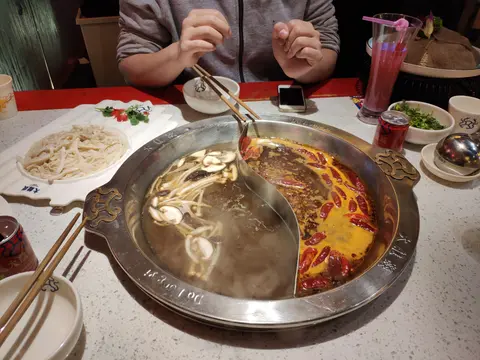 Chinese regional cuisines: a traveler’s guide to what to eat whereSichuan, Cantonese, Beijing, Shanghai, Hunan, Xi’an, Yunnan: how each regional cuisine tastes and the signature dishes to order when you are there.
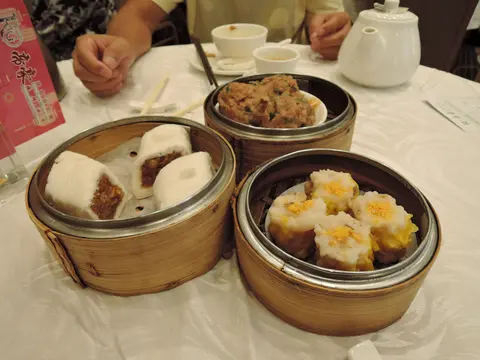 How to order food in China: QR menus, pointing and payingTable QR codes that open WeChat or Alipay, asking for a paper menu, picture menus, translating dishes, sharing, paying and why you do not tip.
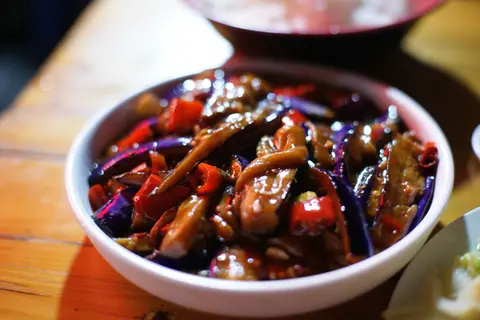 Vegetarian and vegan in China: how to eat well without meatBuddhist vegetarian restaurants, the hidden lard, stock and oyster sauce to watch for, safe dishes to order and the Chinese phrases that work.