
Chinese lunar calendar
农历nónglì
China’s traditional lunisolar calendar: months follow the moon, the 24 solar terms follow the sun, and it still sets festival and temple dates.
China uses the international Gregorian calendar in daily life, but traditional festivals still follow the nongli, often called the lunar calendar, which is really lunisolar. Each month begins at the new moon, so the 15th day is about the full moon; that is why the Spring Festival, the Lantern Festival and the Mid-Autumn Festival move between Western dates every year, and an extra leap month is added roughly every three years to keep pace with the seasons. Alongside the months run the 24 solar terms, fixed points about 15 days apart on the sun’s yearly path, such as the spring equinox, Qingming and the winter solstice, which farmers used to time sowing and harvest; UNESCO listed them as intangible cultural heritage in 2016. For travellers, the calendar shows up at temples: many are busiest, and some free or open longer, on the 1st and 15th of each lunar month. Check the Western date of any festival for the year you travel, because it can shift by several weeks.
Also known as: Nongli
Where to see it in China
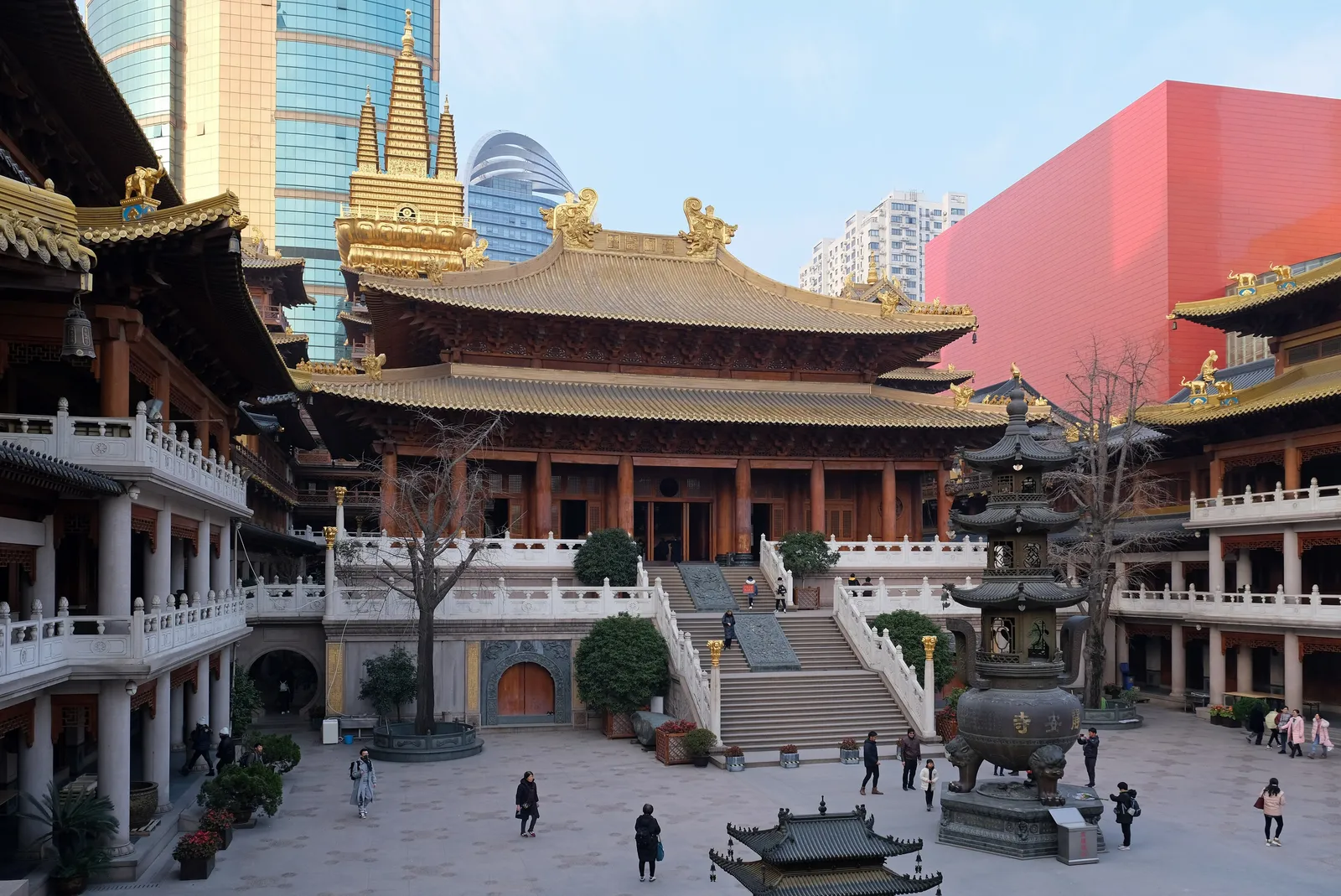
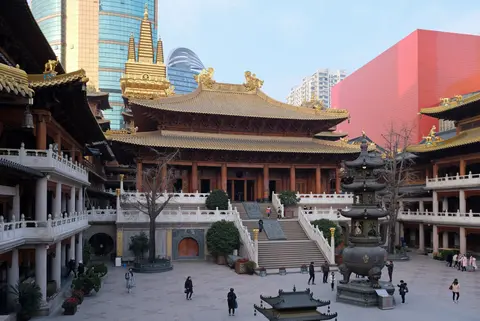 ShanghaiJing’an Temple 静安寺Entry is free on the 1st and 15th of each lunar month, when worshippers crowd in from before dawn.
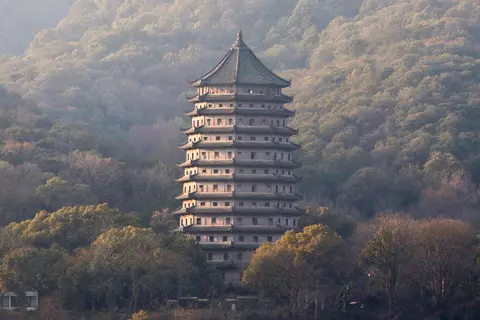 HangzhouSix Harmonies Pagoda 六和塔The Qiantang tidal bore below the pagoda peaks around the 18th day of the 8th lunar month.
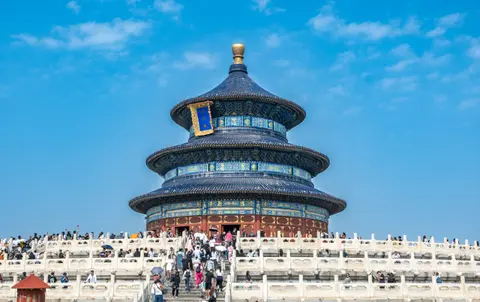 BeijingTemple of Heaven 天坛公园Ming and Qing emperors came here to pray for good harvests, with the main rites set by the calendar, including the winter solstice.
Where we mention it
- The scroll of a city on a spring day Zouzou Stories · Architecture and craft
- The River of Stars Zouzou Stories · Legends
- Two Lovers and a Spring Full of Butterflies Zouzou Stories · Legends
- How an Emperor Got the Lanting Preface Zouzou Stories · History
- The man who walked China for thirty years Zouzou Stories · Travelers of the past
- China in August 2027: weather, crowds and where to go Travel guides
- China in September 2027: weather, crowds and where to go Travel guides
- Quanzhou in 2 days: old town temples, stone bridges, oyster villages Travel guides
Related entries
Sources
- The Twenty-Four Solar Terms — UNESCO Intangible Cultural Heritage (ich.unesco.org)
- Chinese calendar — Encyclopaedia Britannica (britannica.com)
- Chinese calendar — Wikipedia (en.wikipedia.org)