
Papermaking
造纸术Zàozhǐshù
Paper began in China. Tradition credits the court official Cai Lun around AD 105, and handmade paper is still produced in Anhui and Yunnan.
Paper was developed in China, first for wrapping and padding; the oldest paper with legible Chinese writing is dated to 8 BC. Tradition credits Cai Lun, an official at the Han court, with an improved recipe around AD 105 using bark, old rags, hemp and fishing nets, which is why he is often called its inventor even though older paper exists. By the 3rd century paper was a common writing material. Today UNESCO lists the Xuan paper of Jing County in Anhui, made by hand in more than a hundred steps and prized for calligraphy and painting. In Yunnan, the Naxi make Dongba paper from mountain shrub bark near Lijiang, and Dai villagers in the Menghai valley still make sheets by hand. To see why paper mattered, compare it with the bamboo slips it replaced.
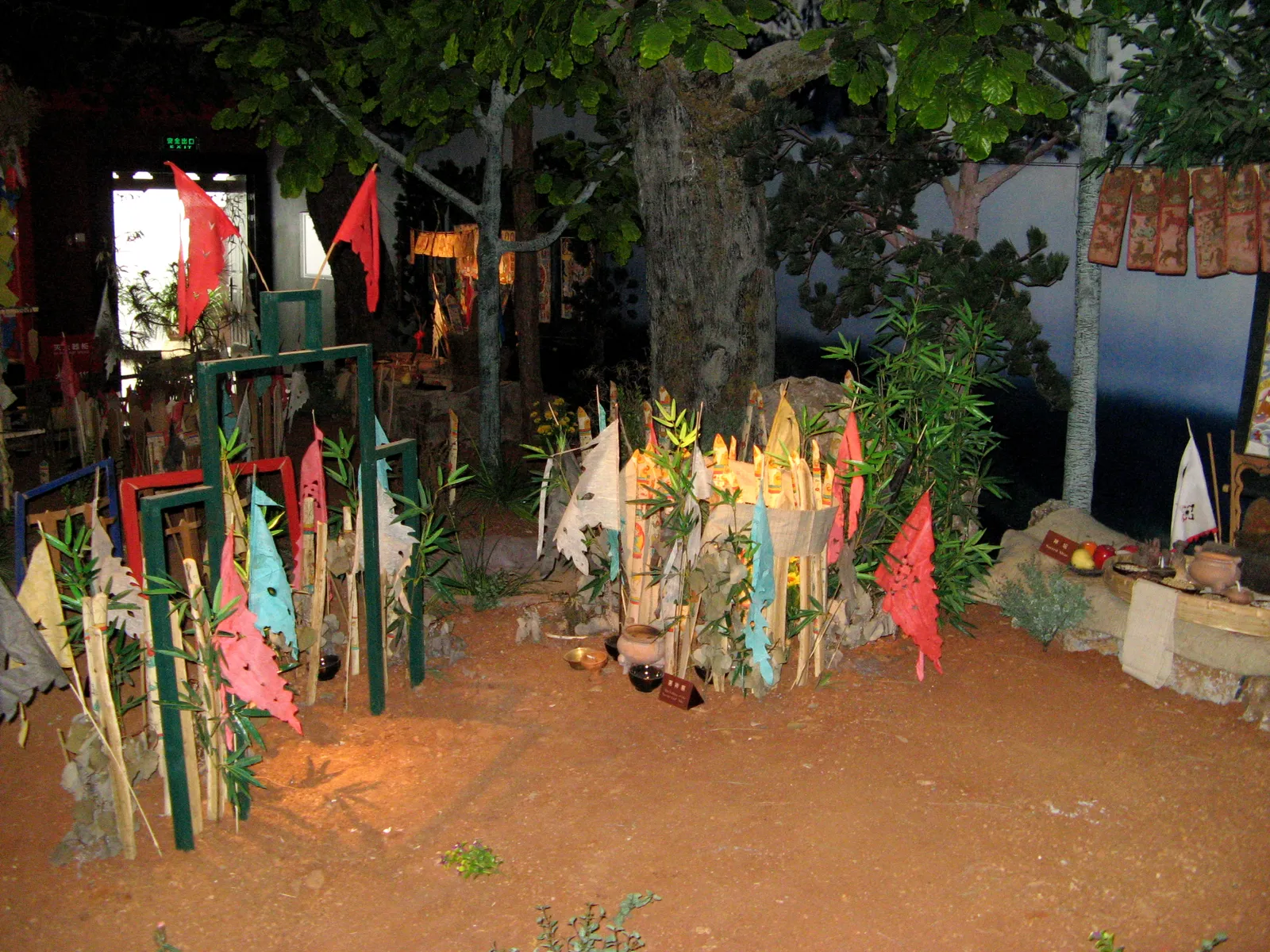
Where to see it in China
 LijiangLijiang Museum (Dongba Culture Museum) 丽江市博物院(东巴文化博物馆)A museum of Naxi life and the Dongba script, whose manuscripts are written on local handmade paper.City guideXishuangbanna 西双版纳In the Menghai valley west of Jinghong, a Dai village makes paper by hand. It is off the usual route, so go with a local guide.
Where we mention it
Related entries
Sources
- Traditional handicrafts of making Xuan paper: UNESCO Intangible Cultural Heritage (ich.unesco.org)
- Papermaking: Wikipedia (en.wikipedia.org)
- Naxi bast fiber legacy: China Daily (chinadailyhk.com)
- Menghai and paper making village: Yunnan Roads (yunnan-roads.com)