
Bamboo and wooden slips
简牍jiǎndú
Narrow strips of bamboo or wood that were China’s main writing material before paper, and the source of many ancient texts found in tombs and wells.
Bamboo and wooden slips (jiandu) are long, narrow strips, each usually holding one brush-written column of several dozen characters, tied together with cord to make a kind of book. They were the main writing material in China until paper spread during the first centuries AD, and by the 4th century bamboo had largely gone out of use. The oldest surviving examples date from the 5th century BC; bamboo was more common in the south and wood in the north. Because slips last well in tombs and wells, museums can show both lost classics and everyday records, such as tax lists. Look closely at the brushwork: these are real handwriting from over 1,700 years ago, not later copies.
Also known as: jiandu
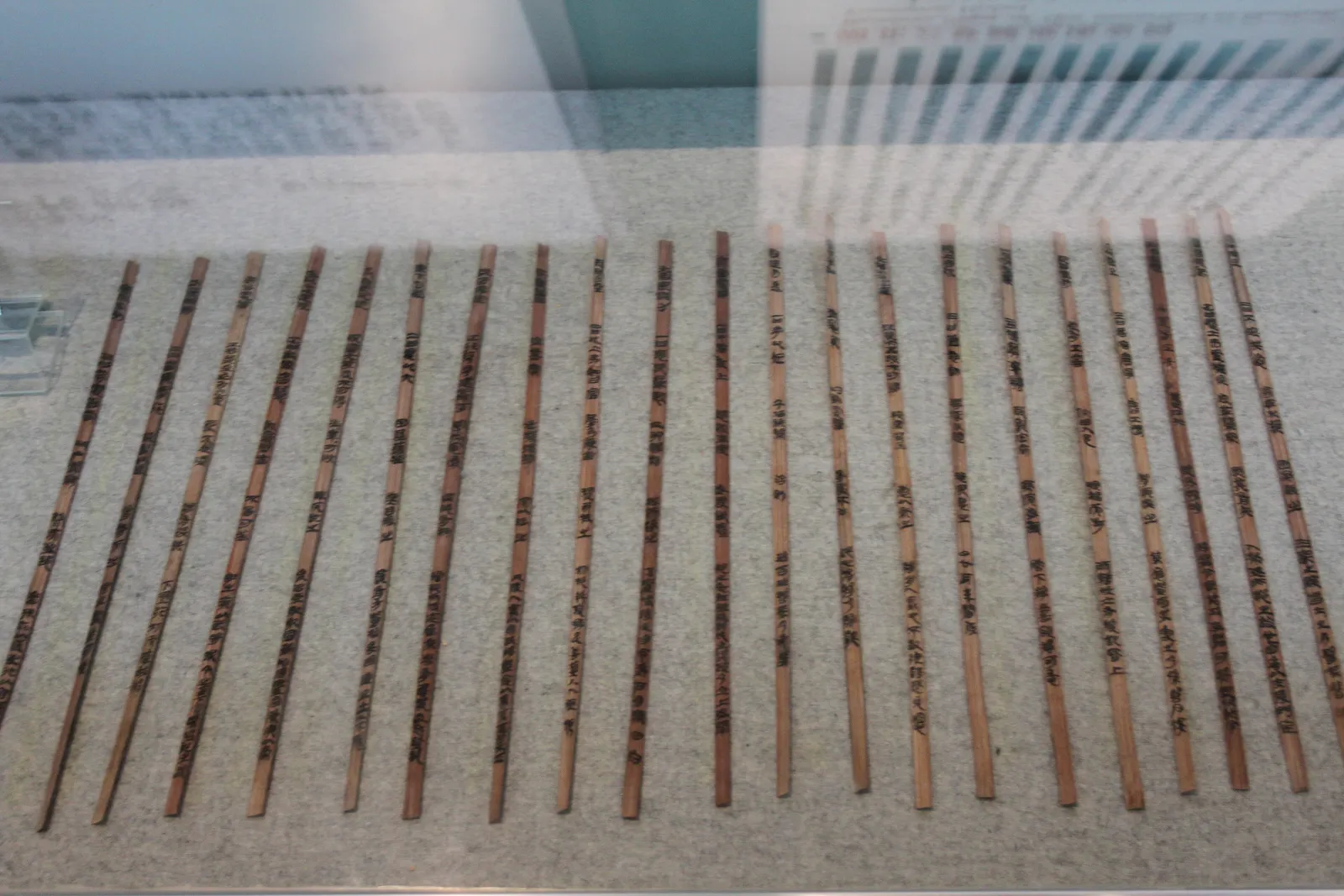
Where to see it in China
 ChangshaChangsha Bamboo Slips Museum 长沙简牍博物馆China’s first museum of slips, built around a huge Three Kingdoms-era cache of records found in a Changsha well.
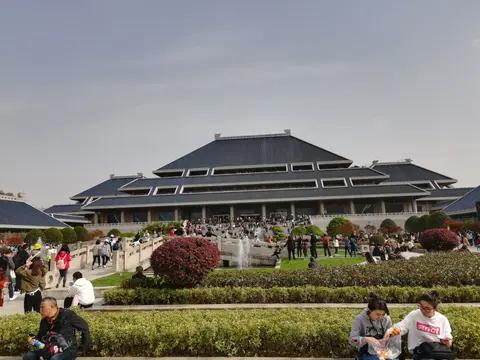 WuhanHubei Provincial Museum 湖北省博物馆Its collection includes Qin slips from Shuihudi and Chu slips from Guodian; displays change, so check what is out.
Where we mention it
Related entries
Sources
- Bamboo and wooden slips, Wikipedia (en.wikipedia.org)
- Bamboo slips reveal an ancient world, China Daily via China Services Info (chinaservicesinfo.com)
- Zoumalou bamboo slips, Wikipedia (en.wikipedia.org)
- Hubei Provincial Museum, Wikipedia (en.wikipedia.org)