
Stele
碑刻bēikè
An upright carved stone used to preserve texts, names, images or calligraphy in a durable public form.
A stele is an upright stone monument carved with writing or images for commemoration, official records, religion, education or burial. In China, steles preserve both the words and the brush style of famous calligraphers, while ink rubbings helped reproduce their carved surfaces. Xi’an’s Beilin Museum contains the Kaicheng Stone Classics, completed in 837: 114 stones with 228 carved faces and more than 650,000 characters from Confucian texts. When visiting, look beyond the wording to the script, decorative crown, stone base and signs of centuries of handling and weathering.
Also known as: stone stele
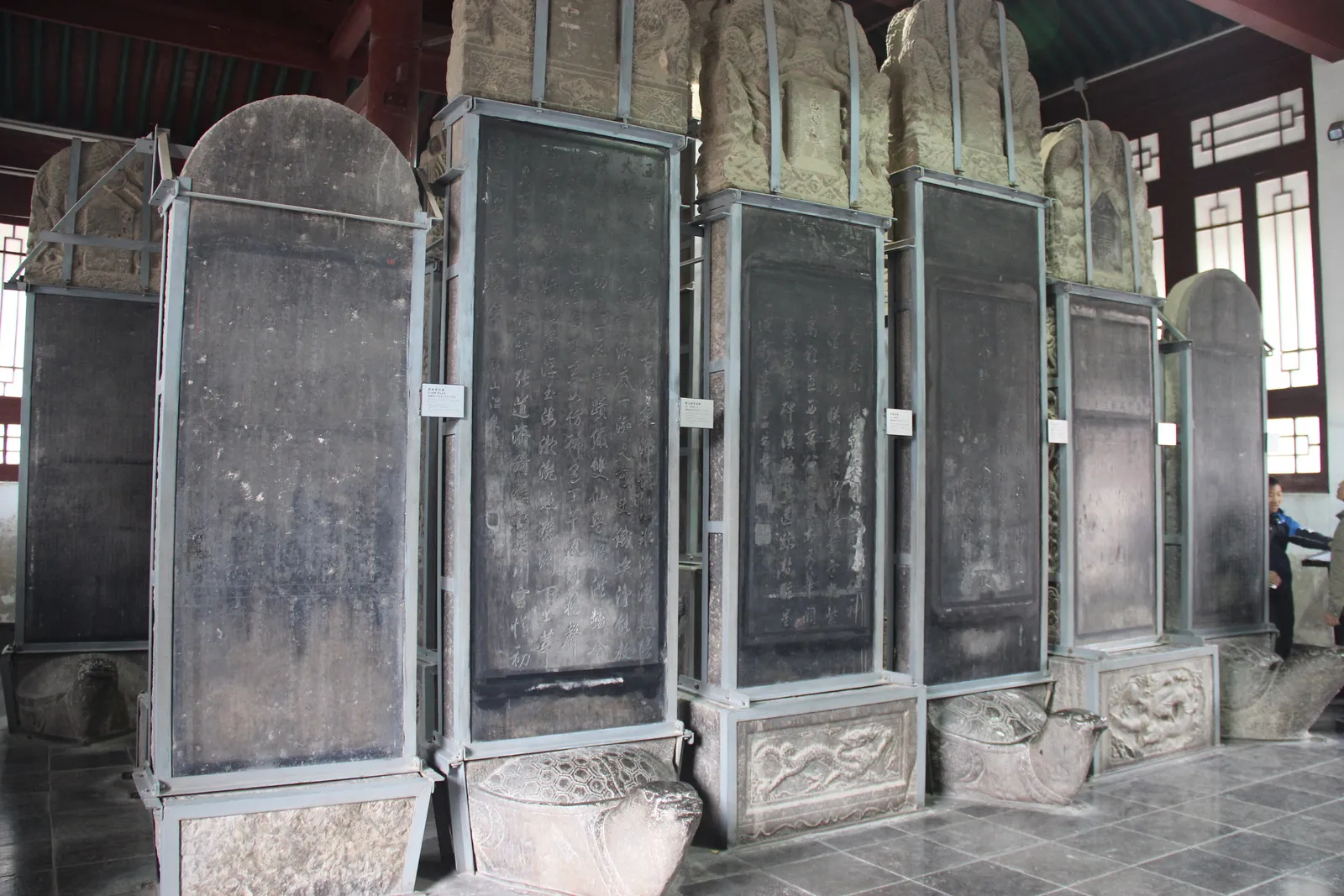
Where to see it in China
 Xi'anBeilin Museum (Forest of Stone Steles) 西安碑林博物馆Walk among halls of Confucian classics and celebrated calligraphy carved into stone, including the Kaicheng Stone Classics.
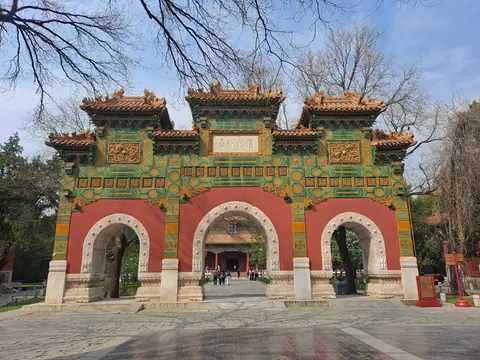 BeijingConfucius Temple and Imperial Academy 孔庙和国子监博物馆See rows of stone tablets recording the names of successful imperial examination candidates across several centuries.
Where we mention it
Related entries
Arts and craftsCalligraphy 书法The art of writing Chinese characters with brush and ink, long ranked among China’s highest arts and still practised everywhere.Ideas and beliefsImperial examination 科举制度China’s long-running written examination system for selecting government officials, rooted in the classics and abolished in 1905.PeopleConfucius 孔子The teacher and thinker of the 6th–5th centuries BC whose ideas on virtue, family and learning shaped Chinese society; nearly every old city has his temple.
Sources
- Kaicheng Stone Classics — Xi’an Beilin Museum (beilin-museum.com)
- Collections and exhibitions — Xi’an Beilin Museum (beilin-museum.com)
- Confucius Temple and Imperial Academy — Beijing Municipal Culture and Tourism Bureau (s.visitbeijing.com.cn)