
The Cowherd and the Weaver Girl
牛郎织女Niúláng Zhīnǚ7th day of the 7th lunar month
The Chinese star legend of two lovers, the stars Altair and Vega, who meet once a year on the seventh day of the seventh lunar month: the Qixi Festival.
Legend says Zhinü, a heavenly weaver, and Niulang, a cowherd, fell in love and were banished to opposite banks of the heavenly river, the Milky Way. Once a year, on the seventh day of the seventh lunar month, magpies form a bridge so they can meet. There are many versions; the two stars already appear by name in a poem of the Classic of Poetry, before the full story took shape. The story grew into the Qixi Festival, also marked as Tanabata in Japan and Chilseok in Korea. No single place owns it, so travellers can look for its echoes at the Summer Palace and in China’s silk museums.
Also known as: Niulang and Zhinü

Where to see it in China
 BeijingSummer Palace 颐和园The Bronze Ox, cast in 1755 on Kunming Lake’s east bank, and the farming and weaving area to the west are popularly read as the two lovers, one of several theories.
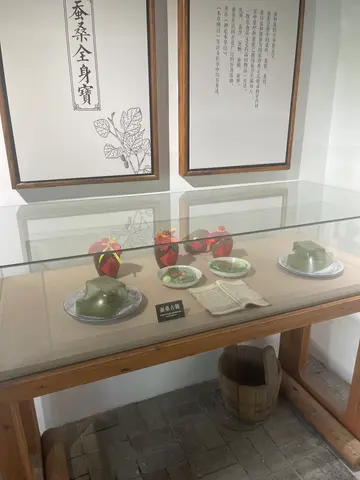 SuzhouSuzhou Silk Museum 苏州丝绸博物馆A small free museum with live silkworms, old looms and weavers at work: the craft the Weaver Girl stands for.
 HangzhouChina National Silk Museum 中国丝绸博物馆A large free museum on 5,000 years of Chinese textiles and weaving crafts, the world behind the story.
Where we mention it
Related entries
Sources
- The Cowherd and the Weaver Girl: Wikipedia (en.wikipedia.org)
- Bronze Ox at the Summer Palace explained: chinaculture.org (en.chinaculture.org)
- Bronze Ox: Travel China Guide (travelchinaguide.com)
- Summer Palace: Wikipedia (en.wikipedia.org)