
Emperor Taizong of Tang
唐太宗Táng TàizōngReigned 626–649
The second Tang emperor (reigned 626–649), born Li Shimin, who helped found the dynasty and left his mark on Xi’an, Shaolin and Jinci.
Taizong (Li Shimin) helped his father Li Yuan found the Tang dynasty, then took the throne in 626 after killing two of his brothers at the Xuanwu Gate in Chang’an. His 23-year reign secured the empire’s borders. He also collected the writings of the calligrapher Wang Xizhi and is said to have had the original Orchid Pavilion Preface buried with him. For his tomb he ordered stone reliefs of six favourite war horses, the Six Steeds of Zhaoling. Travellers can see four of those horses in Xi’an, and the palace he began there for his father.
Also known as: Li Shimin
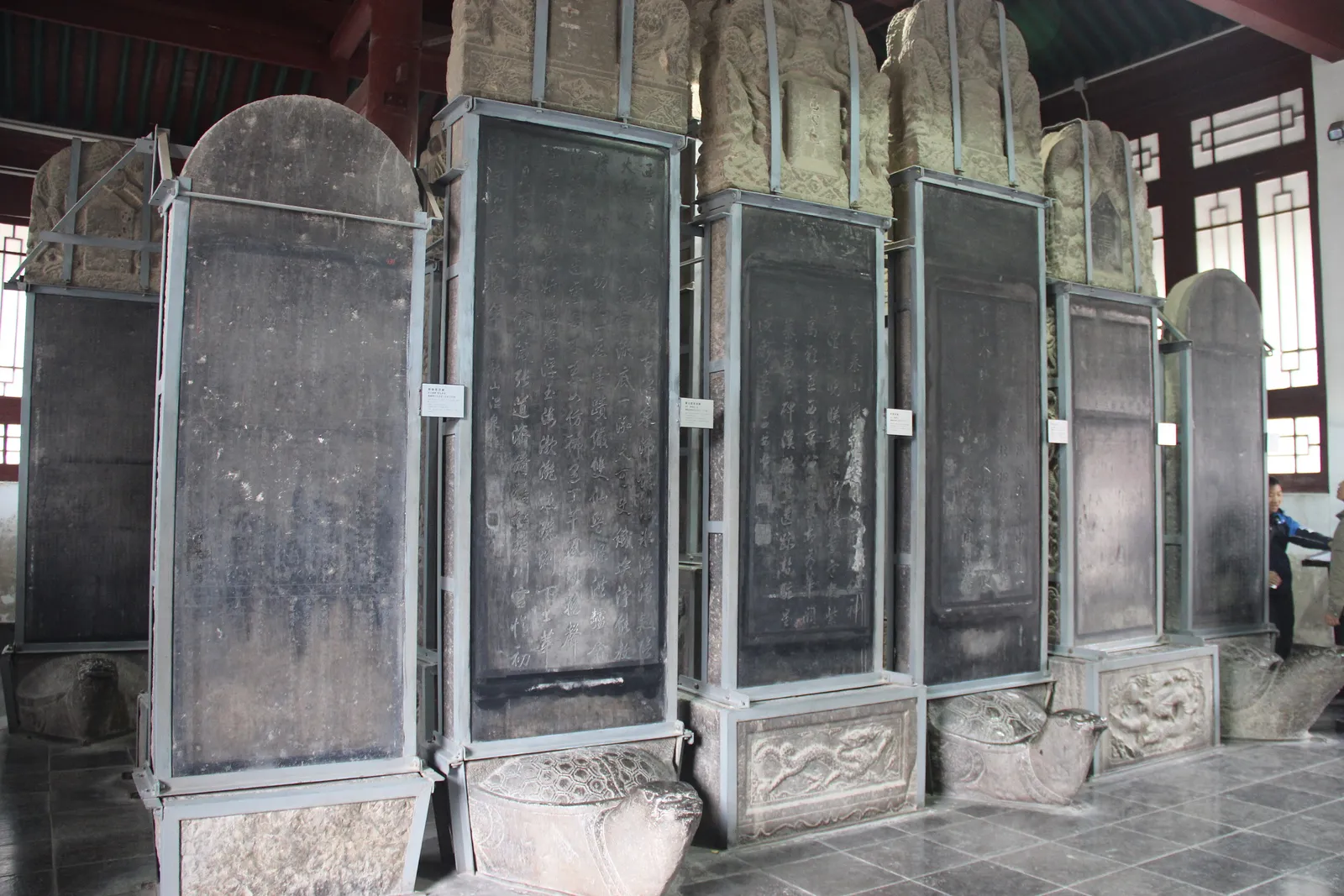
Where to see it in China
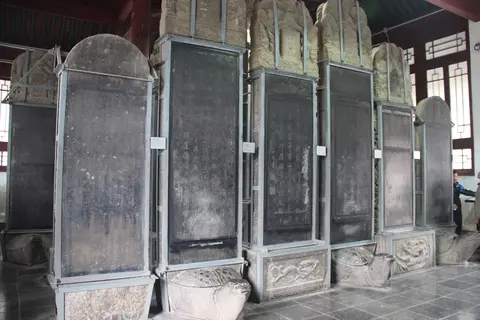 Xi'anBeilin Museum (Forest of Stone Steles) 西安碑林博物馆The sculpture galleries hold four of the Six Steeds, the stone horse reliefs made for his tomb.
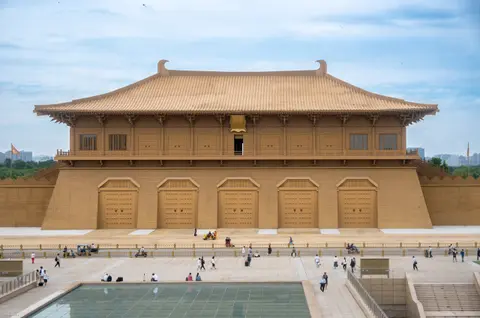 Xi'anDaming Palace National Heritage Park 大明宫国家遗址公园He began this palace in 634 for his retired father, Li Yuan: now a park with a museum and marked-out hall foundations.
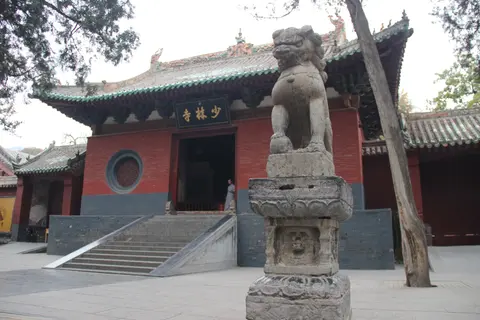 LuoyangShaolin Temple (day trip) 少林寺A stele at the temple records that its monks helped the young Li Shimin in a campaign around 621.
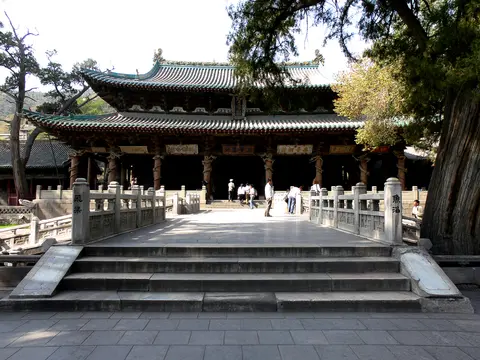 PingyaoJinci Temple (Taiyuan, day trip) 晋祠Home to the inscription he wrote here in early 646 on returning to Taiyuan, the Jinci Ming, kept on a stele.
Where we mention it
Related entries
DynastiesTang dynasty 唐朝The dynasty (618–907) remembered as China’s golden age of poetry, Buddhism and Silk Road trade, ruled from Chang’an, today’s Xi’an.PeopleWu Zetian 武则天The only woman to rule China as emperor in her own name, proclaiming her own Zhou dynasty (690–705) in the middle of the Tang era.PeopleXuanzang 玄奘The 7th-century Chinese monk who walked to India for Buddhist scriptures; the real traveller behind the novel Journey to the West.Arts and craftsShaolin kung fu 少林功夫The martial arts of the Shaolin Temple on Mount Song in Henan, where Chan (Zen) Buddhism and fighting skills grew up side by side.PeopleWang Xizhi 王羲之Jin dynasty calligrapher (c. 303–361), often called the greatest in Chinese history, known for the Orchid Pavilion Preface of 353.
Sources
- Emperor Taizong of Tang: Wikipedia (en.wikipedia.org)
- Beilin Museum: Wikipedia (en.wikipedia.org)
- Daming Palace: Wikipedia (en.wikipedia.org)
- People’s Daily, 2024-07-01: on Jinci and the Jinci Ming (paper.people.com.cn)