
Paifang
牌坊Páifāng
A paifang, or pailou, is a traditional Chinese gateway of posts and beams, often with carved or tiled tops, that marks a place or honours a person or family.
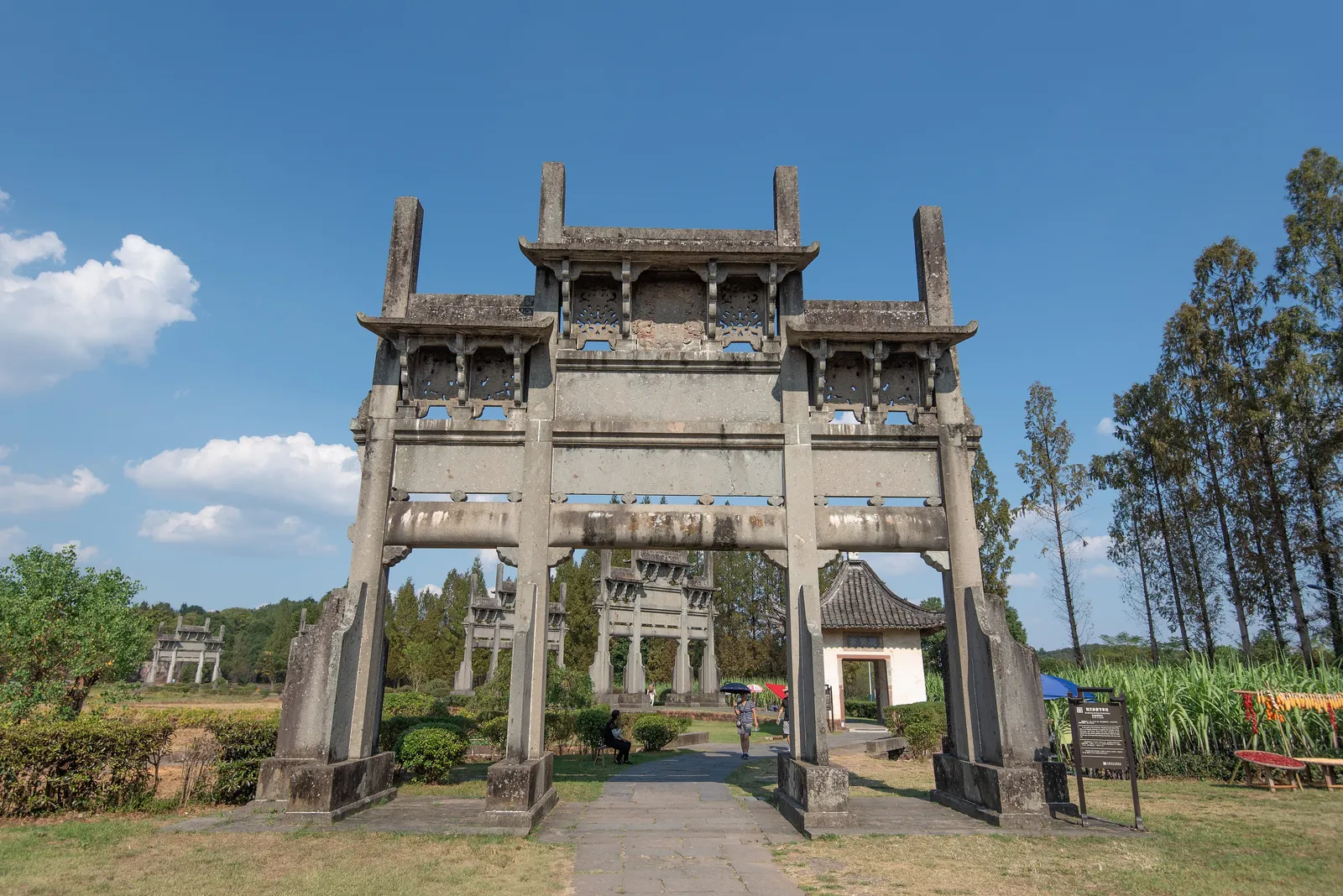
A paifang, also called a pailou, is a freestanding Chinese gateway of posts and beams. The word comes from the old city wards called fang, whose gates once closed at night; by the Song dynasty the form was mainly a decorative monument, and it became far more elaborate under the Ming and Qing. Some are painted wood on stone bases with coloured tiled roofs, and those at temples and tombs are often plain white stone with fine carving. You will see them at the entrances of streets, temples, tombs and villages, and in Chinatowns abroad. In Huizhou villages they often honour a family’s officials or virtuous members. Read the inscription in the centre: it usually states the name of the place or the reason the gateway was built.
Also known as: pailou
Where to see it in China
 HuangshanTangyue Memorial Archways and Bao Family Garden 棠樾牌坊群·鲍家花园A row of seven Ming and Qing stone arches across a field path, built by the Bao merchant clan.
 HuangshanXidi village 西递A stone memorial arch stands at the entrance to this village of Ming and Qing merchant houses.
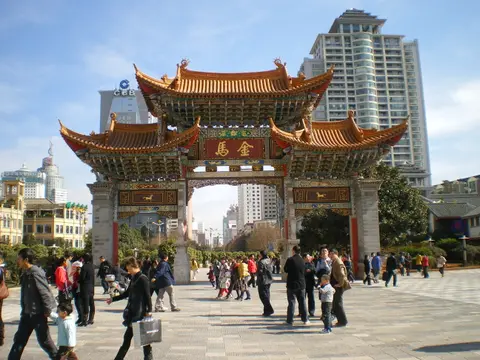 KunmingGolden Horse and Jade Rooster Arches 金马碧鸡坊Two tall painted wooden arches on Jinbi Road, lit up after dark. A good example of the wooden type.
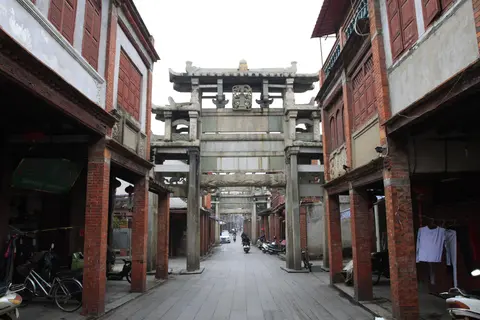 XiamenZhangzhou Ancient City 漳州古城An old town with stone memorial arches on its arcade streets, lit up in the evening on Hong Kong Road.
Where we mention it
Related entries
Sources
- Paifang: Wikipedia (en.wikipedia.org)
- Golden Horse and Jade Rooster Archways: China Daily (govt.chinadaily.com.cn)