
Huizhou architecture
徽派建筑Huīpài jiànzhù
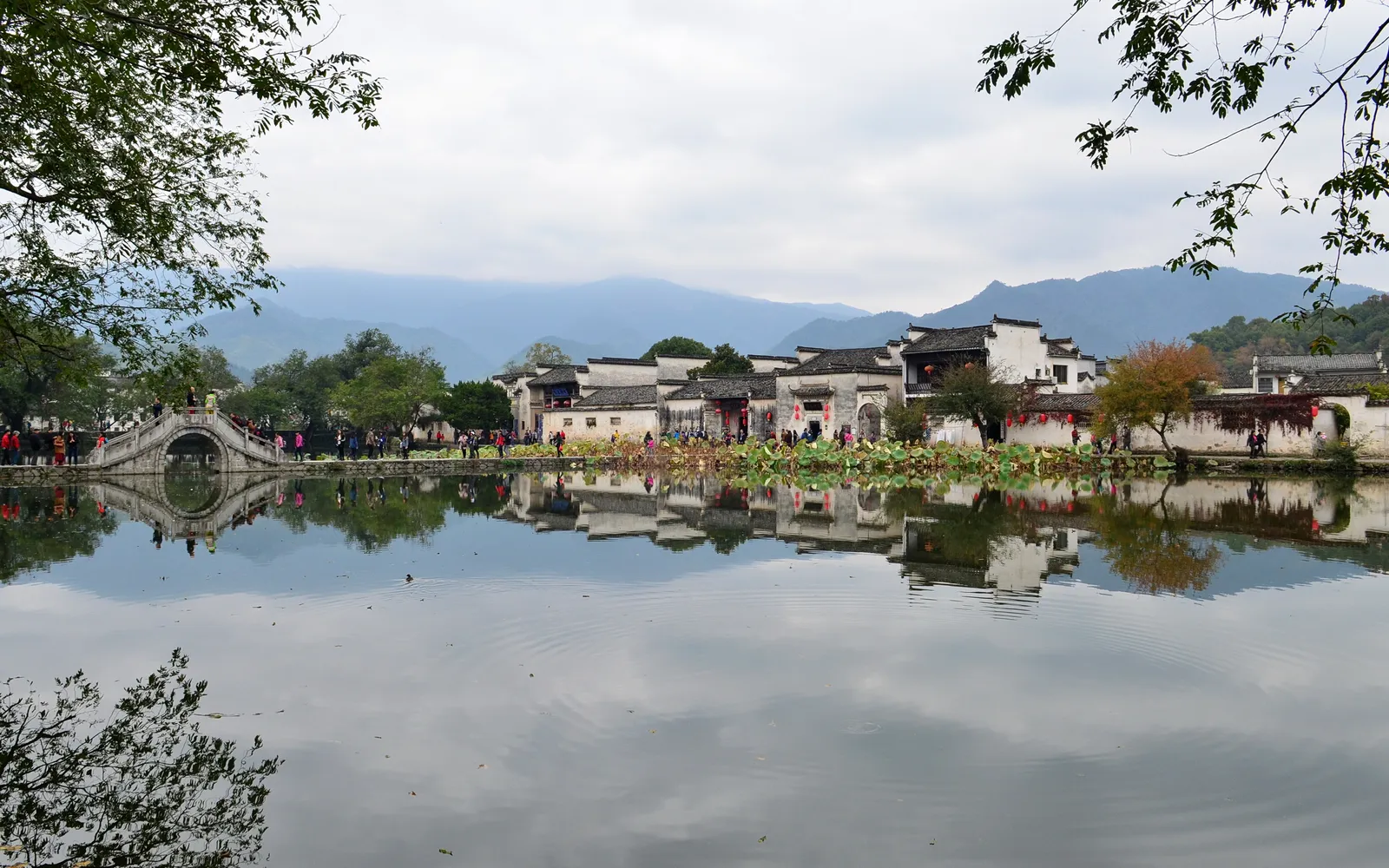
The Ming–Qing village style of southern Anhui: white walls, black tiles, stepped “horse-head” gables, inner skywells and fine carving.
Huizhou was a prefecture in the hills of southern Anhui (plus Wuyuan, now in Jiangxi) whose merchants grew rich in the Ming and Qing dynasties trading salt, tea and timber across China, and spent much of their wealth on houses, ancestral halls and memorial archways back home. Their villages are instantly recognisable: whitewashed walls and black tiles, high stepped gable walls called “horse-head walls” that also stopped fire spreading, and few small windows facing the street. Inside, rooms open onto a narrow skywell that brings in light and air and lets rain fall into the house, a feature often linked to the idea of wealth flowing in. Doorways, beams and window panels are decorated with the “three carvings” in wood, brick and stone. Villages such as Hongcun and Xidi, planned with careful attention to water and feng shui, are a UNESCO World Heritage Site; go early or stay overnight to see them before the tour groups arrive.
Where to see it in China
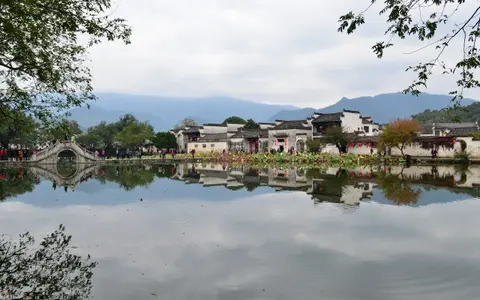 HuangshanHongcun village 宏村A UNESCO-listed Huizhou village of white walls and black tiles around a half-moon pond and canals.
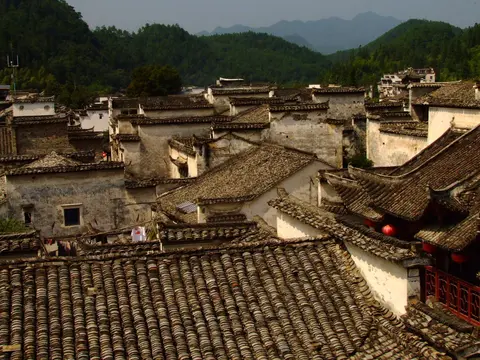 HuangshanXidi village 西递Hongcun’s quieter twin, with lanes of Ming and Qing merchant houses full of carved wood and stone.
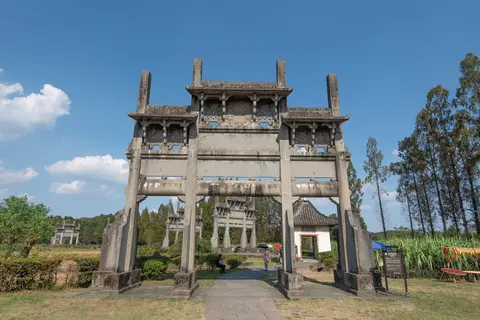 HuangshanTangyue Memorial Archways and Bao Family Garden 棠樾牌坊群·鲍家花园A row of seven Ming and Qing stone memorial archways built by the Bao merchant clan, with their ancestral halls.
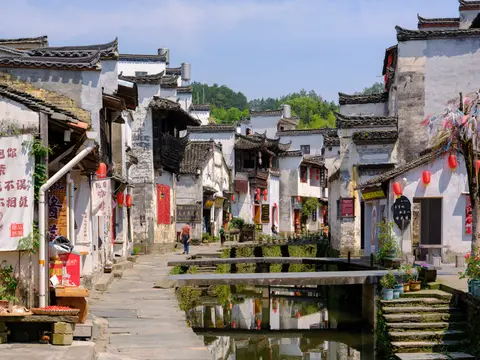 JingdezhenWuyuan villages: Likeng and Wangkou (day trip) 婺源(李坑 · 汪口)White-walled, black-tiled Hui-style villages among tea hills and rapeseed fields.
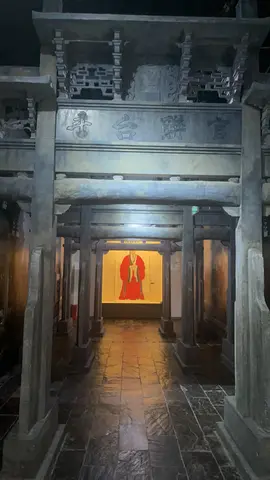 HuangshanChina Huizhou Culture Museum 安徽中国徽州文化博物馆A museum on Huizhou merchants and on wood, stone and brick carving, a good start before the villages.
Where we mention it
- Autumn colours in China: best places and dates Travel guides
- China in March 2027: weather, crowds and where to go Travel guides
- China in November: weather, crowds and where to go Travel guides
- Chengkan village Huangshan
- Tachuan village Huangshan
- Xin’an River boat trip (Shendu) Huangshan
- Yaoli Ancient Town Jingdezhen
- Sanhe Ancient Town Hefei
Related entries
Sources
- Ancient Villages in Southern Anhui – Xidi and Hongcun — UNESCO World Heritage Centre (whc.unesco.org)
- Huizhou architecture — Wikipedia (en.wikipedia.org)
- Hongcun — Wikipedia (en.wikipedia.org)