
Dougong
斗拱dǒugǒng
The interlocking wooden brackets under Chinese roofs, fitted by joinery alone, that carry the eaves and move weight from the roof down to the columns.
Dougong are the sets of interlocking wooden brackets between the tops of columns and the roof of a traditional Chinese building. Clear evidence appears in Han dynasty architectural models, and they grew into complex systems that peaked in the Tang and Song. The pieces fit together by joinery alone, with no glue or fasteners. After the Song, bracket sets on palaces and great temples became more ornamental than structural, so large plain brackets usually signal an older building. The craft of timber-framed building is on the UNESCO intangible heritage list. Stand under the eaves and look up: this is often the best view in an old hall.
Where to see it in China
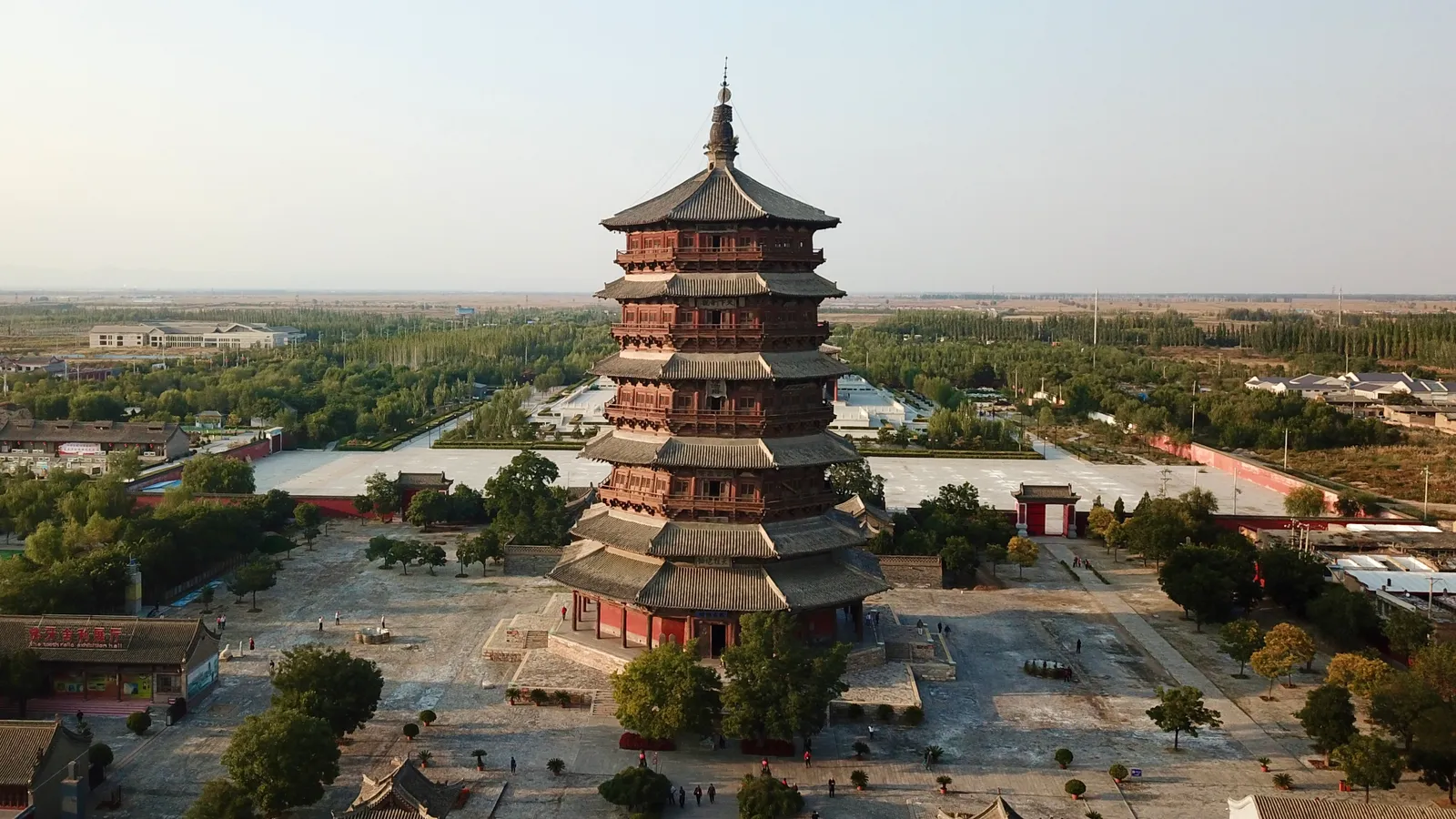
 DatongYingxian Wooden Pagoda 应县木塔The 67 m all-wood pagoda of 1056, with 54 kinds of bracket arms; only the ground floor is open, so view them from outside.
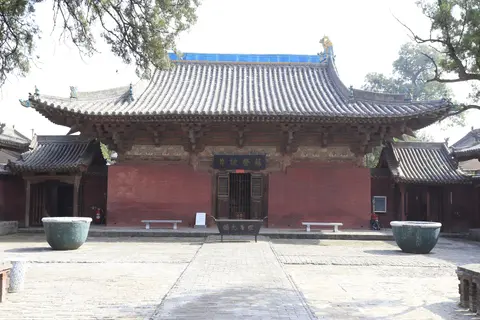 PingyaoZhenguo Temple 镇国寺The Wanfo Hall of 963 is one of China’s oldest wooden buildings, noted for its very large brackets.
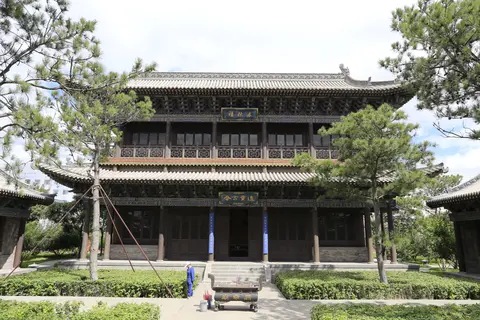 DatongGuandi Temple 关帝庙Look up at the bracket sets of the main hall, which date from the Yuan.
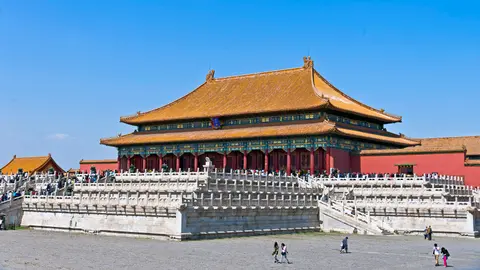 BeijingForbidden City (Palace Museum) 故宫博物院Painted bracket sets from the late imperial period, when they were more ornamental than structural.
Related entries
Sources
- Chinese traditional architectural craftsmanship for timber-framed structures, UNESCO Intangible Cultural Heritage (ich.unesco.org)
- Dougong, Wikipedia (en.wikipedia.org)
- Pagoda of Fogong Temple, Wikipedia (en.wikipedia.org)
- Zhenguo Temple, Wikipedia (en.wikipedia.org)