
Chinese pagoda
佛塔Fótǎ
An East Asian Buddhist tower derived from the Indian stupa, built for relics or sacred images and adapted into many Chinese forms.
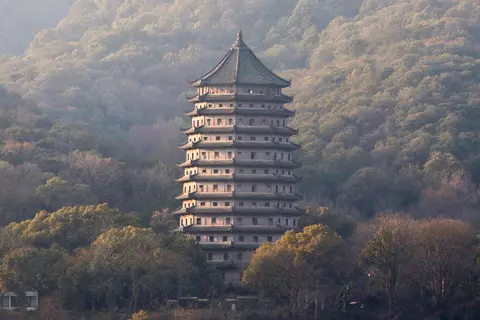
A pagoda is an East Asian Buddhist tower derived from the Indian stupa, originally built to enshrine relics or sacred images. In China, builders combined that Buddhist function with local multi-storey tower forms, using wood, brick or stone. Plans and silhouettes vary by period and region, from square, tiered structures to tall octagonal towers; many became city landmarks even when their interiors were not designed for ordinary access. Xi’an’s Big Wild Goose Pagoda and Hangzhou’s Six Harmonies Pagoda let travellers compare major Tang- and Song-period examples.
Also known as: Buddhist pagoda · Buddhist tower
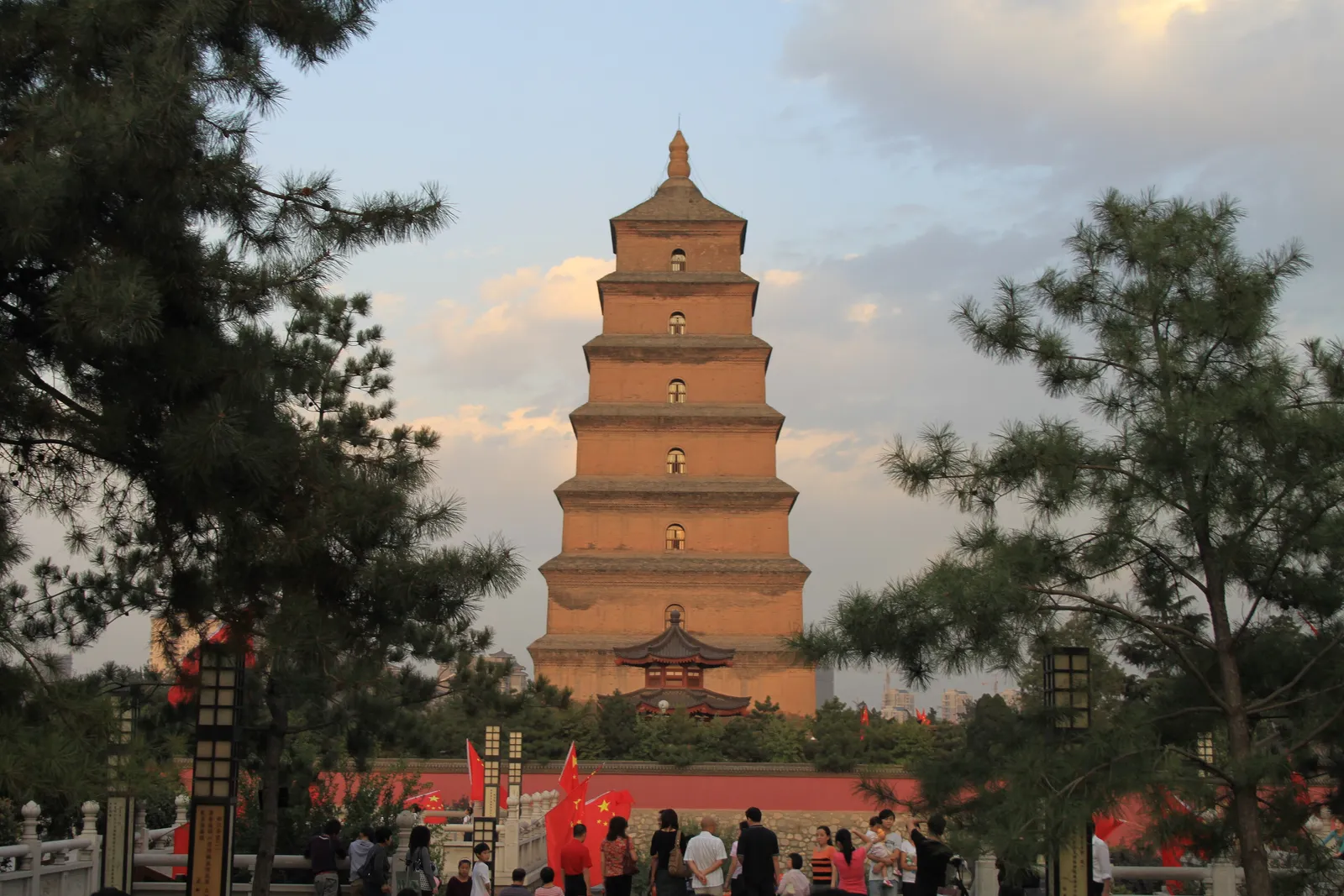
Where to see it in China
Where we mention it
Related entries
Ideas and beliefsBuddhism in China 中国佛教The faith that came from India around the 1st century AD and shaped China’s temples, cave art, festivals and everyday language.DynastiesTang dynasty 唐朝The dynasty (618–907) remembered as China’s golden age of poetry, Buddhism and Silk Road trade, ruled from Chang’an, today’s Xi’an.DynastiesSong dynasty 宋朝The dynasty (960–1279) of printing, porcelain, landscape painting and paper money, ruled first from Kaifeng and later from Hangzhou.Ideas and beliefsSilk Road 丝绸之路The network of trade routes that linked China with Central Asia, India, Persia and the Mediterranean for over 1,500 years.Places and buildingsDougong 斗拱The interlocking wooden brackets under Chinese roofs, fitted by joinery alone, that carry the eaves and move weight from the roof down to the columns.
Sources
- Chinese Buddhist Architecture — The Metropolitan Museum of Art Bulletin (resources.metmuseum.org)
- Chinese pagoda — Wikipedia (en.wikipedia.org)