
Temple etiquette in China: what to wear and how to behave
Dress modestly, step over the threshold, walk clockwise, follow photo signs, and you do not have to burn incense. What to do in Chinese temples, step by step.
In a Chinese temple, dress modestly, speak quietly, step over raised thresholds, walk clockwise around stupas and pagodas, and follow any photo signs. You are welcome as a visitor, and you do not have to pray or burn incense. These are active places of worship, so a little care goes a long way. Rules differ from temple to temple, so follow signs and staff first.
How we checked: temple guides from Chinavigators and Georgetown University's Berkley Center, UK government advice and Wikipedia, read on 4 November 2026. We found no single official national rule for visitors. These are customs, not laws, unless a temple's own notice says otherwise.
Before you go
- Dress. Cover your shoulders and knees. Carry a light scarf, especially in summer. Remove your hat inside halls.
- Check entry. Some temples need a ticket, and popular ones may need a timed booking at weekends and festivals. Check the page for your temple, such as the Lama Temple or Lingyin Temple.
- Carry your passport if the booking needs it.
Step by step inside
- Enter calmly. Step over the raised threshold at each doorway rather than standing on it. Remove your shoes if there is a shoe rack in front of an inner hall.
- Keep your voice down. Silence your phone, and do not eat or smoke in the halls.
- Walk clockwise. Go clockwise around stupas, pagodas and sacred objects, and turn prayer wheels clockwise in Tibetan temples. This is the usual Buddhist direction, and it is what pilgrims do at the Jokhang Temple.
- Look without touching. Do not touch statues, altars or offerings. Do not climb on anything.
- Check before taking photos. Courtyards and outside views are generally fine. Inside halls, follow the signs, because many temples forbid photos. The Lama Temple, for example, does not allow photos inside its halls. Ask before photographing monks, and do not photograph people while they pray.
- Give way. If someone is praying, walk around them, and do not step in front of them or their kneeling mat.
Incense and donations
Incense is optional. It is a way of showing respect, and you can simply watch. If you would like to take part:
- Use the temple's own incense. Some temples hand it out free, such as the Lama Temple.
- Light it at the burner provided.
- Hold it with both hands, bow three times towards the main hall, and place it upright.
- Do not blow out a flame with your mouth. Wave it out, and do not fan it to make it burn faster.
Donation boxes are voluntary. Be careful of anyone who presses you to pay for blessings or expensive incense, and see scams to avoid.
Monks and nuns
Greet them politely, keep a little distance and do not touch them. If you ask a question, wait until they are free.
If you get it wrong
You will not be expected to know everything. If staff or worshippers correct you, smile, apologise and do as they ask. If you are refused entry for your clothes, ask whether a wrap is available, or come back later.
Foreign visitors are free to worship privately, but preaching or handing out religious material is restricted, so do not do either.
Chinese to show
- 请问这里可以拍照吗?(May I take photos here?)
- 对不起。(I am sorry.)
- 请问我可以进去吗?(May I go in?)
- 谢谢。(Thank you.)
For wider manners, see China etiquette tips, and pack layers using what to pack for China.
Sources
- Chinavigators: visiting Chinese temples, how to enter and behave (chinavigators.com)
- Berkley Center, Georgetown University: praying rituals and etiquette of southern China (berkleycenter.georgetown.edu)
- Wikipedia: circumambulation in Buddhism (en.wikipedia.org)
- UK FCDO: China travel advice, safety and security (laws, religious activity) (gov.uk)
Checked against these sources on 2026-11-04. Rules change often, so confirm on the official site before you go.
Ask about this page
Stuck on something? Ask here. Our team answers within 24 hours and emails you the answer.
Questions are public (your email is not). We check them before they appear.
Read next
More on Practical tips
 30 basic Chinese phrases for travelers, with pinyinThirty essential Mandarin phrases in characters and pinyin: greetings, numbers, directions, ordering food, paying and asking for help, plus tones in brief.
 Hotels in China for foreigners: booking, check-in and registrationWhich hotels take foreign passports, how check-in and deposits work, where to book, and how to register with police within 24 hours if you stay privately.
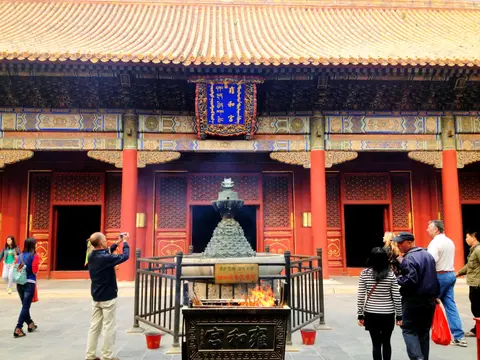 China etiquette tips: tipping, chopsticks, temples and morePractical etiquette for China: no tipping, chopstick manners, queues, what not to photograph, temples, gifts, bargaining and topics to handle with care.