
Zhou dynasty
周朝Zhōu cháoc. 1046–256 BC
China’s longest dynasty (c. 1046–256 BC), ruling first from near Xi’an and then from Luoyang; the age of Confucius, Laozi and great bronzes.
The Zhou overthrew the Shang dynasty around 1046 BC and ruled for nearly eight centuries, longer than any other Chinese dynasty. During the Western Zhou the capital stood near today’s Xi’an; in 770 BC the court moved east to Luoyang, beginning the Eastern Zhou, when real power passed to rival states in the Spring and Autumn and Warring States periods, until Qin ended the dynasty in 256 BC and soon unified China under Qin Shi Huang. The Zhou kings justified their rule by the Mandate of Heaven, the idea that Heaven grants the right to rule to a virtuous ruler and can withdraw it, and tradition credits the Duke of Zhou, regent for the young king, with setting the court rites and building Luoyang. The age produced the thinkers who still shape Chinese culture, including Confucius and, by tradition, Laozi of Taoism, and its ritual bronzes often carry long inscriptions. In Luoyang you can see a royal Eastern Zhou chariot pit drawn by six horses and a temple to the Duke of Zhou, and the Shaanxi History Museum in Xi’an covers the Western Zhou.
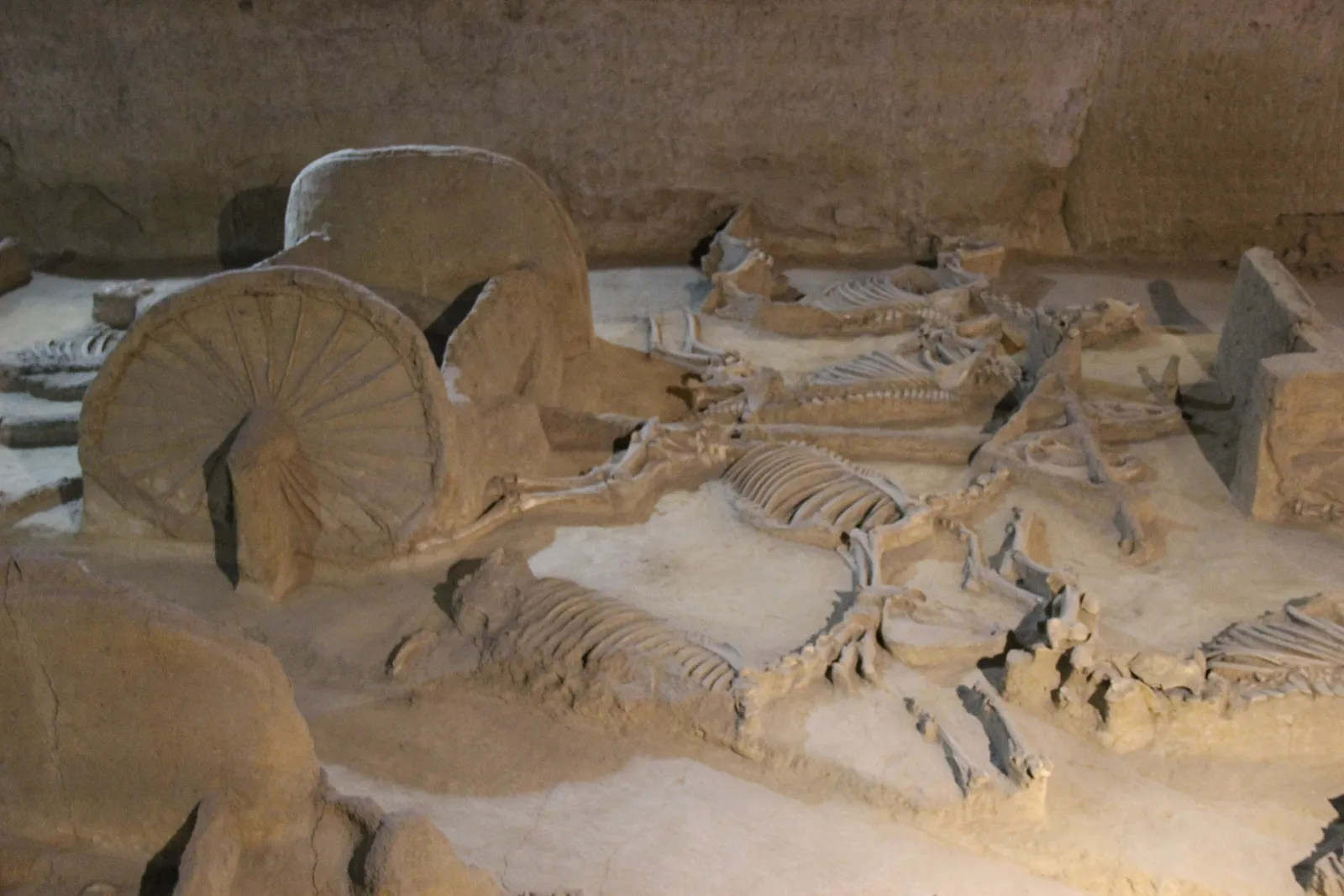
Where to see it in China
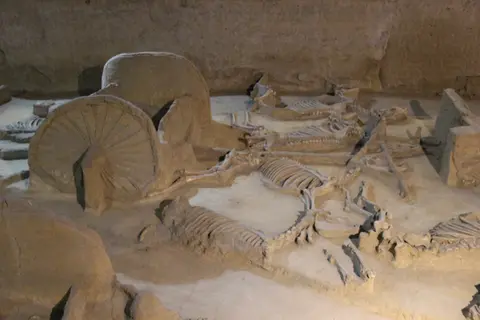 LuoyangEmperor’s Six-Horse Chariot Museum 天子驾六博物馆An Eastern Zhou chariot pit under a downtown square, with the only known royal chariot drawn by six horses.
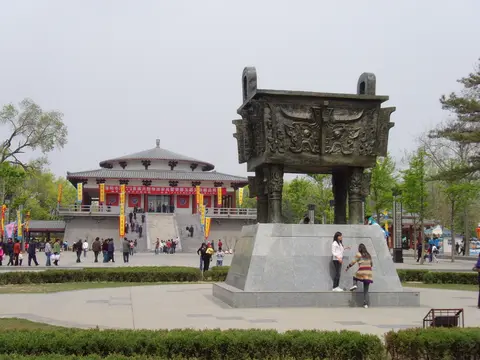 LuoyangWangcheng Park 王城公园The city’s main park, built over the Eastern Zhou royal city; famous for April peonies.
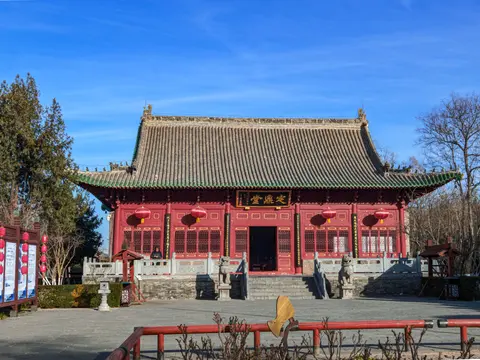 LuoyangDuke of Zhou Temple Museum 洛阳周公庙博物馆A temple to the Duke of Zhou, credited with founding Luoyang, with exhibitions on the Zhou dynasty.
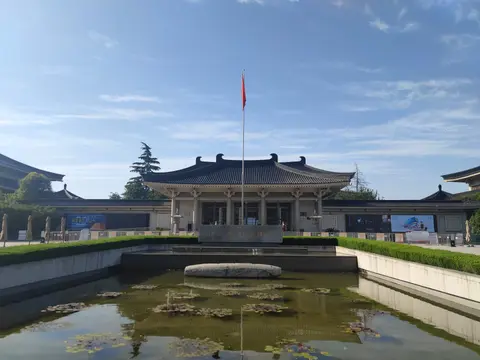 Xi'anShaanxi History Museum 陕西历史博物馆One of China’s best museums, telling the story of the Zhou, Qin, Han and Tang capitals around Xi’an.
Where we mention it
Related entries
Sources
- Zhou dynasty — Encyclopaedia Britannica (britannica.com)
- Shang and Zhou Dynasties: The Bronze Age of China — The Metropolitan Museum of Art (metmuseum.org)
- Zhou dynasty — Wikipedia (en.wikipedia.org)