
Laozi
老子Lǎozǐtraditionally 6th century BC
The legendary sage traditionally credited with the Daodejing, the founding text of Taoism, said to have been a Zhou court archivist in the 6th century BC.
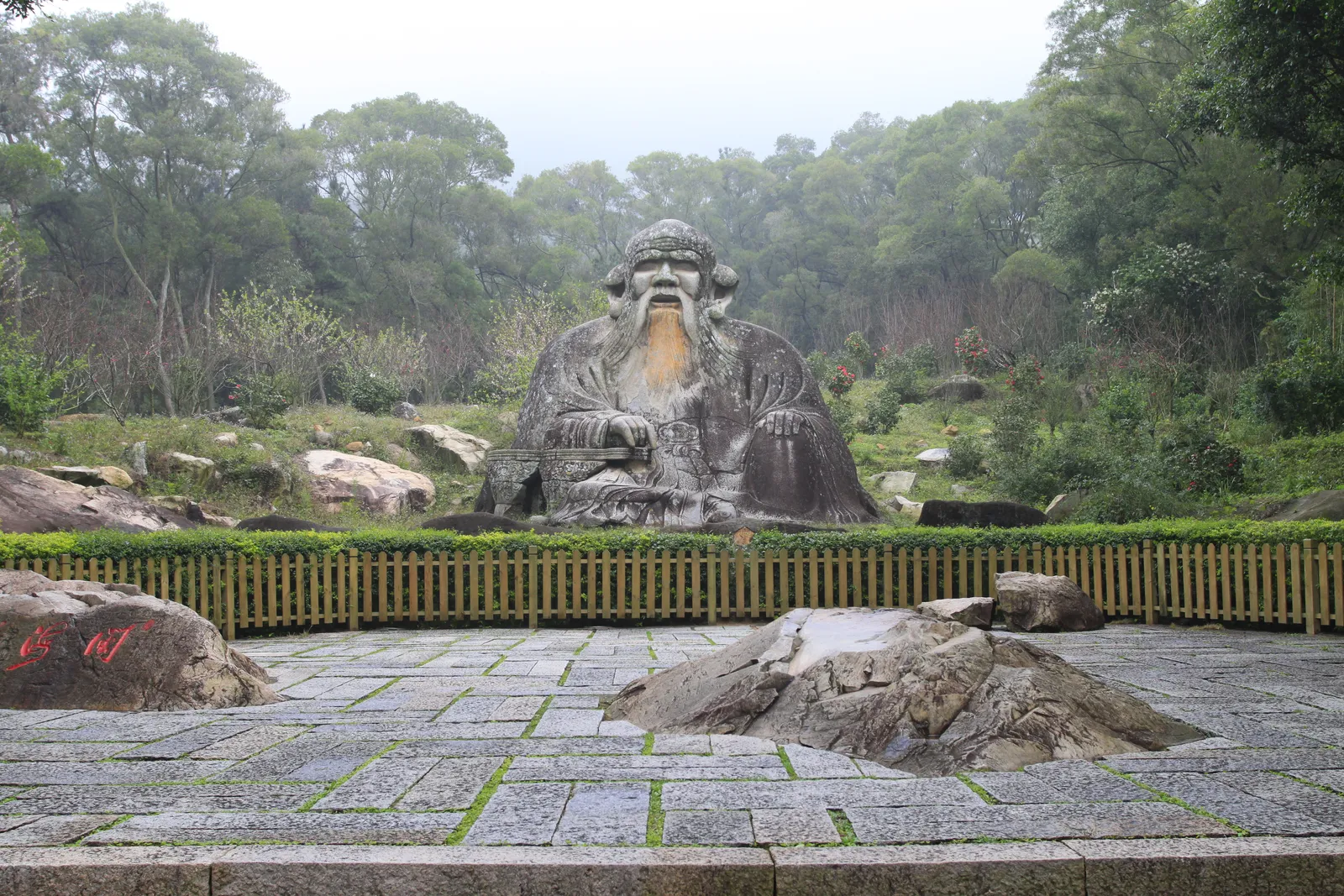
Laozi, “Old Master”, is the sage traditionally credited with the Daodejing, the short, poetic book at the heart of Taoism. The earliest biography, written centuries later, calls him an archivist at the Zhou court and says Confucius consulted him; scholars still debate whether he was one man, or even a historical person, and whether the book had a single author. According to the traditional story, he grew tired of the court’s decline and travelled west, and at the frontier pass the gatekeeper Yin Xi asked him to write down his teaching, which became a book of about 5,000 characters in 81 short chapters. Later Taoists revered him as a deity, and the Tang emperors, who shared his surname Li, claimed him as an ancestor. Visitors meet him in Taoist temples and in statues such as the giant seated Laozi at Quanzhou.
Also known as: Lao Tzu · Lao Tse · Lao Dan
Where to see it in China
 QuanzhouLaojun Rock (Statue of Laozi), Qingyuan Mountain 老君岩A huge seated Laozi, about 5 metres high, carved from a single granite boulder in the Song dynasty at the foot of Qingyuan Mountain.
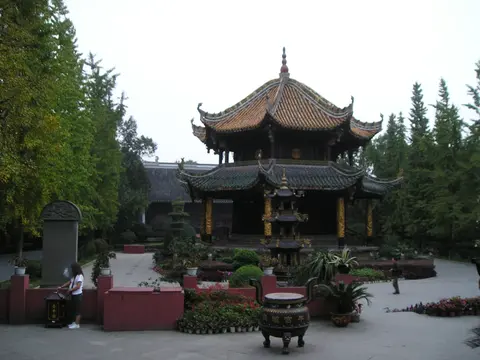 ChengduQingyang Palace 青羊宫Chengdu’s oldest and largest Taoist temple, where local legend says Laozi met his disciple Yin Xi again; look for the two bronze goats.City guideLuoyang 洛阳The Zhou capital in the later part of that dynasty, where tradition places Laozi as keeper of the court archives.
Where we mention it
Related entries
Sources
- Laozi — Stanford Encyclopedia of Philosophy (plato.stanford.edu)
- Laozi — Internet Encyclopedia of Philosophy (iep.utm.edu)
- Laozi — Wikipedia (en.wikipedia.org)