
Chinese lacquerware
漆器qīqì
Objects coated in many layers of tree sap, a Chinese craft thousands of years old, seen best in Han and earlier tomb finds and carved Ming pieces.
Chinese lacquerware is made by coating objects in many thin layers of the sap of the lacquer tree, first as a protective finish and later as an art in itself. The oldest known piece is thought to be a red wooden bowl from the Hemudu culture in Zhejiang, from about the 5th millennium BC. Tombs of the Warring States and Han periods hold painted cups, boxes and coffins. Later techniques developed along three lines: painting, inlay and carving through thick built-up layers. In museums, look at how fresh the red and black still appear on objects over 2,000 years old.
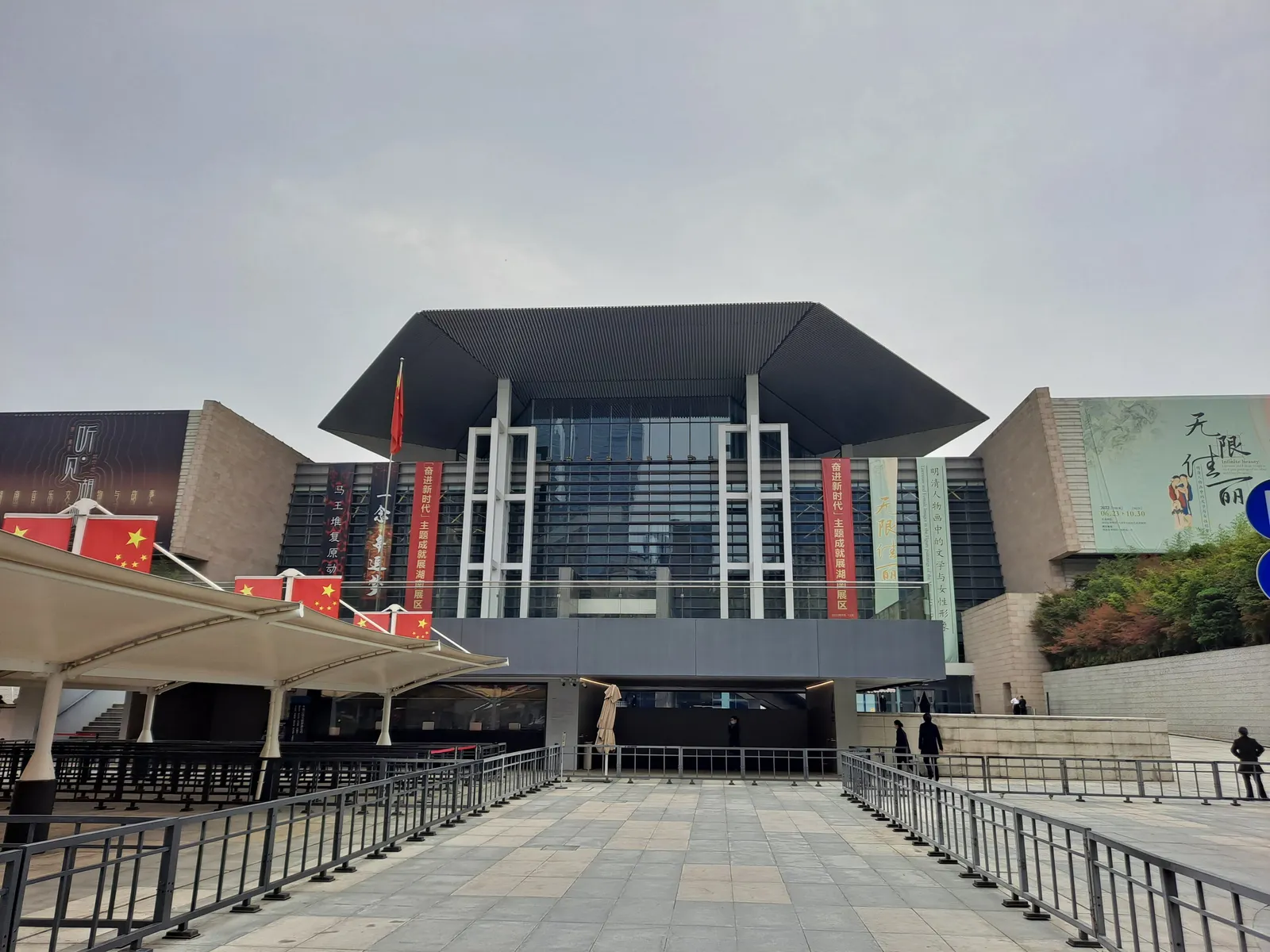
Where to see it in China


Where we mention it
Related entries
DynastiesHan dynasty 汉朝China’s second imperial dynasty (206 BC–AD 220), which gave the Han Chinese their name and opened the routes of the Silk Road.Ideas and beliefsMingqi (tomb objects) 明器Objects made specifically for a tomb to represent people, animals, buildings and goods needed in the afterlife.Arts and craftsChinese silk 中国丝绸A fabric made from silkworm cocoons, invented in China in the Neolithic and long produced mainly there: the luxury behind the Silk Road.DynastiesMing dynasty 明朝The dynasty (1368–1644) that built the Forbidden City and most of the Great Wall seen today, ruling first from Nanjing and then Beijing.Arts and craftsCloisonné 景泰蓝Cloisonné is enamelware made by fixing fine metal wire to a metal body and filling the gaps with coloured enamel. China calls it jingtailan, Jingtai blue.
Sources
- Delightful Luxury: The Art of Chinese Lacquer, Asian Art Museum (exhibitions.asianart.org)
- Lacquerware, Wikipedia (en.wikipedia.org)
- Mawangdui, Wikipedia (en.wikipedia.org)
- Tomb of Marquis Yi of Zeng, Wikipedia (en.wikipedia.org)