
Chinese jade
玉器yùqì
China’s most prized stone, mostly nephrite, worked since the Stone Age into ritual discs, ornaments and burial suits and long a symbol of purity and virtue.
In China “jade” usually means nephrite, a tough, fine-grained stone found in white, green and other colours, and it has been worked since the Neolithic: the Hongshan culture in the north-east and the Liangzhu culture near Lake Tai made ornaments and ritual pieces thousands of years ago. Early jades include the bi, a flat disc with a central hole found in elite graves, and the cong, a tube that is square outside and round inside; their exact meaning is unknown, although later texts linked the bi to heaven and the cong to earth. Jade was often prized, at times above gold and silver, and in the Han dynasty princes and nobles were buried in suits of small jade plates sewn together, in the belief that the stone would preserve the body. The finest white jade came from Hotan in Xinjiang, and reached the central Chinese courts through trade and tribute over long overland routes of the Silk Road. Museums in Guangzhou, Nanjing and Chengdu show ancient pieces, and in Kashgar you can still see jade carved and sold.
Also known as: Nephrite jade
Where to see it in China
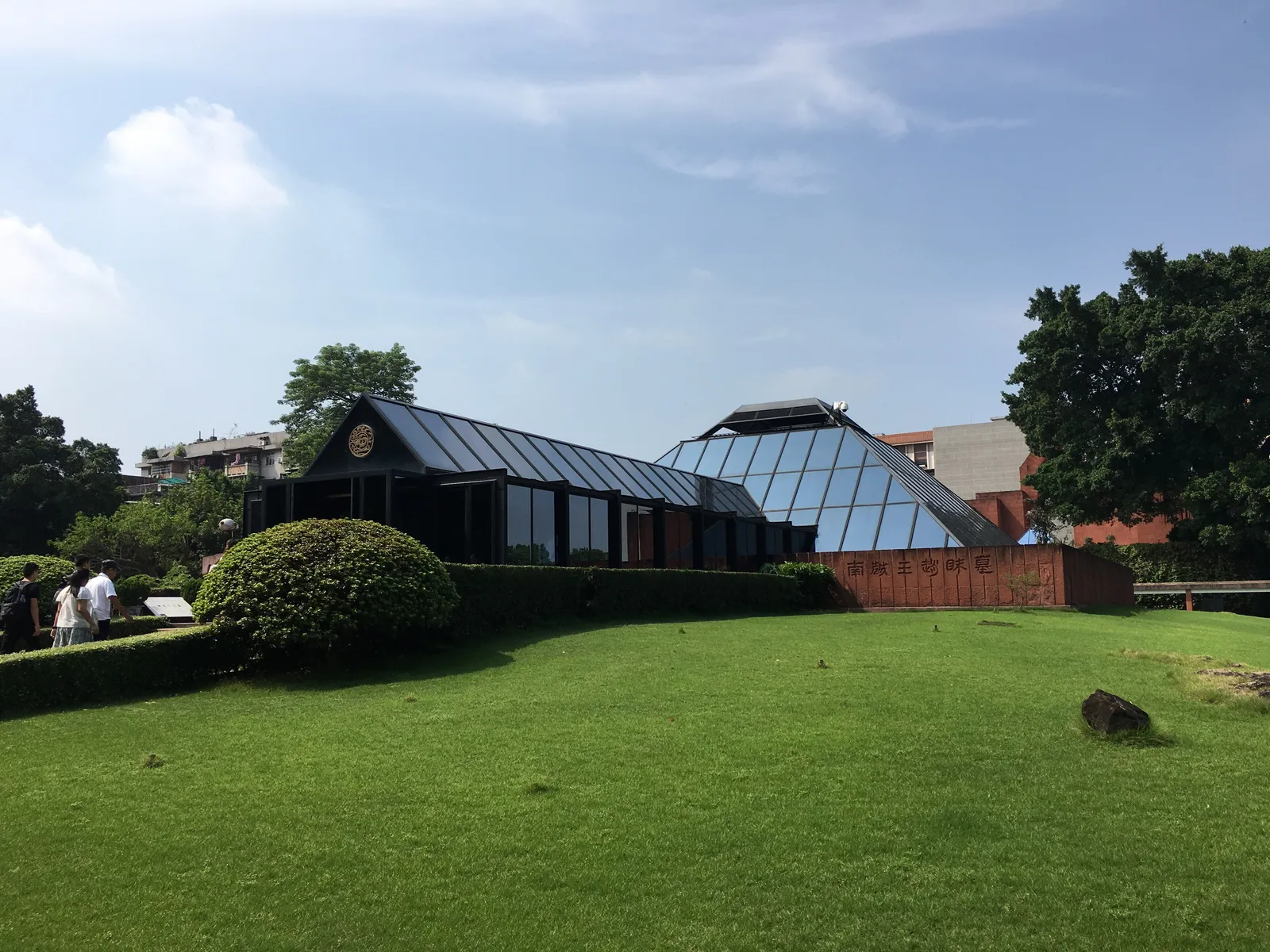
 GuangzhouMuseum of the Western Han Dynasty Mausoleum of the Nanyue King 西汉南越王博物馆(南越王博物院王墓展区)The 2,100-year-old stone tomb of Zhao Mo, second king of Nanyue, with his burial suit of jade plates threaded with silk.
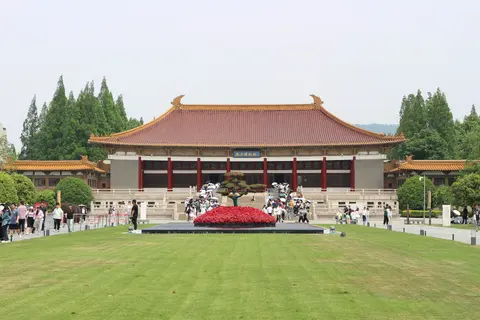 NanjingNanjing Museum 南京博物院One of China’s great national museums, with jade burial suits among its bronzes and porcelain.
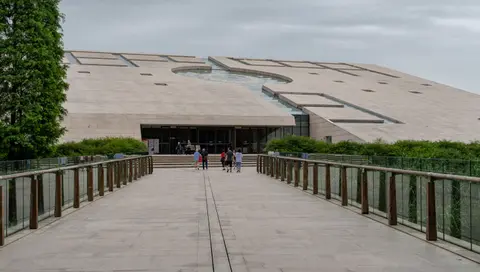 ChengduJinsha Site Museum 金沙遗址博物馆A museum built over a 3,000-year-old Shu kingdom site, with excavation pits and finds in gold, jade and ivory.KashgarKashgar Folk Jade and Carpet Hall 喀什市民间玉石展览馆A private exhibition hall on Hotan jade and hand-knotted carpets, with a jade-carving workshop where you can watch the work.KashgarKashgar Antique Street 喀什古玩街A pedestrian shopping street with about 300 shops selling Hotan jade, ceramics, bronzes and paintings, plus a jade culture museum.
Where we mention it
Related entries
Sources
- Chinese jade — Wikipedia (en.wikipedia.org)
- Liangzhu Jade Bi — Smithsonian National Museum of Asian Art (asia-archive.si.edu)
- Jade burial suit — Wikipedia (en.wikipedia.org)