
Chinese grottoes (cave temples)
石窟寺shíkūsì4th–14th century
Buddhist temples cut into cliffs, carved and painted, from Mogao and Yungang to Longmen: China’s great sites of rock sculpture and murals.
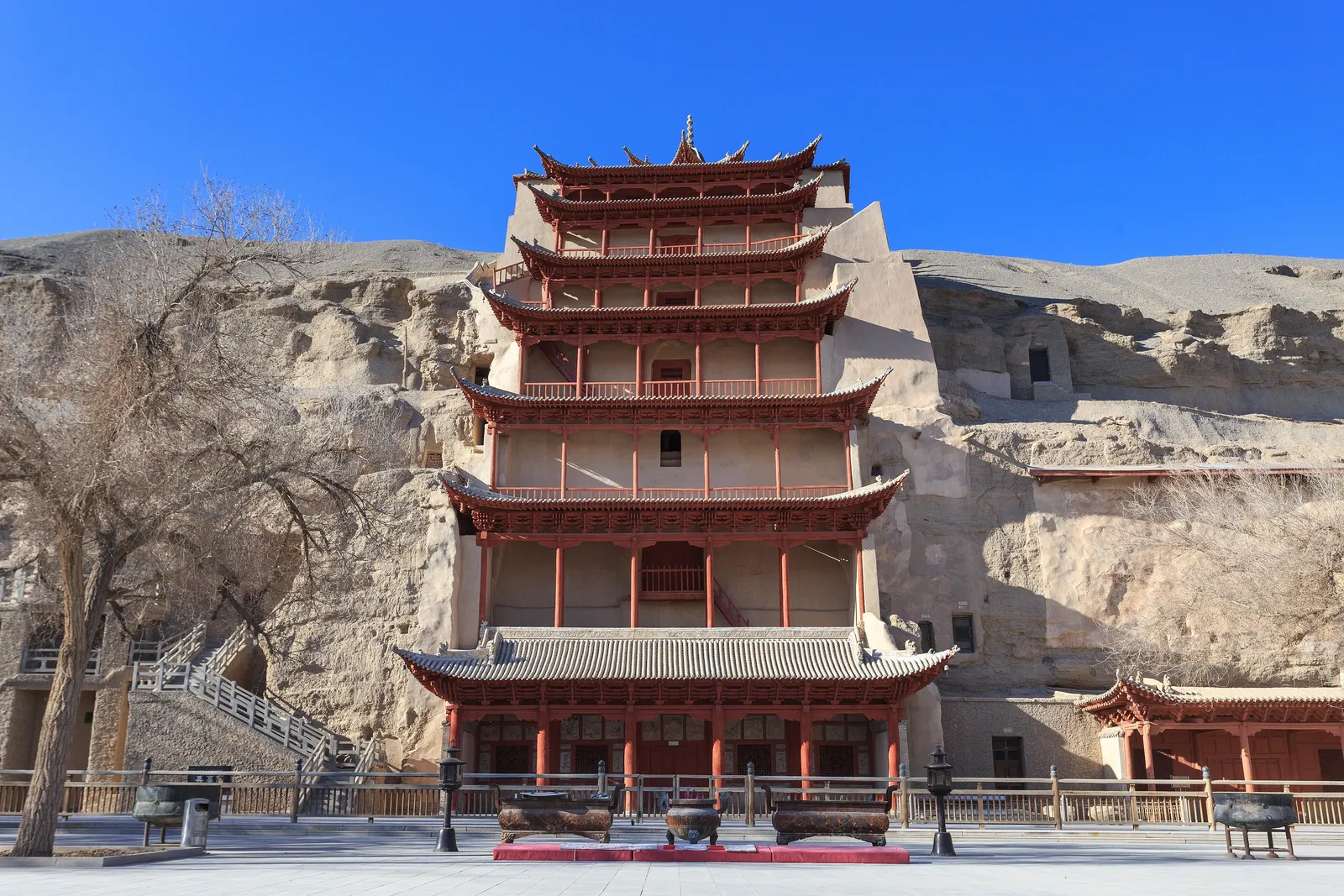
Cave temples, or grottoes, are Buddhist sanctuaries cut into cliffs and filled with carved statues and painted walls. The idea travelled along the Silk Road with Buddhism, and China’s great sites date from the 4th century onwards. At Mogao near Dunhuang, hundreds of caves were painted over about a thousand years; at Yungang near Datong, the Northern Wei had giant seated Buddhas carved in the 5th century; and at Longmen near Luoyang, carving began around 493 and mostly belongs to the Tang, with the giant Vairocana Buddha finished in 675 under Emperor Gaozong and Wu Zetian. All three are World Heritage sites. Because the paintings and carvings are fragile, some caves can only be entered on a guided visit or in limited numbers, so check the current rules before you go.
Also known as: Cave temples
Where to see it in China
 DunhuangMogao Caves 莫高窟Hundreds of Buddhist cave temples painted over a thousand years, one of the world’s great art sites.
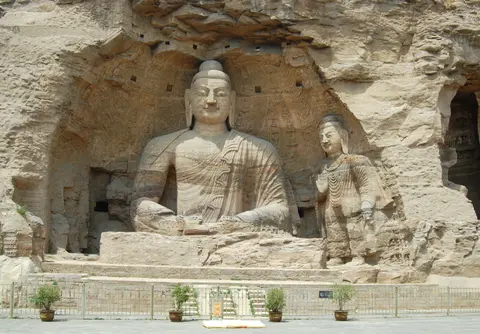 DatongYungang Grottoes 云冈石窟Caves carved in the 5th century by the Northern Wei, including giant seated Buddhas open to the sky.
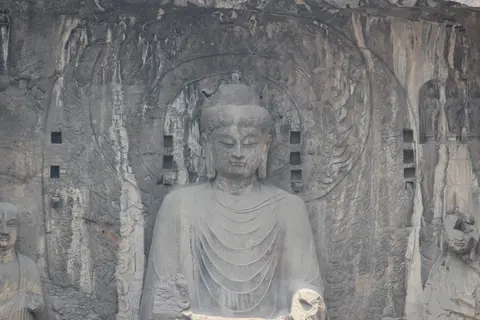 LuoyangLongmen Grottoes 龙门石窟Over 100,000 Buddha statues carved into the cliffs on both banks of the Yi River, crowned by the giant Vairocana Buddha.
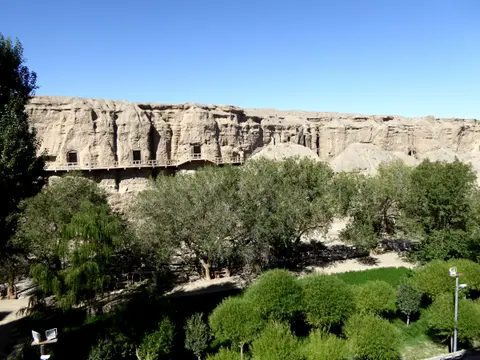 DunhuangYulin Grottoes 榆林窟Mogao’s “sister” cave temples in a river gorge, with Tang to Yuan murals including fine Western Xia paintings.
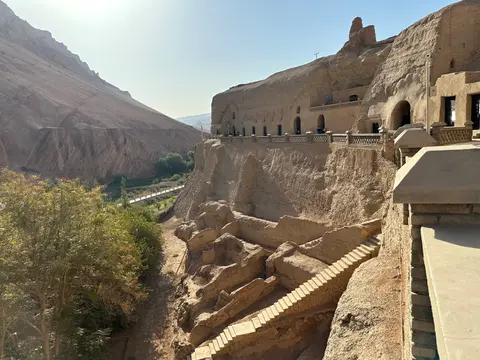 TurpanBezeklik Thousand Buddha Caves 柏孜克里克千佛洞Cave temples cut into a cliff above the Murtuk gorge, painted from about the 6th to the 14th century; many murals were damaged or removed in the early 20th century.
Where we mention it
Related entries
Sources
- Longmen Grottoes — Wikipedia (en.wikipedia.org)
- Yungang Grottoes — Wikipedia (en.wikipedia.org)
- Mogao Caves — Wikipedia (en.wikipedia.org)
- Longmen Grottoes — World History Encyclopedia (worldhistory.org)