
Chinese dragon
中国龙Zhōngguó lóng
A mythical creature tied to water, weather and good fortune, later the emblem of the emperor, seen on China’s palaces, screens and temple columns.
The Chinese dragon (long) is a mythical creature with a long snake-like body, traditionally linked to water, weather and good fortune rather than to the fire and treasure of many European stories. It is also the only imaginary animal in the Chinese zodiac. A Han dynasty scholar recorded that it has nine resemblances to other animals, and later lists of these features differ. Emperors took it as their emblem: in the Yuan dynasty the five-clawed dragon was set aside for the ruler, and under the Ming and Qing this rule was strict. When you see dragons on a building, count the claws and look at where they sit: gates, thrones and ramps show how close you are to imperial power.
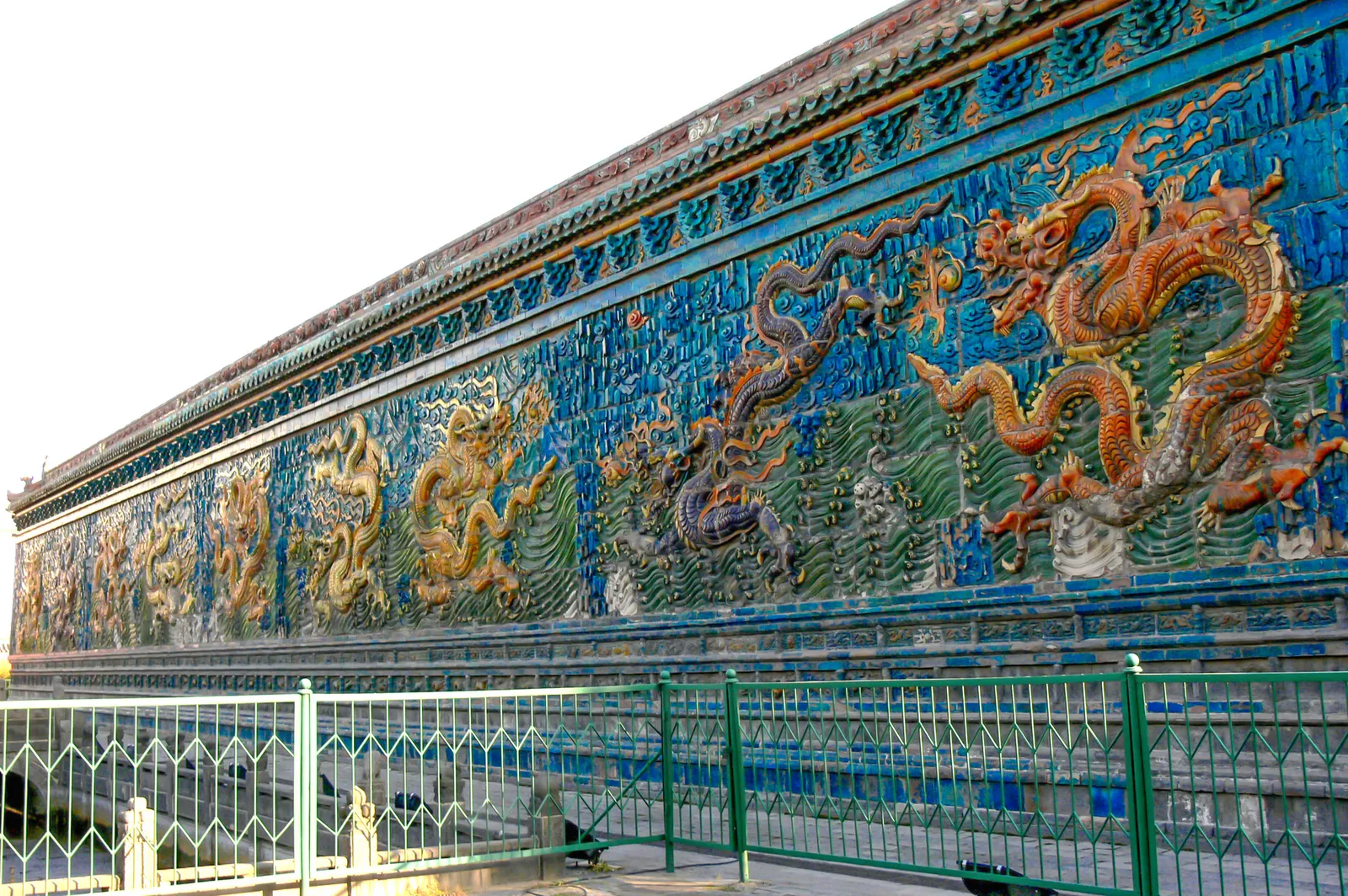
Where to see it in China
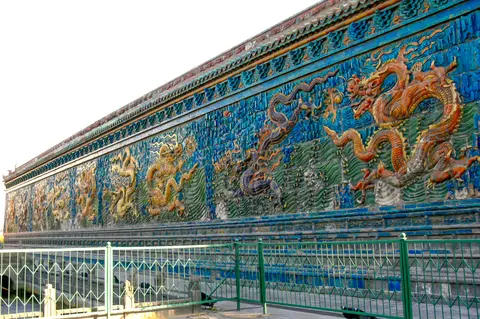 DatongNine Dragon Screen 九龙壁China’s largest glazed-tile dragon screen, 45 m long, made in 1392 for a Ming prince.
 BeijingBeihai Park 北海公园A Nine-Dragon Wall near the North Gate, built in 1756, with dragons on both sides.
 BeijingForbidden City (Palace Museum) 故宫博物院Dragons fill the Hall of Supreme Harmony, home of the Dragon Throne, and a Nine-Dragon Wall from 1771 stands in the palace.
 QufuTemple of Confucius 孔庙The carved stone dragon columns of Dacheng Hall.
Related entries
Sources
- Chinese dragon, Wikipedia (en.wikipedia.org)
- Trunk with five-clawed dragon, Los Angeles County Museum of Art (collections.lacma.org)
- Nine-Dragon Wall, Wikipedia (en.wikipedia.org)
- Hall of Supreme Harmony, Wikipedia (en.wikipedia.org)