
Li Bing
李冰Lǐ Bīng3rd century BC
The Qin governor of Shu who, in the 3rd century BC, built the Dujiangyan irrigation system that still waters the Chengdu Plain.
Li Bing was the governor of Shu, around today’s Chengdu, sent by the state of Qin in the 3rd century BC, a few decades before Qin Shi Huang unified China. Almost nothing is known about him as a person; what survives is his work, Dujiangyan, traditionally dated to 256 BC. Instead of damming the Min River, it splits it: the Fish Mouth levee divides the flow, the low Flying Sand weir spills floodwater and gravel back into the outer river, and the Bottle-Neck cut through a hill lets only so much water onto the plain, which then spreads by gravity through canals. The system turned the Chengdu Plain into the “Land of Abundance” and, rebuilt many times, still works today; it is a UNESCO World Heritage site together with Mount Qingcheng. Legends grew around him, including a son, Erlang, who chained a dragon, and father and son are honoured together at the Erwang Temple, while a stone statue of Li Bing from AD 168 stands in the Fulong Temple.
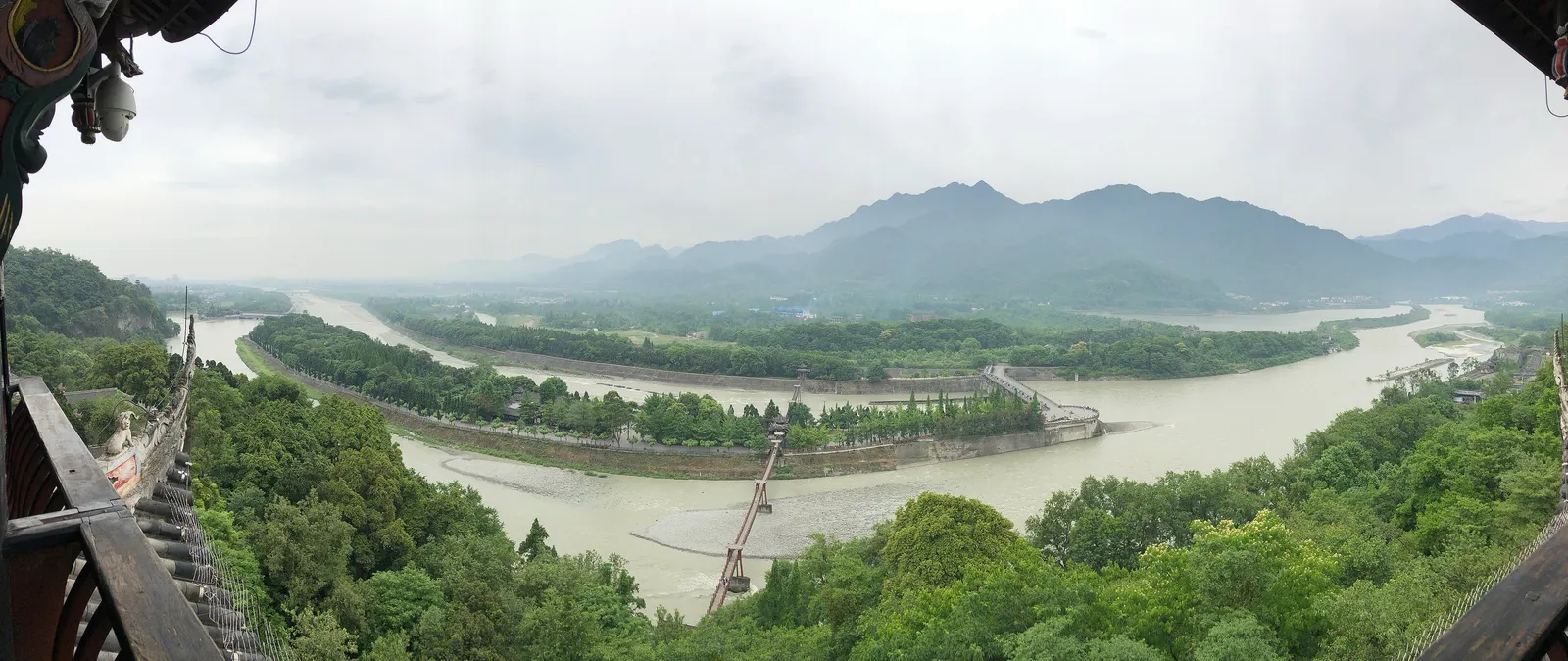
Where to see it in China
 ChengduDujiangyan and Mount Qingcheng 都江堰与青城山Li Bing’s 2,000-year-old irrigation system, with the Erwang and Fulong temples that honour him; pair it with forested Mount Qingcheng.City guideChengdu 成都The farmland of the Chengdu Plain around the city is still watered by canals fed from Li Bing’s Dujiangyan.
Where we mention it
Related entries
Sources
- Mount Qingcheng and the Dujiangyan Irrigation System — UNESCO World Heritage Centre (whc.unesco.org)
- Li Bing — Wikipedia (en.wikipedia.org)
- Dujiangyan — Wikipedia (en.wikipedia.org)