
Bai people
白族Báizú
The people of the Dali region in Yunnan, known for white-walled courtyard houses, indigo tie-dye, silverwork and the “three-course tea”.
The Bai are an officially recognised ethnic group of about two million people, most of whom live around Erhai Lake and the Cangshan mountains in the Dali Bai Autonomous Prefecture of north-west Yunnan. They have their own language and a long history in the Erhai basin, which was the heartland of the Nanzhao (8th–10th centuries) and Dali (10th–13th centuries) kingdoms that ruled much of Yunnan before the Mongol conquest. Bai houses are easy to spot: whitewashed walls with painted eaves and a large white screen wall facing the courtyard to reflect light into the house. Bai crafts include indigo tie-dye, still made by hand in Zhoucheng, and silverwork in Heqing, and guests are traditionally welcomed with the “three-course tea”, a bitter, a sweet and a lingering aftertaste cup. In Dali you can also try rushan, a thin sheet of milk cheese grilled on a stick.
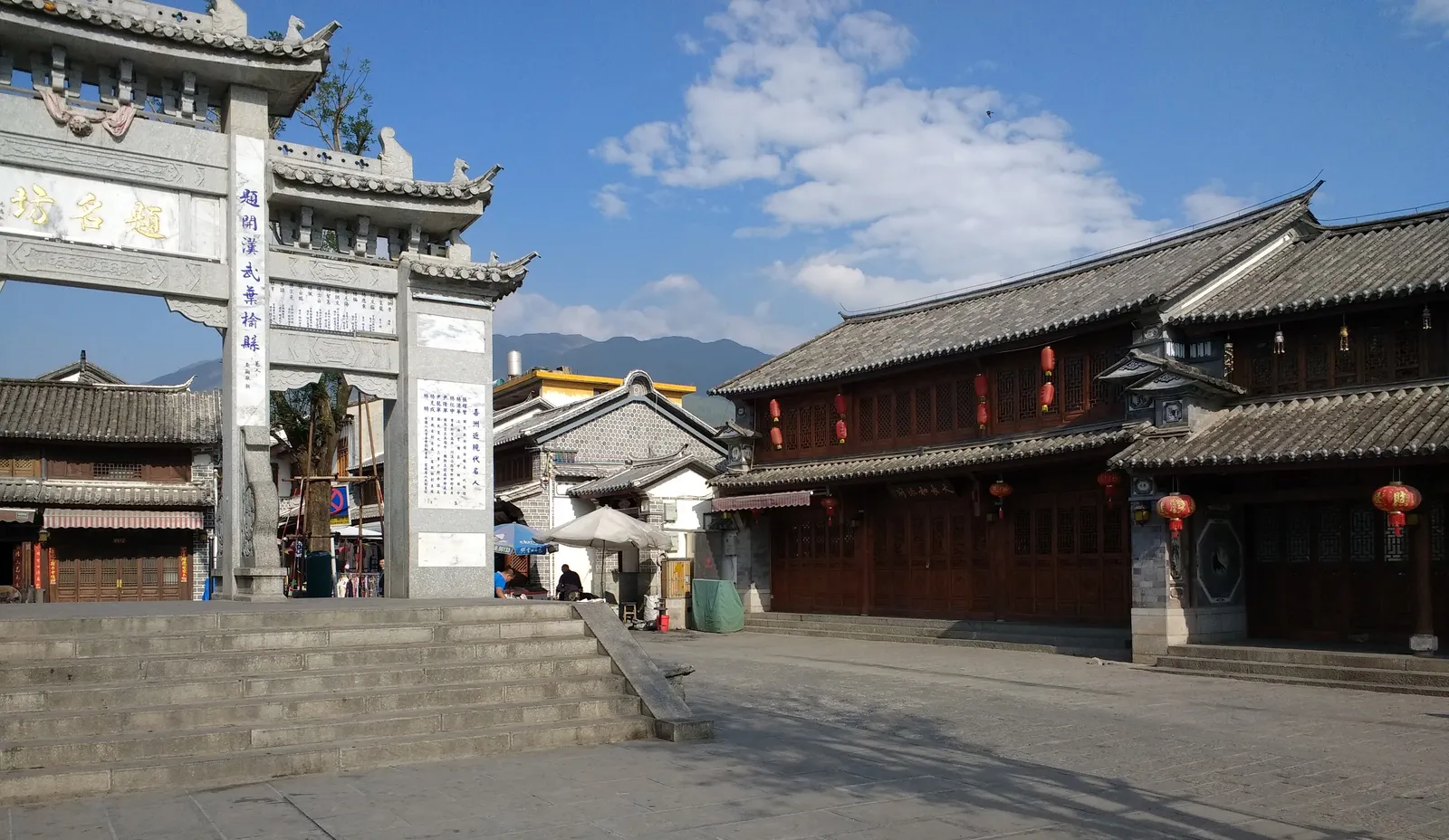
Where to see it in China
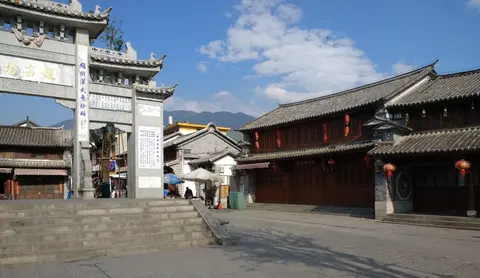 DaliXizhou village 喜洲古镇A living Bai town of merchant mansions and rice fields, famous for its baba flatbread.
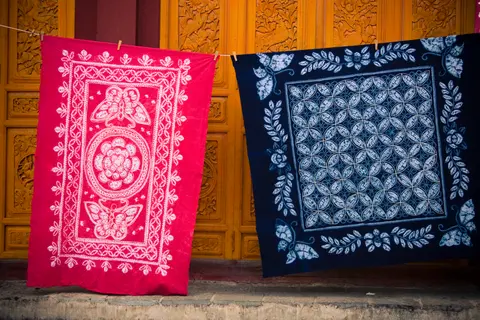 DaliZhoucheng tie-dye village 周城扎染The largest Bai village, where families still make indigo tie-dye by hand.DaliXinhua silversmith village 新华村(银都水乡)A Bai village in Heqing where families have hammered silver for over 500 years.
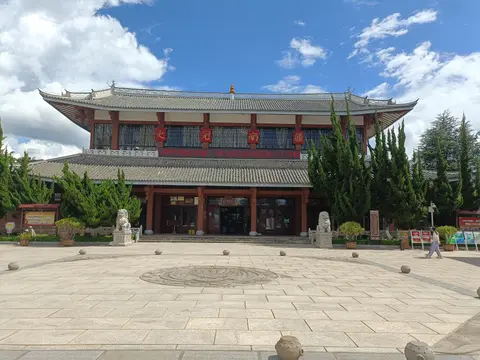 DaliDali Prefecture Museum 大理白族自治州博物馆A free museum on Bai culture and the Nanzhao and Dali kingdoms.
Where we mention it
Related entries
Sources
- Bai — Encyclopaedia Britannica (britannica.com)
- Bai people — Wikipedia (en.wikipedia.org)
- Dali Kingdom — Wikipedia (en.wikipedia.org)