Lhasa
拉萨 · Lāsà
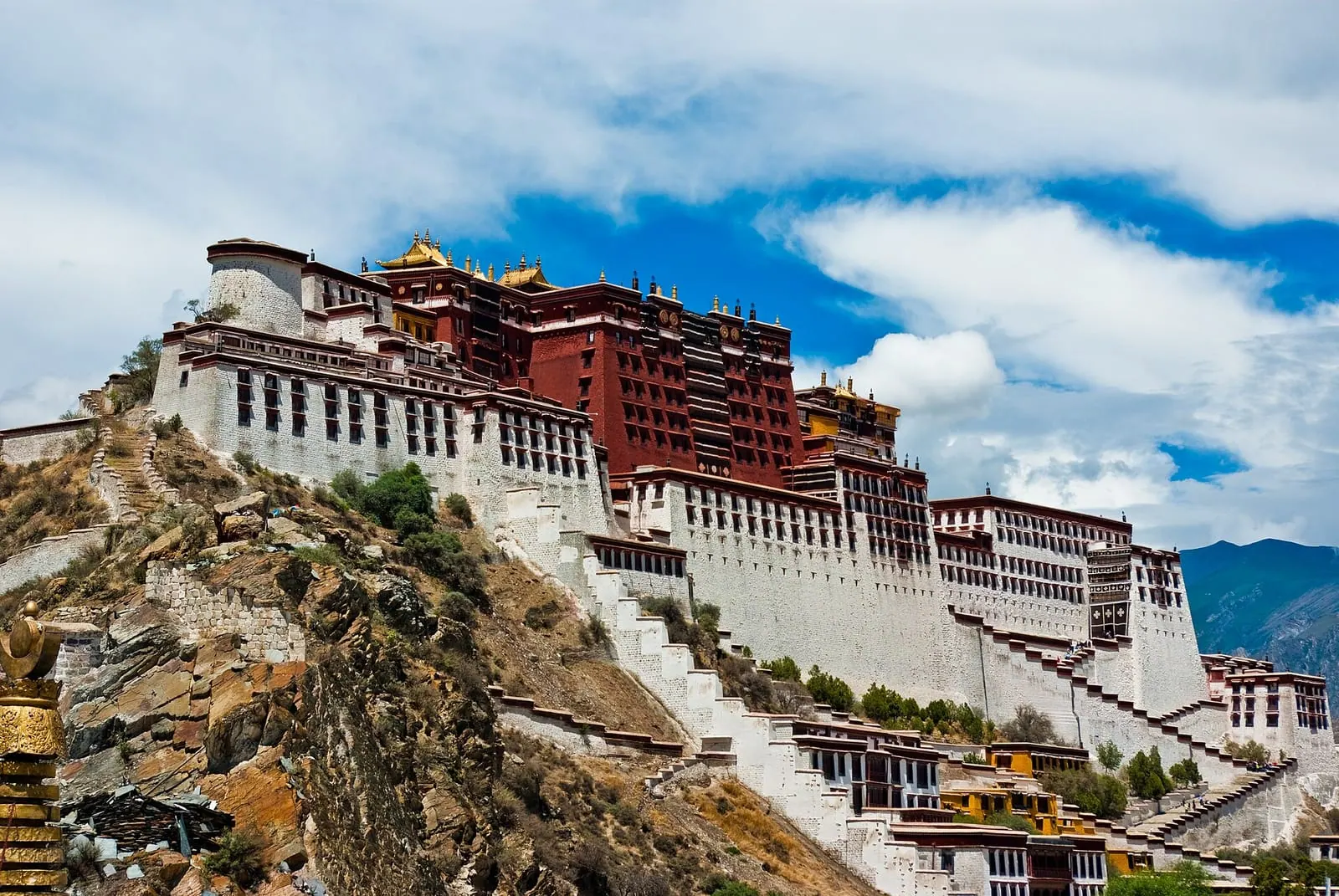
The Potala Palace and Jokhang Temple at 3,650 m.
Photo: Antoine Taveneaux · CC BY-SA 3.0
Foreign visitors need a Tibet Travel Permit and must travel with a licensed agency.
Best time to visit
- Jan
- Feb
- Mar
- Apr
- May
- Jun
- Jul
- Aug
- Sep
- Oct
- Nov
- Dec
From the airport or station to the city
Where you land, the ways into the city centre, how long each takes and what it costs.
From Lhasa Gonggar Airport (LXA)
拉萨贡嘎国际机场
From Lhasa Railway Station
拉萨站
Getting around
Entry rules first: foreign visitors cannot travel to Tibet independently. As of September 2026 you need a Tibet Travel Permit, which only a licensed Tibet travel agency can apply for, and you must join an organised tour with a licensed guide and a fixed itinerary; visa-free entry to China does not replace the permit. Allow 2–3 weeks for the permit, and note that entry rules can change at short notice. Lhasa sits at about 3,650 m: rest on your first day, drink water, avoid alcohol and heavy exercise, and see a doctor if a headache gets worse or you feel breathless at rest. In the city your guide and driver take you to the big sites; the old town around the Barkhor is best on foot. Taxis are cheap for short trips. Carry your passport at all times: it is checked at sites and checkpoints.
Book these before you fly
These sights need a reservation with your passport. Walk-ups are usually turned away.
Top sights
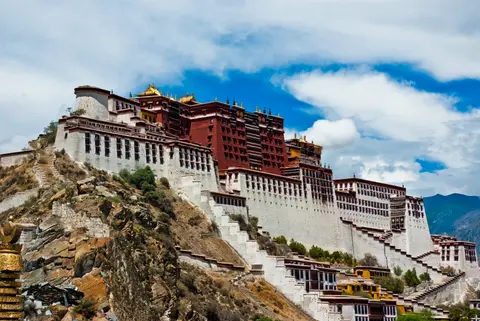 布达拉宫Potala PalaceThe white and red palace on Red Hill above Lhasa, with chapels, tombs and murals on thirteen storeys.
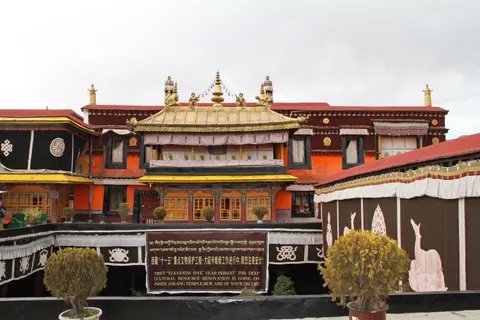 大昭寺Jokhang TempleTibet’s most revered temple, built in the 7th century, with pilgrims prostrating at the gate and a golden roof over the old town.
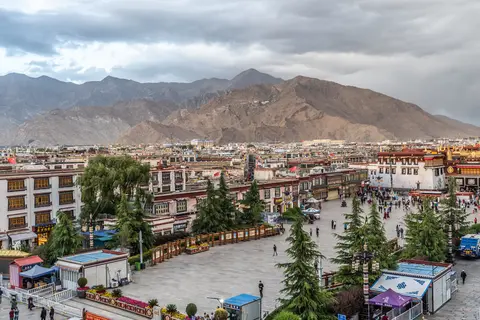 八廓街Barkhor StreetThe pilgrim circuit around the Jokhang, lined with whitewashed old houses, prayer-wheel stalls, tea houses and shops.
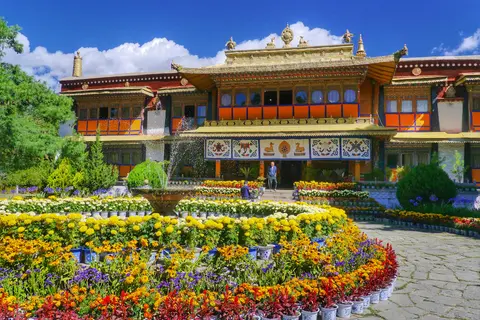 罗布林卡NorbulingkaThe former summer palace: a large walled park with pavilions, painted halls and old trees, quieter than the city centre.
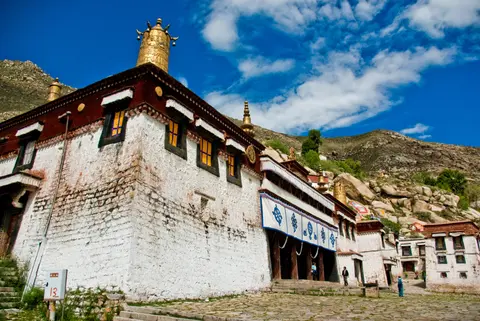 色拉寺Sera MonasteryA large monastery at the foot of the hills north of the city, famous for the monks’ lively afternoon debates in the courtyard.
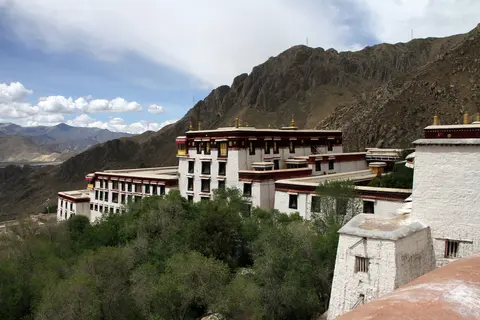 哲蚌寺Drepung MonasteryOnce one of the largest monasteries in the world, a white hillside town of halls and alleys on the western edge of Lhasa.
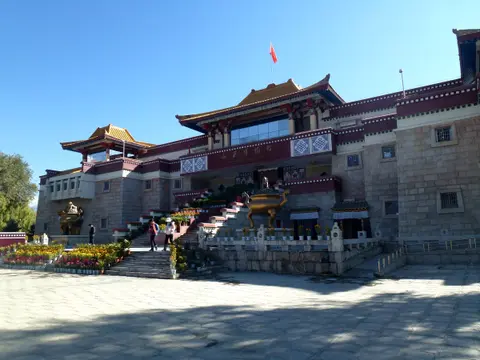 西藏博物馆Tibet MuseumA large modern museum of Tibetan art and daily life: thangka paintings, statues, manuscripts, costumes and crafts.
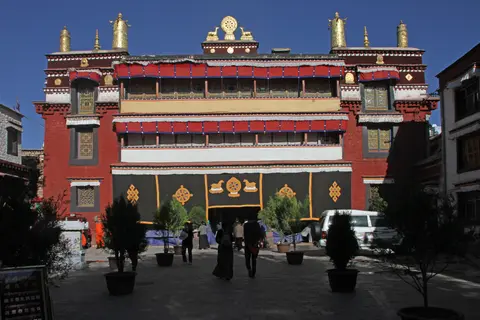 小昭寺Ramoche TempleA 7th-century temple a short walk north of the Barkhor, often visited together with the Jokhang; a compact working temple with a gilded roof and a busy pilgrim circuit.
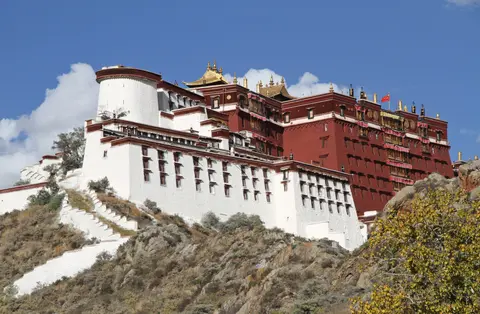 药王山观景台Chakpori ViewpointA viewing terrace on Chakpori Hill, across the road from the Potala Palace; the classic front view of the palace, the same angle as on the back of the ¥50 banknote.
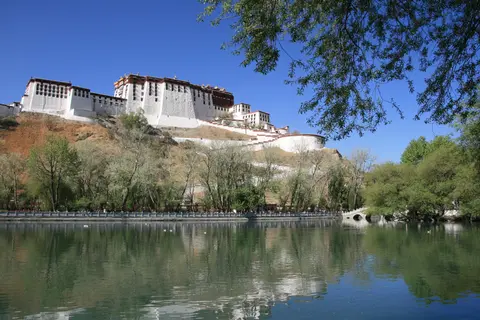 宗角禄康公园Zongjiao Lukhang ParkThe park behind the Potala Palace, with a lake, old willows and the small Lukhang chapel on an island; locals come to walk, spin prayer wheels and relax, and it has a reflected view of the palace.
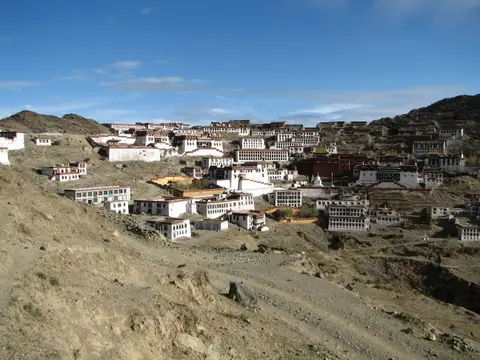 甘丹寺Ganden MonasteryA large monastery founded in 1409 high on a ridge about 60 km east of Lhasa, at about 3,800 m, with wide views over the Lhasa River valley and a popular kora (pilgrim walk) around the hill.
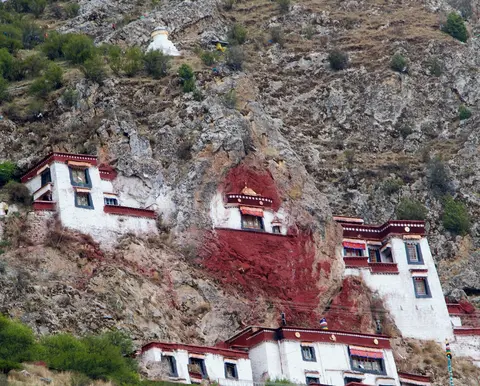 扎叶巴寺Drak YerpaMeditation caves and small temples set into a cliff in a quiet valley about 30 km northeast of Lhasa, one of the oldest retreat sites in Tibet; an easy half-day trip.
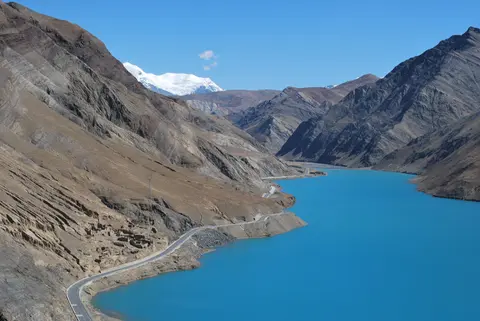 羊卓雍措Yamdrok LakeA huge turquoise lake at about 4,440 m, one of Tibet’s sacred lakes, first seen from the Kamba La pass with the glacier of Mt Nojin Kangsang behind.
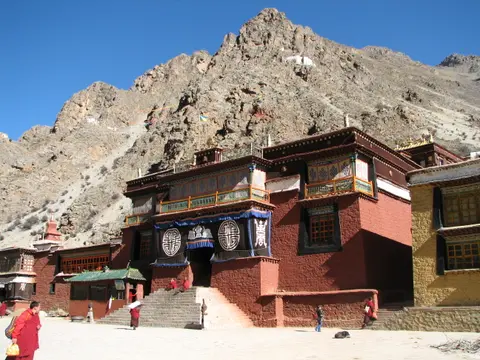 楚布寺Tsurphu MonasteryThe seat of the Karmapa lineage, founded in 1187 in a high side valley west of Lhasa at about 4,300 m, with a demanding kora path above the monastery.
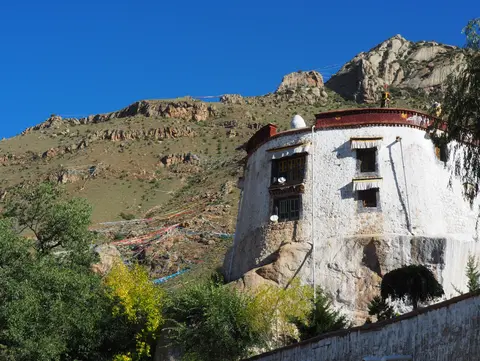 帕邦喀Pabonka MonasteryA hermitage built on a huge boulder on the hillside north of Lhasa, said to date from the 7th century and to be older than the Jokhang, with quiet chapels and wide views.
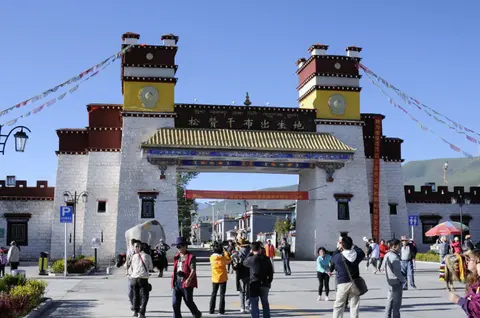 甲玛沟(松赞干布出生地)Gyama Valley (birthplace of Songtsen Gampo)A farming valley east of Lhasa, traditionally held to be the birthplace of the 7th-century king Songtsen Gampo, with a small chapel, old stupas and the ruins of a palace.
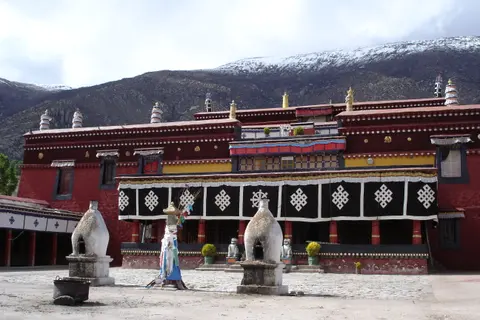 乃琼寺Nechung MonasteryA small temple just below Drepung, once the seat of Tibet’s state oracle, known for its vivid and fierce wall paintings.
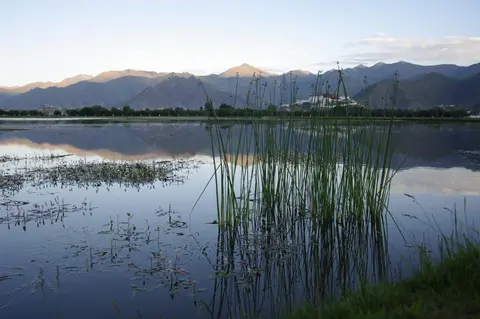 拉鲁湿地国家级自然保护区Lhalu WetlandA protected high-altitude wetland of reeds and meadows right on the north side of Lhasa, a Ramsar site where bar-headed geese and ruddy shelducks gather.
Map
What to eat here
Find a pharmacy, ATM, food or any shop nearby in Chinese
Places added by travelers
Add a placeFrom other travelers
Write a reviewComing to this page
- Hotels, tickets and experiences you can bookComing soon