
Zhang Qian
张骞Zhāng QiānDied c. 114 BC
Han envoy (died c. 114 BC) sent west in 138 BC; his reports on Central Asia helped open the routes later called the Silk Road.
Zhang Qian left Chang’an (today’s Xi’an) in 138 BC, sent by Emperor Wu to seek an alliance with the Yuezhi against the Xiongnu. The Xiongnu captured him and held him for years, and he reached Central Asia only after escaping. He returned around 126 or 125 BC without the alliance but with detailed news of kingdoms to the west. His reports shaped Han policy and helped open the trade routes later known as the Silk Road. Travellers follow him through the Dunhuang frontier, where Han forts and a Tang mural keep his story.
Where to see it in China
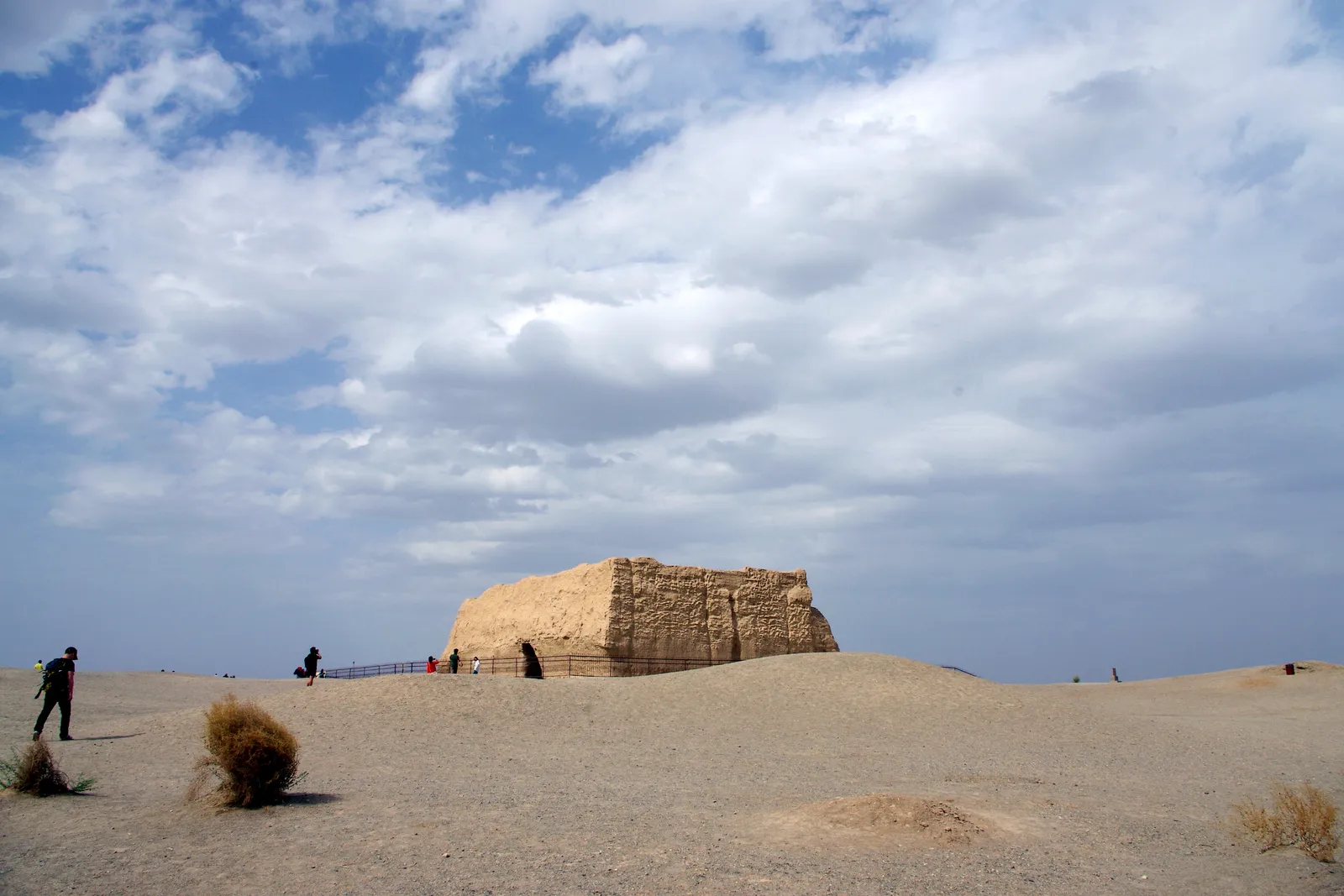
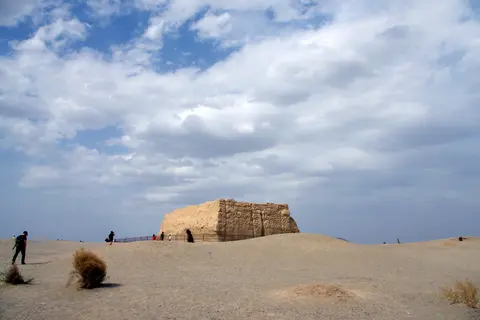 DunhuangYumen Pass (Jade Gate) 玉门关遗址A fort on the western frontier: the pass was set up soon after 121 BC, as the Han pushed along the route his journey opened.
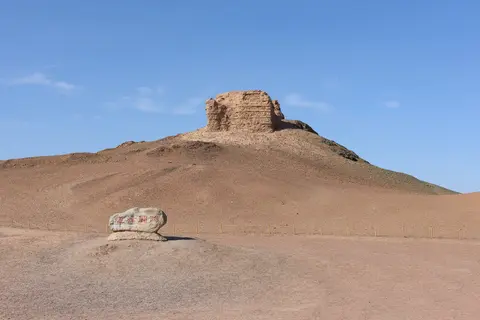 DunhuangYangguan Pass 阳关The southern Silk Road gate on the same frontier: now a beacon tower on a ridge and a small museum.
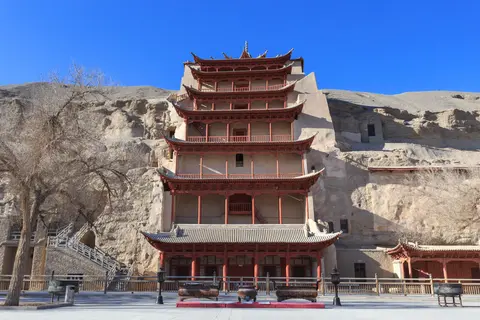 DunhuangMogao Caves 莫高窟Cave 323 has an early Tang mural of Zhang Qian and Emperor Wu, a popular legend rather than history; you may not be shown this cave on your visit.
Related entries
Ideas and beliefsSilk Road 丝绸之路The network of trade routes that linked China with Central Asia, India, Persia and the Mediterranean for over 1,500 years.DynastiesHan dynasty 汉朝China’s second imperial dynasty (206 BC–AD 220), which gave the Han Chinese their name and opened the routes of the Silk Road.PeopleEmperor Wu of Han 汉武帝The Han emperor (reigned 141–87 BC) who pushed China’s frontier west along the Hexi Corridor and sent Zhang Qian on the journey behind the Silk Road.
Sources
- Zhang Qian: Wikipedia (en.wikipedia.org)
- Rediscovering Zhang Qian: The World of Chinese (theworldofchinese.com)
- Yumen Pass: Wikipedia (en.wikipedia.org)