
Yin and yang
阴阳学说yīnyáng xuéshuō
The Chinese idea that paired opposites, such as shade and sun or rest and movement, depend on each other and together make up the world.
Yin and yang is the old Chinese idea that paired forces, such as dark and light or rest and movement, are opposite but depend on each other. The words first meant the shaded north side and the sunny south side of a hill. Thinkers were using them as philosophical terms by about the 4th century BC, and they appear in the Yijing (Book of Changes) and in classical medical writing. Diagrams called taijitu are recorded from the Song dynasty on, and the familiar black-and-white circle took shape later. Travellers meet the pair at Taoist temples, often beside the eight trigrams, and in the numbers and shapes of imperial altars.
Where to see it in China
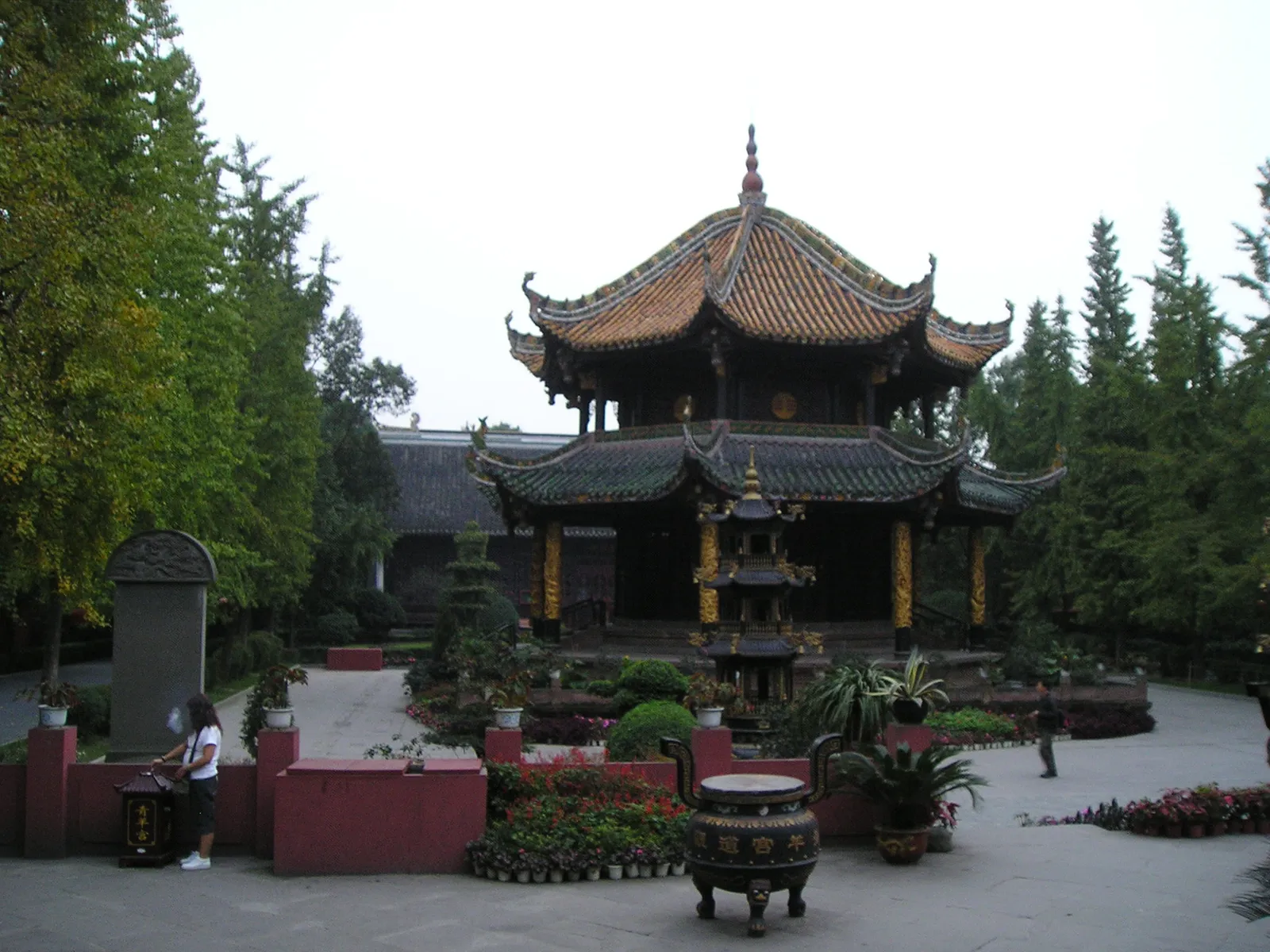
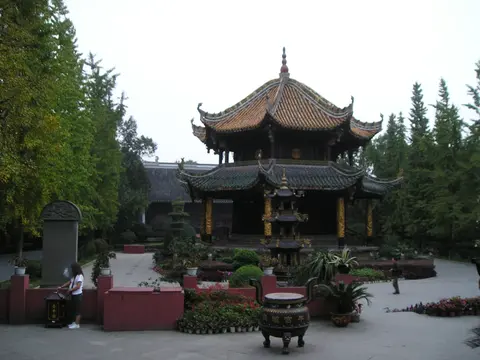 ChengduQingyang Palace 青羊宫A working Taoist temple with an Eight Trigrams Pavilion; look for yin-yang and trigram symbols around the halls.
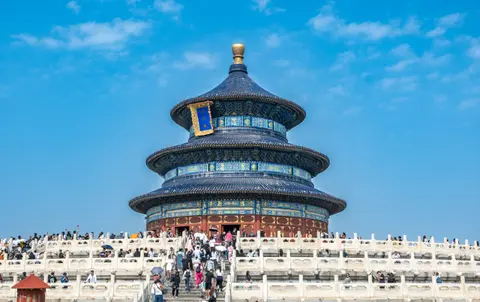 BeijingTemple of Heaven 天坛公园At the Circular Mound Altar the stones are laid in rings of nine and multiples of nine, around a centre stone called the Supreme Yang.
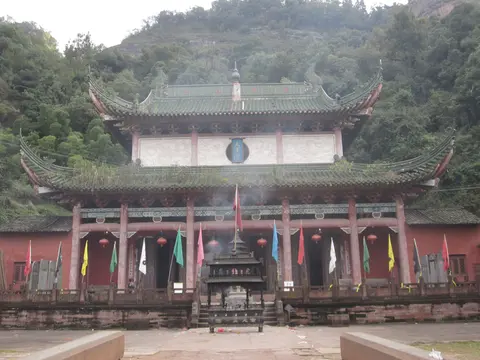 HuangshanMount Qiyun 齐云山A quieter Taoist mountain, with temples and cliff inscriptions near the top where you can look for these symbols.
Related entries
Sources
- Yinyang (Yin-yang), Internet Encyclopedia of Philosophy (iep.utm.edu)
- Yin and yang, Wikipedia (en.wikipedia.org)
- Taijitu, Wikipedia (en.wikipedia.org)
- Temple of Heaven, Wikipedia (en.wikipedia.org)